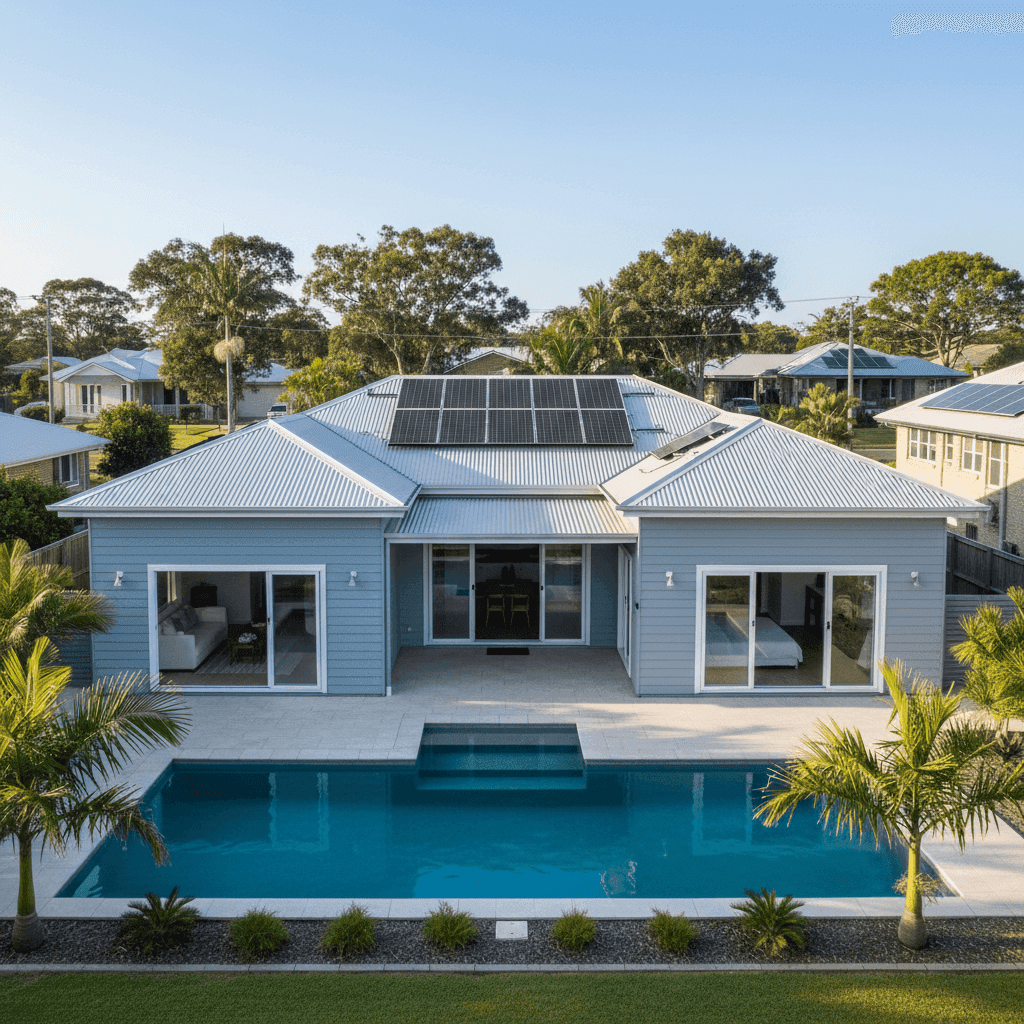
Paradise Point is a leafy, waterfront suburb sitting on the northern tip of the Gold Coast — and if you own a free standing home here, you already know that premium coastal living comes with its own set of insurance considerations. This article breaks down a real home and contents insurance quote for a four-bedroom, two-bathroom free standing home in Paradise Point (QLD 4216), and puts it in context against suburb, state, and national benchmarks so you can judge whether you're getting a fair deal.
---
Is This Quote Fair?
The quote in question comes in at $3,337 per year (or $327/month) for combined home and contents cover, with a building sum insured of $575,000 and contents valued at $80,000. The building excess is $3,000 and the contents excess is $2,000.
Our price rating for this quote is CHEAP — below average — and the data backs that up convincingly.
When you compare this figure against the Paradise Point suburb average of $6,876/year, this homeowner is paying less than half what most people in the same postcode are being quoted. Even measured against the suburb's 25th percentile — meaning the cheapest quarter of quotes — the benchmark sits at $4,010/year, which is still $673 more than this quote. In short, this is an exceptionally competitive result for the area.
It's also well below the Queensland state average of $4,547/year, and sits modestly above the national average of $2,965/year — which makes sense given that Paradise Point carries coastal and flood-related risk factors that push premiums higher than the typical Australian suburb.
For a property of this size, age, and location, landing a quote at this level is a genuinely strong outcome.
---
How Paradise Point Compares
To put the numbers in perspective, here's how this quote sits across different benchmarks:
| Benchmark | Annual Premium |
|---|---|
| This Quote | $3,337 |
| Paradise Point 25th Percentile | $4,010 |
| Paradise Point Median | $6,394 |
| Paradise Point Average | $6,876 |
| Paradise Point 75th Percentile | $8,584 |
| Gold Coast LGA Average | $5,494 |
| QLD State Average | $4,547 |
| National Average | $2,965 |
(Based on 126 quotes collected for the Paradise Point area.)
A few things stand out here. First, the gap between the suburb's median ($6,394) and average ($6,876) is relatively small, which suggests premiums in Paradise Point are fairly consistently high — there aren't many extreme outliers pulling the average up. This makes the quote above even more impressive by comparison.
Second, the Gold Coast LGA average of $5,494 reflects the broader risk profile of the region — coastal proximity, storm exposure, and high property values all contribute to elevated premiums across the Gold Coast. Paradise Point's suburb average of $6,876 sits well above even the LGA average, highlighting just how exposed this particular pocket of the Gold Coast can be from an insurer's perspective.
For more context on how Queensland homeowners are faring, visit the QLD insurance stats page, or explore national home insurance trends.
---
Property Features That Affect Your Premium
Several characteristics of this property are worth discussing in the context of insurance pricing.
Weatherboard timber walls are a significant factor. Timber-clad homes are generally considered higher risk than brick or rendered masonry by insurers, primarily due to fire susceptibility and susceptibility to moisture damage over time. This can push premiums upward, so the competitive quote here is particularly notable.
Steel/Colorbond roofing is viewed favourably by most insurers. It's durable, performs well in high winds, and is resistant to fire and rot — all of which can contribute to a more competitive premium compared to older tile or fibro roofs.
Concrete slab foundation is another positive signal for insurers. Slab homes tend to be structurally stable and are less exposed to the kind of subfloor damage that can affect homes on stumps or piers.
Timber and laminate flooring is a contents and building consideration — these materials can be costly to repair or replace after water damage, which is worth keeping in mind when reviewing your sum insured.
The pool, solar panels, and ducted climate control all add to the replacement value of the property. It's important to ensure these are adequately factored into your building sum insured — underinsurance is a common and costly mistake. At $575,000, the building cover here appears to reflect a realistic rebuild cost for a 139 sqm home with these features in the current construction market.
No cyclone risk is a meaningful factor in this quote. While Paradise Point is in Queensland, it sits outside the designated cyclone risk zone, which removes one of the most significant premium loading factors that affect properties further north in the state.
---
Tips for Homeowners in Paradise Point
1. Don't assume your current insurer is competitive. The spread of premiums in Paradise Point is enormous — from around $4,010 at the low end to $8,584 at the 75th percentile. That's a $4,574 difference for what could be comparable cover. Shopping around regularly is one of the most effective ways to keep your premium in check.
2. Review your sum insured annually. Construction costs in South East Queensland have risen sharply in recent years. If your building sum insured hasn't kept pace, you could be significantly underinsured — meaning you'd bear a portion of rebuild costs out of pocket in the event of a total loss. Use a building cost calculator or speak to a quantity surveyor if you're unsure.
3. Consider your excess strategically. This quote carries a $3,000 building excess and $2,000 contents excess — both on the higher side. Higher excesses typically reduce your annual premium, which is a reasonable trade-off if you have the financial buffer to cover them. Just make sure you're not setting an excess so high that you'd hesitate to make a legitimate claim.
4. Check what's covered for your pool and solar panels. Not all policies treat pools and solar systems the same way. Some insurers include them automatically under building cover; others require specific endorsements or have sub-limits. Review your Product Disclosure Statement (PDS) carefully to confirm these assets are properly protected.
---
Compare Your Own Quote at CoverClub
Whether you're renewing your policy or shopping for the first time, it pays to know where your premium sits relative to your neighbours. CoverClub aggregates real quote data from across Australia so you can make an informed decision — not just accept whatever your current insurer sends at renewal time. Get a home insurance quote today and see how your property compares in the Paradise Point suburb stats.