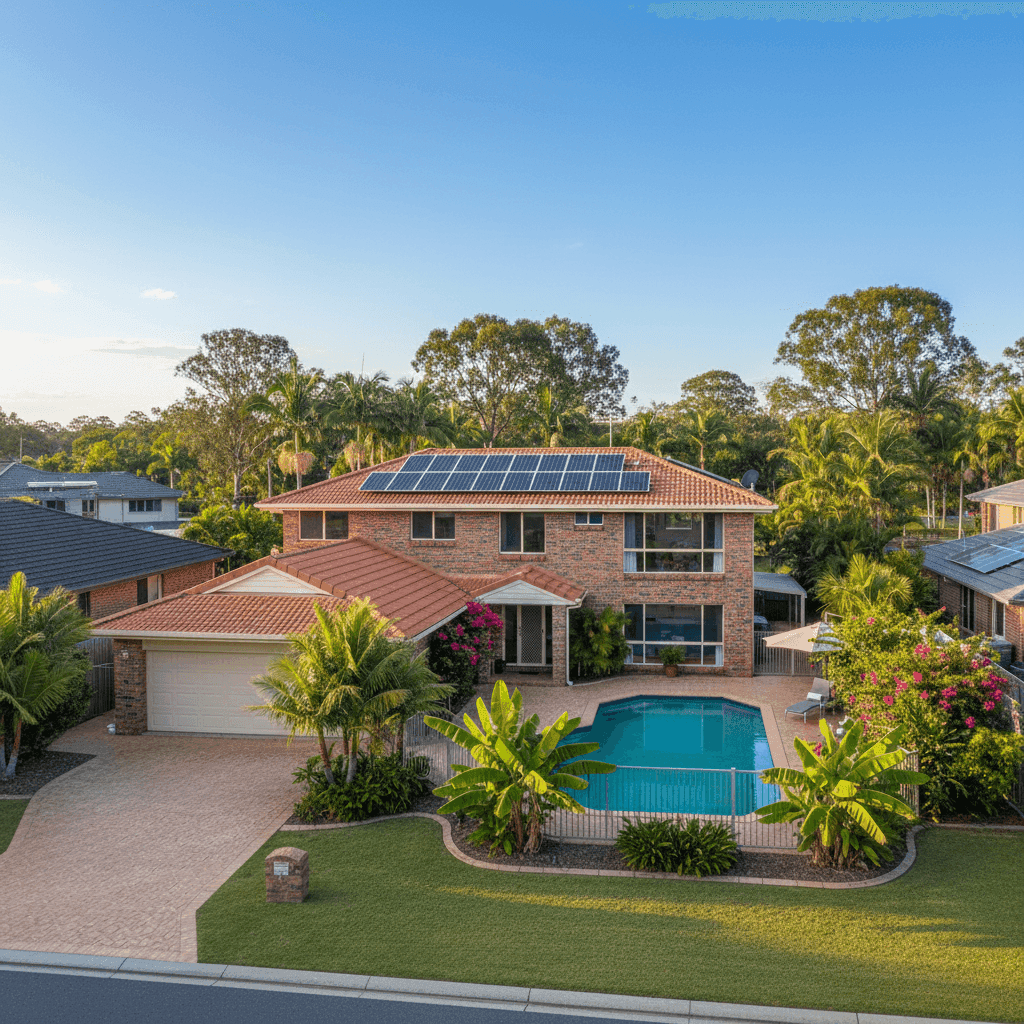
Paradise Point is one of the Gold Coast's most sought-after waterside suburbs — a peninsula community known for its canals, relaxed lifestyle, and well-established residential streets. It's also a suburb where home insurance premiums can vary significantly, thanks to a mix of property ages, sizes, and proximity to water. This article breaks down a recent building insurance quote for a five-bedroom free standing home in Paradise Point (QLD 4216), rated Fair (Around Average) by CoverClub, and puts it in context with local, state, and national data.
---
Is This Quote Fair?
The quoted annual premium for this property sits at $4,914 per year (or $484/month), covering building only with a sum insured of $1,208,000 and a building excess of $3,000.
CoverClub has rated this quote as Fair — Around Average, which is a reasonable outcome for a property of this size and specification. Here's why that rating makes sense:
- The quote sits above the suburb's 25th percentile of $4,010/yr, meaning roughly a quarter of comparable Paradise Point quotes come in cheaper.
- It falls well below the suburb average of $6,876/yr and the suburb median of $6,394/yr — so this homeowner is actually paying meaningfully less than most in the area.
- The suburb's 75th percentile is $8,584/yr, meaning many Paradise Point homeowners are paying considerably more.
In short, while the premium isn't the cheapest available in the suburb, it's comfortably below what most local homeowners are paying. The "Fair" rating reflects that there may be room to improve, but this is a reasonable price point for the coverage on offer.
---
How Paradise Point Compares
To understand this quote properly, it helps to zoom out and look at the broader picture. You can explore full suburb-level data on the Paradise Point insurance stats page.
| Benchmark | Annual Premium |
|---|---|
| This Quote | $4,914 |
| Suburb Average (Paradise Point) | $6,876 |
| Suburb Median (Paradise Point) | $6,394 |
| LGA Average (Gold Coast) | $5,494 |
| State Average (QLD) | $4,547 |
| State Median (QLD) | $3,931 |
| National Average | $2,965 |
| National Median | $2,716 |
A few things stand out from this comparison:
Paradise Point is an expensive suburb to insure. The suburb average of $6,876/yr is roughly 51% higher than the Queensland state average of $4,547/yr, and more than double the national average. This reflects the suburb's coastal and canal-adjacent nature, the higher rebuild values of larger homes, and the general risk profile of waterfront Gold Coast communities.
This quote beats the Gold Coast LGA average. The LGA average for the Gold Coast sits at $5,494/yr — and this quote comes in $580 below that, which is encouraging for a 305 sqm, five-bedroom home.
Queensland premiums are elevated compared to the national picture. As you can see on the QLD insurance stats page, the state average of $4,547/yr is significantly above the national average of $2,965/yr. Queensland's exposure to severe weather events — including storms, flooding, and hail — drives premiums higher across the board, even in areas not classified as cyclone risk zones.
---
Property Features That Affect Your Premium
Several characteristics of this property influence what insurers are willing to charge. Here's how each one plays a role:
Brick Veneer Walls & Tiled Roof This combination is generally viewed favourably by insurers. Brick veneer is durable, fire-resistant, and performs well in storms. Tiled roofs, while heavier, are considered more resilient than Colorbond or corrugated iron in many scenarios. Together, these materials typically attract more competitive premiums compared to timber-framed or fibrous cement constructions.
Slab Foundation A concrete slab foundation is standard for Queensland homes of this era and is generally considered low-risk from an insurer's perspective. It offers good structural stability and reduces exposure to underfloor moisture and pest damage.
Built in 1980 A construction year of 1980 places this home in a bracket that insurers watch carefully. Homes of this age may have ageing electrical wiring, plumbing, or roofing materials that increase the likelihood of claims. That said, a well-maintained 1980s brick veneer home can still attract reasonable premiums, especially if it has been renovated or updated over the years.
Swimming Pool Pools add to the insured value of a property and can slightly increase premiums, as they represent a significant asset to rebuild or repair. They also introduce liability considerations, though these are more relevant to home and contents or landlord policies.
Solar Panels Solar panels are increasingly common on Queensland homes and are generally covered under building insurance. Their presence adds to the replacement cost of the property, which is reflected in the sum insured. At $1,208,000, the sum insured here accounts for a substantial home with above-average fittings and additional features like the pool and solar system.
Above Average Fittings Above average fittings — think stone benchtops, quality cabinetry, premium fixtures — increase the cost to rebuild, which pushes the sum insured higher. This is appropriate and important: underinsuring a well-appointed home is one of the most common and costly mistakes homeowners make.
No Cyclone Risk Paradise Point falls outside Queensland's designated cyclone risk zone, which is a meaningful premium advantage. Properties in cyclone-prone areas of North Queensland can pay dramatically more for equivalent coverage.
---
Tips for Homeowners in Paradise Point
1. Review your sum insured regularly With a 305 sqm home and above average fittings, getting the sum insured right is critical. Construction costs in South East Queensland have risen sharply in recent years. Use a building cost calculator or speak with a quantity surveyor to ensure your $1,208,000 sum insured still reflects current rebuild costs — not what it would have cost five years ago.
2. Consider your excess strategically This policy carries a $3,000 building excess. A higher excess typically reduces your annual premium, but you need to be comfortable covering that amount out of pocket in the event of a claim. If your emergency fund is solid, maintaining or increasing the excess can be a smart way to reduce ongoing costs.
3. Shop the market at renewal Even a "Fair" rated quote has room for improvement. Insurers price risk differently, and a premium that's competitive today may not be next year. CoverClub makes it easy to compare quotes for your property without having to ring around individually. Given the suburb average is nearly $2,000/yr higher than this quote, it's worth checking whether you can do even better.
4. Maintain your home proactively For a 1980-built home, staying on top of maintenance — roof tiles, gutters, electrical systems, and plumbing — isn't just good housekeeping. Insurers can decline claims or reduce payouts if damage is attributable to a lack of maintenance. A well-maintained property is also more likely to attract better renewal terms.
---
Compare Your Home Insurance Quote Today
Whether you're a long-time Paradise Point local or considering a purchase in the area, understanding what you should be paying for home insurance is the first step to making sure you're not overpaying. CoverClub aggregates real quote data from across Australia to help you benchmark your premium against what others are actually paying — not just advertised rates.
Get a quote and compare your home insurance options today, or explore the Paradise Point suburb stats to dig deeper into local pricing trends.