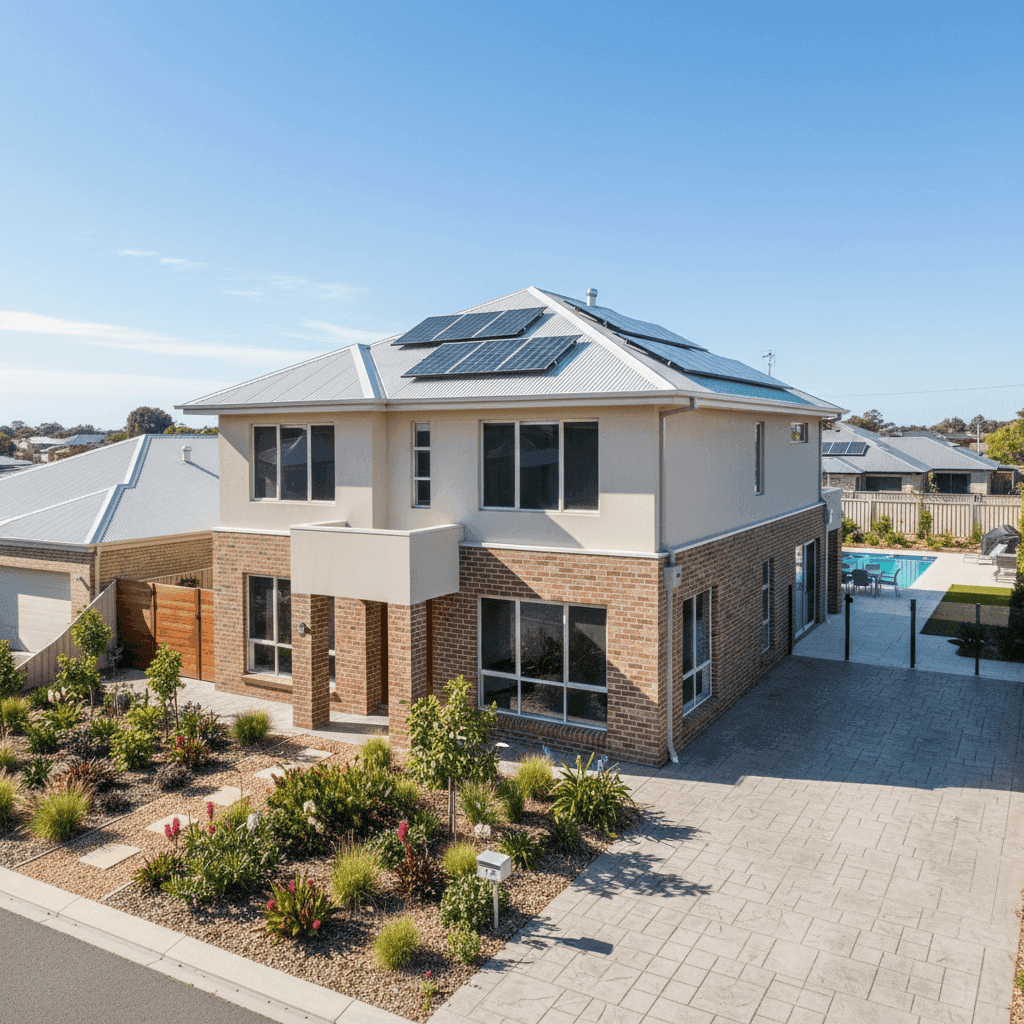
If you own a free standing home in Paradise, SA 5075, you're probably curious whether you're paying a fair price for your home and contents insurance — or whether there's room to do better. This article breaks down a recent quote for a three-bedroom, two-bathroom property in Paradise, compares it against local, state, and national benchmarks, and offers practical tips to help you get the most value from your cover.
---
Is This Quote Fair?
The quote in question comes in at $1,515 per year (or roughly $145 per month) for combined home and contents cover, with a $450,000 building sum insured and $104,000 in contents cover. Both the building and contents excess are set at $500 — a fairly standard arrangement.
Our price rating for this quote is FAIR — Around Average, which is a reasonable result in the current market. It's neither a standout bargain nor an overpriced outlier. Given the property's features and location, the insurer appears to have priced the risk sensibly.
To put it in perspective: the suburb average premium in Paradise sits at $2,187 per year, meaning this quote is approximately $672 below the local average — a meaningful saving. Even compared to the suburb median of $1,733, this quote comes in noticeably lower, sitting closer to the 25th percentile of $1,352. In other words, this homeowner is paying less than most of their neighbours for comparable cover.
---
How Paradise Compares
Understanding where Paradise sits in the broader insurance landscape helps frame what "fair" actually means. Here's a quick snapshot:
| Benchmark | Premium |
|---|---|
| This quote | $1,515/yr |
| Suburb average (Paradise 5075) | $2,187/yr |
| Suburb median | $1,733/yr |
| SA state average | $2,433/yr |
| SA state median | $1,679/yr |
| National average | $5,347/yr |
| National median | $2,764/yr |
| LGA average (Port Adelaide Enfield) | $1,295/yr |
A few things stand out here. First, South Australian premiums are notably more affordable than the national average — the SA state average of $2,433 is less than half the national average of $5,347. This largely reflects the relatively low natural disaster risk in metropolitan Adelaide compared to cyclone-prone northern Queensland or flood-affected parts of New South Wales.
Second, Paradise specifically (based on 19 quotes in our dataset) has a fairly wide spread — from $1,352 at the 25th percentile to $2,325 at the 75th percentile. That's nearly a $1,000 gap between the cheapest and more expensive end of the market, which underscores just how much insurers can vary in their pricing for the same suburb.
Interestingly, the LGA average for Port Adelaide Enfield comes in at just $1,295 — lower than the Paradise suburb average — suggesting that pockets within the LGA carry different risk profiles, and Paradise may attract slightly higher premiums due to localised factors.
---
Property Features That Affect Your Premium
Several characteristics of this property influence how insurers assess and price the risk:
Double brick construction is generally viewed favourably by insurers. It offers excellent structural integrity, strong resistance to fire, and good thermal performance. Compared to timber-framed homes, double brick walls tend to attract lower premiums due to their durability and reduced fire susceptibility.
Steel/Colorbond roofing is another positive factor. Colorbond is lightweight, highly resistant to corrosion, and performs well in the Australian climate. Insurers typically view it as a low-maintenance, durable roofing solution — certainly preferable to ageing terracotta or asbestos-containing materials sometimes found on homes of a similar era.
Construction year (1975) is worth noting. At around 50 years old, this home sits in a bracket where insurers may apply some scrutiny to plumbing, wiring, and structural wear. However, the double brick construction and Colorbond roof suggest the property has either been well maintained or partially upgraded over the decades, which helps mitigate age-related risk loading.
The swimming pool adds a modest premium loading in most policies, as it introduces liability considerations — particularly if a third party is injured on the property. It also increases the replacement cost of external structures.
Solar panels are increasingly common on Australian homes and can affect premiums in two ways: they add to the insured value of the property (panels can cost $5,000–$15,000+ to replace), and they introduce a small additional risk around electrical faults. Most modern policies cover solar panels as part of the building sum insured, so it's worth confirming this is the case.
Ducted climate control adds to the contents or building value and may influence the overall sum insured adequacy. Systems like these can be expensive to repair or replace, so ensuring the building sum insured accounts for this is important.
Slab foundation and tile flooring are both neutral-to-positive risk factors. Concrete slabs are stable and common in South Australian homes, while tiled flooring is durable and straightforward to replace.
---
Tips for Homeowners in Paradise
1. Review your sum insured annually With building costs rising across Australia, the cost to rebuild a 139 sqm double brick home in Adelaide's eastern suburbs has increased significantly in recent years. Make sure your $450,000 sum insured still reflects genuine rebuild costs — including demolition, professional fees, and any upgrades like the ducted climate control and solar system. Underinsurance is one of the most common and costly mistakes homeowners make.
2. Shop the market at renewal time The $1,000 spread between the cheapest and most expensive quotes in Paradise shows that loyalty doesn't always pay. Insurers re-price risk differently, and the market shifts year to year. Compare quotes at CoverClub before your renewal date to make sure you're still getting a competitive rate.
3. Check your pool and solar panel cover Ask your insurer explicitly whether your swimming pool (including fencing, pump, and filtration equipment) and solar panels are covered under your building policy — and to what limit. Some policies cap coverage on these items or exclude them unless specifically listed. Given the value of these assets, it's worth getting clarity in writing.
4. Consider your excess strategically Both the building and contents excess on this policy are set at $500. Opting for a higher voluntary excess — say $1,000 — can reduce your annual premium, sometimes by 10–20%. If you're unlikely to make small claims (as many homeowners are), this trade-off can make good financial sense over time.
---
Ready to Compare?
Whether you're renewing soon or just doing a health check on your current policy, it pays to know where you stand. CoverClub makes it easy to see how your premium stacks up against real quotes from your suburb and across South Australia.
Get a home insurance quote today and find out if you could be paying less — without sacrificing the cover you need.