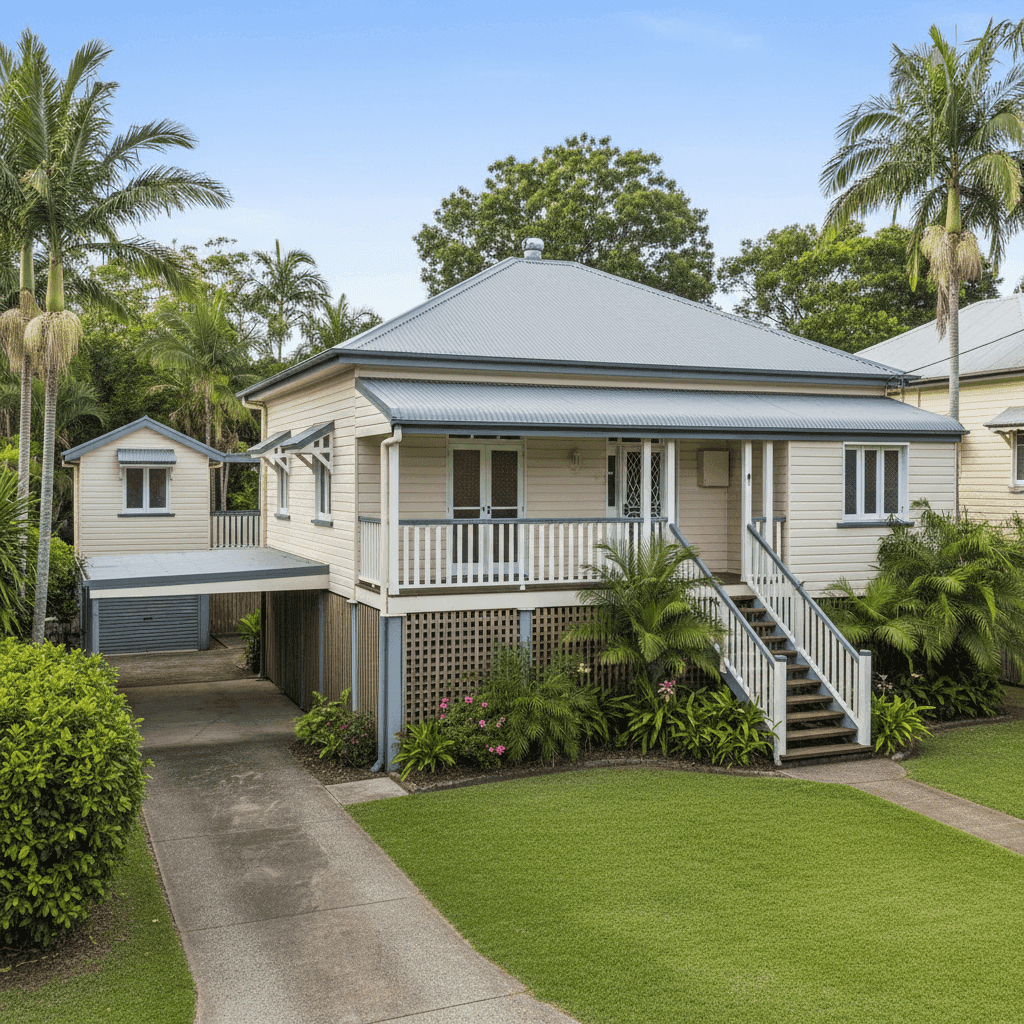
If you own a four-bedroom free standing home in Park Avenue, QLD 4701, you already know that insuring a property in Central Queensland comes with its own set of considerations — from the region's tropical climate to the architectural character of older timber homes. This article breaks down a recent building-only insurance quote for a property in this suburb, benchmarks it against local, state, and national data, and offers practical guidance for homeowners looking to make the most of their cover.
---
Is This Quote Fair?
The quote in question sits at $4,473 per year (or $422/month) for building-only cover, with a sum insured of $594,000 and a building excess of $2,000.
Our analysis rates this quote as FAIR — Around Average, and the numbers back that up. Against the suburb median of $4,695/yr for Park Avenue, this quote comes in roughly $222 below the midpoint, which is a reasonable outcome given the property's risk profile. It's not a standout bargain, but it's a solid, competitive result for a home with several features that insurers tend to price cautiously.
To put it in context: the suburb average sits considerably higher at $7,080/yr, pulled upward by higher-risk or higher-value properties in the area. The fact that this quote is well below that average — and sitting just under the median — suggests the pricing reflects the property's characteristics reasonably well.
---
How Park Avenue Compares
Understanding where your premium sits relative to broader benchmarks is essential for evaluating whether you're getting a fair deal.
| Benchmark | Premium |
|---|---|
| This Quote | $4,473/yr |
| Park Avenue Suburb Median | $4,695/yr |
| Park Avenue Suburb Average | $7,080/yr |
| QLD State Average | $4,547/yr |
| QLD State Median | $3,931/yr |
| LGA (Livingstone) Average | $3,949/yr |
| National Average | $2,965/yr |
| National Median | $2,716/yr |
A few things stand out here. First, this quote is virtually in line with the Queensland state average of $4,547/yr — a meaningful signal that the insurer is pricing the property consistently with broader QLD risk models. Second, the premium is noticeably higher than the national average of $2,965/yr, which reflects the elevated risk profile that comes with living in a cyclone-designated region of Queensland.
It's also worth noting that the suburb's wide spread — from a 25th percentile of $2,733/yr all the way to a 75th percentile of $9,060/yr — tells you that premiums in Park Avenue vary enormously depending on individual property factors. With only 27 quotes in our suburb sample, this data should be treated as directional rather than definitive, but the trend is clear: properties in this area carry material weather-related risk that pushes premiums above the national norm.
You can explore the full QLD state insurance data here for additional context.
---
Property Features That Affect Your Premium
Several characteristics of this property have a direct bearing on what insurers charge. Here's how they play out:
Weatherboard Timber Walls
Weatherboard wood construction is common in older Queensland homes and carries a higher fire and storm damage risk compared to brick or rendered cement. Insurers factor this into their pricing, and it's one reason premiums for timber homes tend to run higher than the national average.
Steel/Colorbond Roof
On the positive side, a steel Colorbond roof is generally well-regarded by insurers. It performs strongly in high-wind events and is more resistant to storm damage than older tile or fibrous cement roofing. This may be partially offsetting the risk associated with the timber walls.
Elevated on Stumps (at Least 1 Metre)
This is a classic Queenslander feature — and it's a double-edged sword from an insurance perspective. Elevation on stumps can reduce flood inundation risk significantly, which is a genuine benefit in a region prone to heavy rainfall. However, elevated homes can also be more vulnerable to wind uplift during cyclones, which insurers account for in cyclone-risk postcodes.
Cyclone Risk Area
Park Avenue falls within a designated cyclone risk zone, and this is arguably the single biggest driver of elevated premiums in this area. Cyclone cover typically adds a meaningful loading to building insurance in North and Central Queensland, and it's reflected clearly in the gap between local premiums and the national median.
Granny Flat on Site
The presence of a granny flat increases the total replacement cost of the property, which is reflected in the $594,000 sum insured. Homeowners should ensure their sum insured adequately covers both the main dwelling and the secondary structure — underinsurance is a genuine risk when ancillary buildings are present.
Construction Year: 1980
A home built in 1980 is over 40 years old, which means it may have older wiring, plumbing, and structural elements that increase the likelihood of a claim. Some insurers apply age-related loadings; others assess this through the sum insured and construction type.
277 sqm Floor Area
At 277 square metres across four bedrooms and three bathrooms, this is a generously sized home. Larger homes cost more to rebuild, and the sum insured should reflect current construction costs — particularly given the post-pandemic surge in building material and labour prices.
---
Tips for Homeowners in Park Avenue
1. Review your sum insured annually Building costs in Queensland have risen sharply in recent years. With a granny flat on the property, it's especially important to ensure your $594,000 sum insured still reflects true replacement costs. Consider using a quantity surveyor or your insurer's rebuild calculator to verify this figure each year.
2. Ask about cyclone excess separately Many insurers in cyclone-risk zones apply a separate cyclone excess on top of the standard building excess. Clarify whether your $2,000 excess applies to cyclone events or whether a higher separate excess applies — this can significantly affect your out-of-pocket costs after a major weather event.
3. Compare quotes before renewal The wide premium spread in Park Avenue (from ~$2,733 to ~$9,060/yr) shows that insurers price this suburb very differently. Even if you're happy with your current cover, it's worth getting a fresh quote at renewal to ensure you're not paying more than necessary.
4. Maintain your home's cyclone resilience Insurers and government programs in Queensland sometimes offer discounts or incentives for homes that meet cyclone mitigation standards — such as roof tie-downs, storm shutters, or upgraded fixings. Check whether your insurer offers a discount for any resilience improvements, particularly given the age of the property.
---
Compare Your Home Insurance Today
Whether you're renewing your policy or shopping around for the first time, understanding how your premium compares to the market is the first step to getting better value. CoverClub makes it easy to benchmark your quote against real data from your suburb, state, and across Australia.
Get a home insurance quote today at CoverClub and see how your premium stacks up — in minutes, for free.