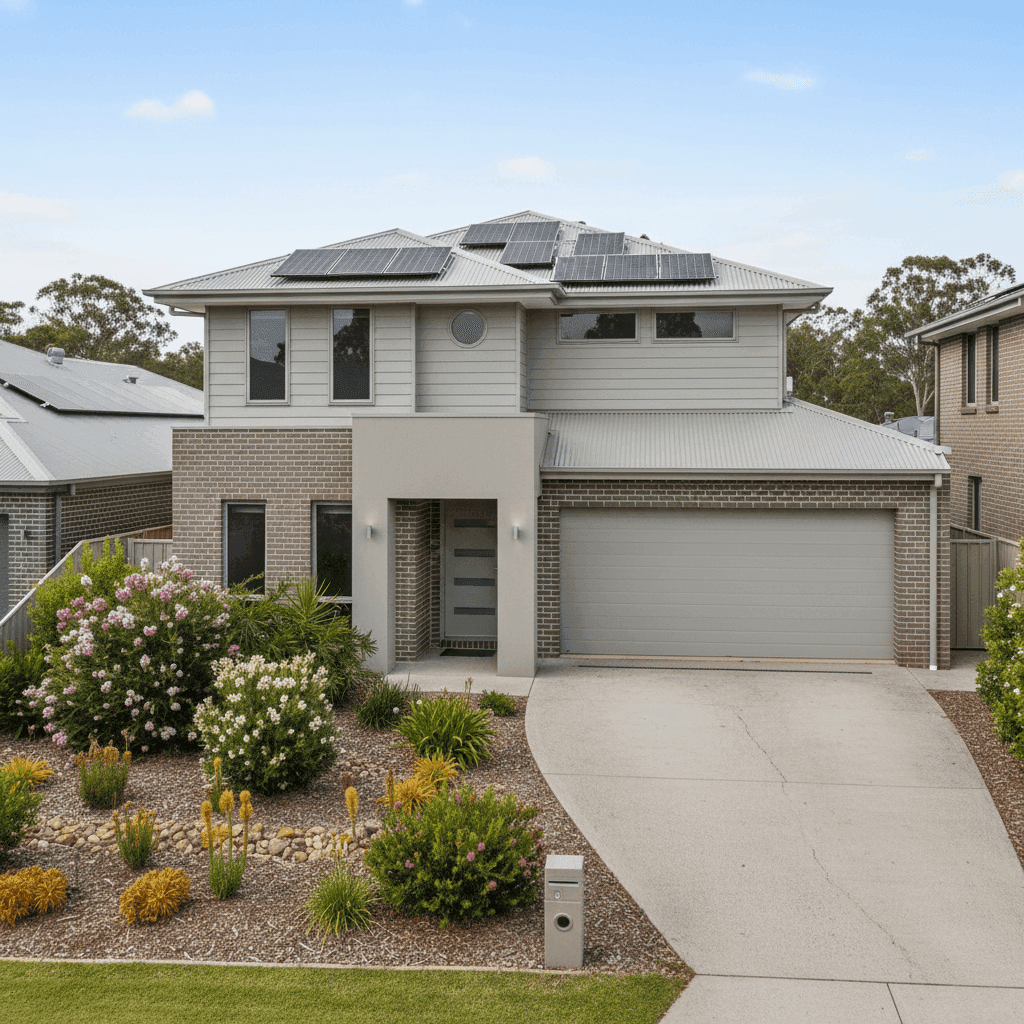
Home insurance costs can vary enormously depending on where you live, what your home is made of, and how much cover you need. To help Queensland homeowners make sense of their premiums, we've taken a close look at a real home and contents insurance quote for a four-bedroom free standing home in Park Ridge, QLD 4125 — a growing residential suburb in Logan City, south of Brisbane.
---
Is This Quote Fair?
The quote in question comes in at $1,632 per year (or $165/month) for combined home and contents cover, with a building sum insured of $610,000 and contents cover of $50,000. The building excess is $3,000 and the contents excess is $1,000.
Our price rating for this quote is FAIR — Around Average, and when you look at the numbers, that assessment holds up well.
Within Park Ridge itself, the suburb average premium sits at $2,379/yr and the median is $2,336/yr, based on a sample of 115 quotes. This particular quote lands just above the 25th percentile ($1,604/yr), meaning it's cheaper than roughly three-quarters of comparable quotes in the area. That's a solid result for a well-specified modern home.
It's worth noting that the 75th percentile for Park Ridge is $3,043/yr, so homeowners on the higher end of the market are paying nearly double this quote. The spread in premiums across the suburb is significant, which underscores why comparing quotes is so important.
---
How Park Ridge Compares
To put this quote in proper context, it helps to zoom out and look at the broader picture. Here's how Park Ridge stacks up against state and national benchmarks:
| Benchmark | Average | Median |
|---|---|---|
| Park Ridge (suburb) | $2,379/yr | $2,336/yr |
| Logan LGA | $4,617/yr | — |
| Queensland (state) | $9,129/yr | $3,903/yr |
| National | $5,347/yr | $2,764/yr |
A few things stand out here. Queensland's average premium of $9,129/yr is extraordinarily high compared to the national average — this is largely driven by high-risk postcodes in cyclone-prone or flood-affected regions of the state. The state median of $3,903/yr is a more representative figure for typical Queensland homeowners, and even that is well above this quote.
At the national level, the median premium is $2,764/yr, which again sits comfortably above this quote's $1,632/yr price tag.
Park Ridge benefits from its position as a non-cyclone zone and a relatively modern suburban area, which keeps premiums more reasonable than many other parts of Queensland. You can explore more Park Ridge insurance statistics, Queensland-wide data, and national benchmarks on CoverClub.
---
Property Features That Affect Your Premium
The characteristics of this particular home play a meaningful role in arriving at a competitive premium. Here's a breakdown of the key factors:
Modern Construction (Built 2021)
A home built in 2021 is subject to the latest Australian building codes, which mandate higher standards for structural integrity, fire resistance, and weather resilience. Insurers typically reward newer builds with lower premiums because the risk of structural failure or hidden defects is considerably lower than in older properties.
Brick Veneer Walls & Colorbond Roof
Brick veneer is one of the most popular and insurer-friendly wall materials in Australia. It offers excellent fire resistance and durability. Paired with a steel Colorbond roof — which is lightweight, corrosion-resistant, and performs well in Australian weather — this combination tends to attract competitive premiums. Colorbond roofing is also widely used in Queensland precisely because of its resilience to heat and moderate weather events.
Slab Foundation
A concrete slab foundation is generally considered lower risk than raised or suspended floors, as it reduces exposure to moisture, pests, and certain types of structural movement. This is a positive factor from an underwriting perspective.
Timber and Laminate Flooring
While timber and laminate flooring adds value and appeal to a home, it's worth noting that these materials can be more costly to replace after a water damage event compared to tiles. However, the $50,000 contents sum insured appears appropriately modest for a standard fit-out, which helps keep the overall premium in check.
Solar Panels
This property has solar panels installed. Most insurers cover rooftop solar panels as part of the building sum insured, but it's important to confirm this with your insurer and ensure the $610,000 building sum insured accounts for the replacement cost of the system. Solar panels can also slightly affect roof repair costs in the event of a claim.
Ducted Climate Control
Ducted air conditioning is a significant fixed asset and should be factored into your building sum insured. It's generally covered under building insurance, but again, verifying this with your insurer is worthwhile — especially given the cost of replacing a full ducted system.
No Pool, No Cyclone Risk
The absence of a swimming pool removes a common liability and maintenance risk that can nudge premiums upward. And being outside a designated cyclone risk area is a substantial premium advantage for Queensland homeowners — cyclone cover is a major driver of elevated premiums across the state.
---
Tips for Homeowners in Park Ridge
Whether you're reviewing an existing policy or shopping for new cover, here are some practical steps to make the most of your home insurance:
- Check your building sum insured regularly. Construction costs have risen sharply in recent years. A home built in 2021 for a certain amount may cost significantly more to rebuild today. Use a building cost calculator or consult a quantity surveyor to ensure you're not underinsured — particularly important with a $610,000 sum insured on a 214 sqm home.
- Confirm solar panels are covered. Ask your insurer specifically whether your solar panels are included in the building sum insured and whether they're covered for accidental damage, storm damage, and electrical faults. Not all policies treat solar the same way.
- Consider your excess carefully. This quote carries a $3,000 building excess, which is on the higher side. A higher excess typically lowers your premium, but it also means a larger out-of-pocket cost at claim time. Make sure you can comfortably cover that amount if you need to make a claim.
- Compare quotes annually. The Park Ridge premium range spans from around $1,600 to over $3,000 per year — a difference of nearly $1,400 for what could be very similar cover. Loyalty doesn't always pay in insurance; shopping around at renewal time is one of the easiest ways to save.
---
Compare Home Insurance Quotes for Your Park Ridge Home
Every property is different, and the best way to know whether you're getting a fair deal is to compare. CoverClub makes it easy to benchmark your premium against real quotes from across your suburb, your LGA, and the broader market. Get a home insurance quote today and see exactly where you stand.