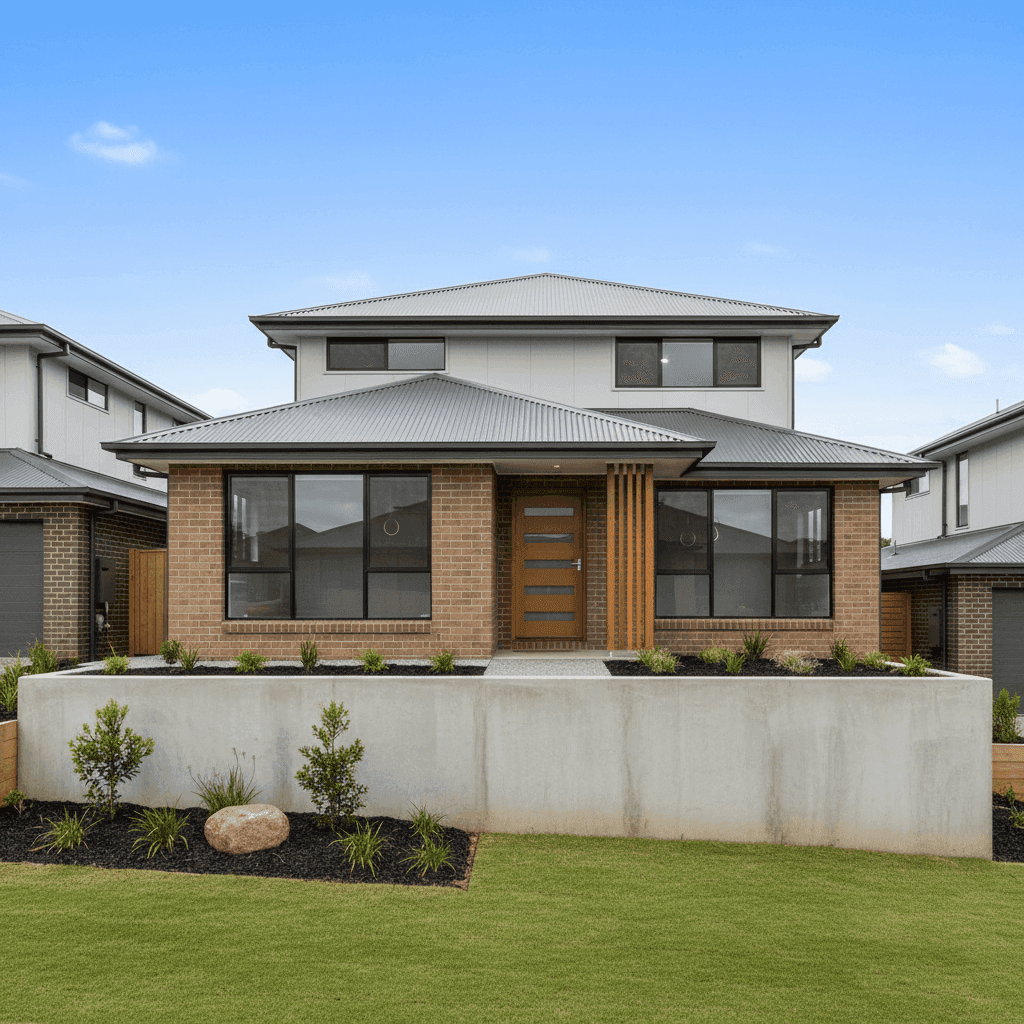
Park Ridge is a growing residential suburb in Logan City, roughly 35 kilometres south of Brisbane's CBD. With a mix of modern estates and established streetscapes, it's become a popular choice for families seeking affordable Queensland living without straying too far from the city. If you own a townhouse here — or are thinking about it — understanding what you should expect to pay for building insurance is a smart first step.
This article breaks down a real building-only insurance quote for a 3-bedroom, 3-bathroom townhouse in Park Ridge (postcode 4125), compares it against local, state, and national benchmarks, and offers practical tips to help you get the best value cover.
---
Is This Quote Fair?
The quote in question sits at $1,385 per year (or $135/month) for building-only cover, with a sum insured of $464,000 and a building excess of $2,000. Our pricing analysis rates this as FAIR — Around Average.
That "fair" rating is well-earned. Based on 25 quotes collected for the Park Ridge suburb, the local average premium comes in at $1,832/year and the median at $1,915/year. At $1,385, this quote falls below both of those figures — sitting closer to the 25th percentile of $1,290/year, meaning it's cheaper than roughly 75% of quotes in the area.
In practical terms, this homeowner is paying meaningfully less than most of their neighbours for comparable cover. That's a solid outcome, though it's always worth scrutinising the policy details — excess levels, inclusions, and exclusions — before declaring any quote a winner on price alone.
---
How Park Ridge Compares
To put this quote in broader context, let's look at how Park Ridge's insurance costs stack up against wider benchmarks.
| Benchmark | Average Premium | Median Premium |
|---|---|---|
| Park Ridge (suburb) | $1,832/yr | $1,915/yr |
| Logan LGA | $3,411/yr | — |
| Queensland (state) | $4,547/yr | $3,931/yr |
| National | $2,965/yr | $2,716/yr |
The numbers tell an interesting story. Park Ridge sits well below the Queensland state average of $4,547/year — less than half, in fact. Even compared to the national average of $2,965/year, Park Ridge premiums look remarkably competitive.
This is somewhat surprising given that Park Ridge falls within Logan City, where the LGA average is $3,411/year — nearly double the suburb's own average. The disparity likely reflects a combination of factors: the suburb's relatively modern housing stock, lower flood exposure in parts of the area, and the prevalence of townhouses (which typically carry lower rebuild costs than freestanding homes on larger blocks).
Queensland as a whole carries some of Australia's highest home insurance premiums, largely driven by cyclone risk in northern regions, flood-prone catchments, and severe storm exposure. Park Ridge, being outside designated cyclone risk zones and situated in south-east Queensland, benefits from a more favourable risk profile than many Queensland postcodes.
---
Property Features That Affect Your Premium
Several characteristics of this particular townhouse influence how insurers price the risk — and many work in the owner's favour.
Brick Veneer Walls & Colorbond Roof Brick veneer is one of the most widely accepted external wall materials among Australian insurers. It's durable, fire-resistant, and well-understood in terms of repair costs. Paired with a steel Colorbond roof — which is lightweight, resistant to rust, and handles Queensland's heat and storm conditions well — this construction profile is generally viewed favourably at underwriting.
Concrete Slab Foundation A slab foundation is standard for modern Queensland construction and presents minimal risk of subsidence or termite entry compared to older timber-framed stumped homes. Insurers typically price slab homes more competitively.
Elevated by at Least 1 Metre This is a notable feature. Elevation can play a meaningful role in reducing flood and inundation risk, which is a key pricing factor for insurers in south-east Queensland. Even modest elevation can move a property out of the highest-risk flood bands on insurer models.
Built in 2013 At just over a decade old, this townhouse sits in a sweet spot — modern enough to meet contemporary building codes (including improved cyclone and storm standards introduced after 2011's Queensland floods and storms), but not so new that replacement costs are at a premium.
Ducted Climate Control Ducted air conditioning is a fixed building feature and forms part of the building sum insured. It's factored into the $464,000 insured value rather than treated as a separate contents item, which is the correct approach for building-only cover.
No Pool, No Solar Panels Both pools and solar panel systems can add complexity and cost to a building policy. Their absence here simplifies the risk profile and keeps the premium lean.
139 sqm Building Size & Standard Fittings At 139 square metres with standard-quality fittings, the rebuild cost estimate of $464,000 works out to roughly $3,340 per square metre — a reasonable figure for a modern brick veneer townhouse in south-east Queensland when factoring in demolition, site costs, and current construction pricing.
---
Tips for Homeowners in Park Ridge
1. Check Your Flood Classification Annually Flood mapping in Logan City has been updated several times since the 2011 and 2022 flood events. Even if your property wasn't affected, your insurer's flood classification may have changed. Log into your policy portal or call your insurer each renewal to confirm your flood status — it can significantly affect your premium and your cover entitlements.
2. Don't Underinsure Your Building $464,000 for a 139 sqm townhouse is a reasonable starting point, but construction costs in Queensland have risen sharply in recent years. Use an independent building cost calculator (such as the one provided by Cordell or your insurer) each year to stress-test your sum insured. Underinsurance is one of the most common and costly mistakes homeowners make at claim time.
3. Consider a Higher Excess to Lower Your Premium This policy carries a $2,000 building excess. If you have the financial buffer to absorb a higher out-of-pocket cost in the event of a claim, opting for a $2,500 or $3,000 excess could reduce your annual premium further. Just make sure the saving is meaningful — run the numbers before committing.
4. Compare at Every Renewal The insurance market in Australia is competitive, and loyalty doesn't always pay. Premiums can shift significantly from year to year based on insurer appetite, reinsurance costs, and local claims history. Getting a fresh set of quotes at each renewal — rather than simply auto-renewing — is one of the simplest ways to keep your costs in check.
---
Compare Your Own Quote
Whether you're renewing your existing policy or insuring a new purchase, it pays to know where your premium sits relative to the market. CoverClub aggregates real quote data from across Australia so you can see exactly how your premium compares — by suburb, by state, and nationally. Start comparing home insurance quotes today and make sure you're not paying more than you need to.