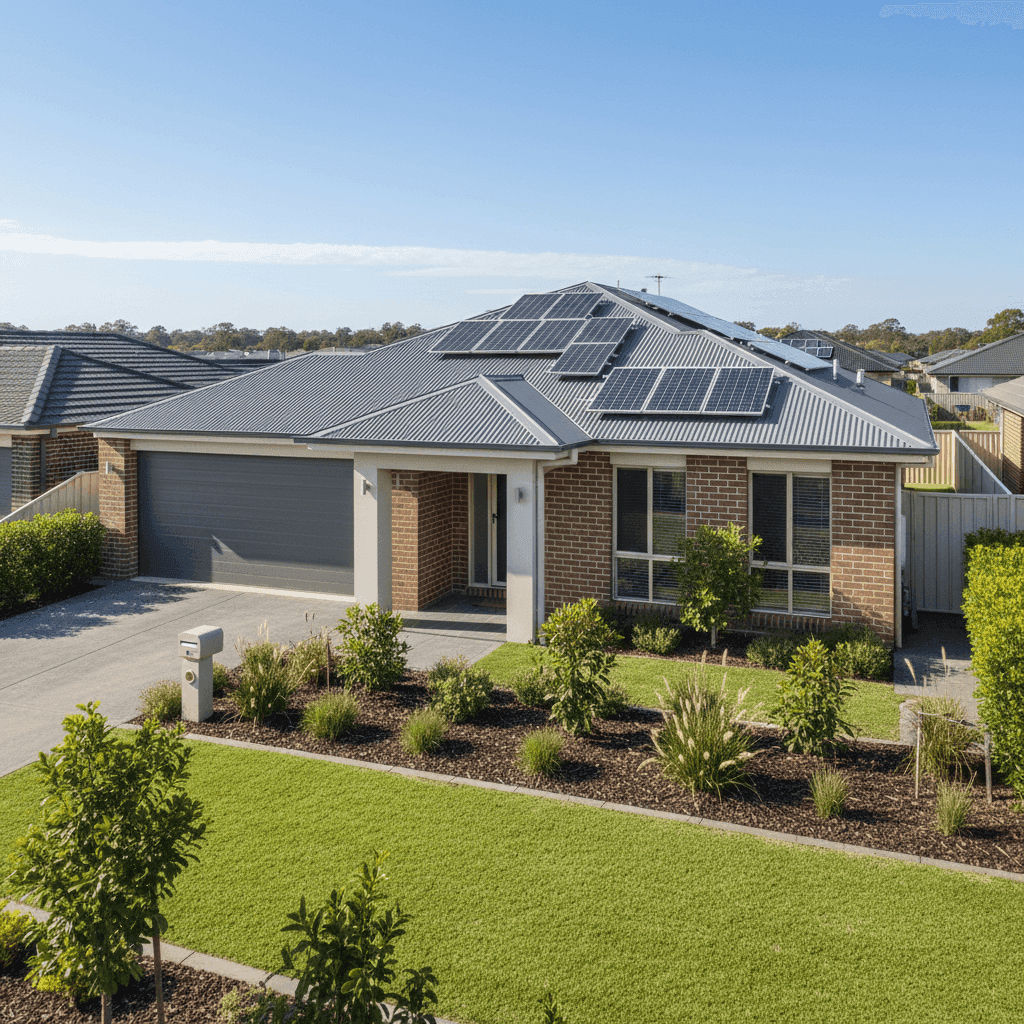
Nestled in the southern corridor of Brisbane's Logan region, Park Ridge South is a quietly growing suburb attracting families drawn to its larger blocks, newer-era homes, and relative affordability. If you own a free standing home here, understanding what you should be paying for building insurance — and why — can save you hundreds of dollars every year. This article breaks down a real building-only insurance quote for a 4-bedroom, 2-bathroom home in Park Ridge South (postcode 4125) and puts it into context against local, state, and national benchmarks.
---
Is This Quote Fair?
The quote in question comes in at $2,508 per year (or $234/month) for building-only cover on a free standing home with a sum insured of $605,000 and a $1,000 excess. CoverClub's pricing engine rates this as CHEAP — below the suburb average — and the data backs that up convincingly.
The suburb average premium for Park Ridge South sits at $4,001 per year, meaning this quote is roughly $1,493 cheaper than what most homeowners in the area are paying. Even the 25th percentile — the cheapest quarter of quotes in the suburb — comes in at $3,003/yr, which is still nearly $500 more expensive than this result. In other words, this quote sits well below the bottom quarter of the local market. That's a genuinely strong outcome, not just a marginal saving.
For a homeowner paying monthly, the difference between this premium and the suburb average works out to roughly $125/month — money that could easily cover groceries, a utility bill, or a contribution to a home maintenance fund.
---
How Park Ridge South Compares
To appreciate just how competitive this quote is, it helps to zoom out and look at the broader pricing landscape.
| Benchmark | Annual Premium |
|---|---|
| This Quote | $2,508 |
| Park Ridge South Suburb Average | $4,001 |
| Logan LGA Average | $4,617 |
| QLD State Average | $9,129 |
| QLD State Median | $3,903 |
| National Average | $5,347 |
| National Median | $2,764 |
A few things stand out here. Queensland's state average of $9,129/yr is extraordinarily high compared to the national average — a reflection of the significant concentration of high-risk properties in cyclone-prone Far North Queensland, which drags the mean upward sharply. The state median of $3,903/yr is a far more representative figure for south-east Queensland homeowners, and this quote still comfortably undercuts it.
Against the national median of $2,764/yr, this quote is only marginally cheaper — suggesting it's broadly in line with what a typical Australian homeowner pays, while being significantly below what's typical specifically in Park Ridge South and the Logan LGA.
You can explore more local pricing data on the Park Ridge South suburb stats page, compare it against Queensland-wide insurance trends, or benchmark against national home insurance averages.
> Note: The suburb sample size for Park Ridge South is 19 quotes, which is a reasonable but modest dataset. Averages may shift as more data is collected.
---
Property Features That Affect Your Premium
Insurance premiums aren't plucked from thin air — they're calculated based on a detailed assessment of your property's characteristics. Here's how the features of this particular home likely influence its pricing:
Brick Veneer Walls & Colorbond Roof
Brick veneer is one of the most common and well-regarded wall constructions in Queensland. It offers solid fire resistance and durability, which insurers generally view favourably. The Colorbond steel roof is similarly well-regarded — it's lightweight, resistant to corrosion, and performs well in severe weather. Together, these materials contribute to a lower risk profile compared to, say, weatherboard walls or older terracotta tile roofs.
Concrete Slab Foundation & Tile Flooring
A concrete slab foundation is standard in Queensland and provides stability without the under-floor void risks associated with raised timber stumps. Tiled flooring is also a practical, low-maintenance choice that's resistant to water damage — another tick in the insurer's risk assessment.
Built in 1997
At roughly 27 years old, this home sits in a comfortable middle ground. It's old enough that any early construction defects would have surfaced, but modern enough to comply with building codes that predate some of the more stringent post-2000 standards. Electrical, plumbing, and roofing systems are likely in reasonable condition, which keeps risk — and premiums — lower.
Solar Panels
The presence of rooftop solar panels is worth noting. Some insurers include solar panels under building cover automatically, while others treat them as an optional extra or may apply a loading. It's worth confirming with your insurer exactly how your solar system is covered and whether the sum insured of $605,000 adequately accounts for the replacement cost of the panels.
Ducted Climate Control
Ducted air conditioning is a significant fixed asset that forms part of the building. This is typically covered under building insurance, and its inclusion is already factored into the sum insured. Ensure your policy explicitly covers mechanical breakdown or storm damage to the ducted system.
No Pool, No Cyclone Risk Zone
The absence of a pool removes a common source of liability and structural claims. Importantly, Park Ridge South falls outside designated cyclone risk areas, which is a meaningful premium advantage in Queensland — cyclone-prone postcodes in Far North Queensland can attract premiums three to five times higher.
---
Tips for Homeowners in Park Ridge South
1. Review Your Sum Insured Annually
Construction costs have risen sharply across Queensland in recent years. A sum insured of $605,000 for a 214 sqm brick veneer home works out to approximately $2,827/sqm — which is broadly reasonable but should be reviewed each year. Underinsurance is one of the most common and costly mistakes homeowners make. Use a building cost calculator or speak to a quantity surveyor if you're unsure.
2. Confirm Solar Panel Coverage
As mentioned above, rooftop solar panels can be a grey area in building policies. Before renewing, call your insurer and ask specifically: Are my solar panels covered under this policy, and up to what value? If not, you may need to add an endorsement or seek a policy that explicitly includes them.
3. Shop the Market at Renewal Time
Even if you're happy with your current premium, the insurance market shifts every year. The fact that this quote came in well below the suburb average suggests there's real variation between providers in this postcode. Make it a habit to compare quotes at CoverClub each year before auto-renewing — loyalty doesn't always pay in insurance.
4. Consider a Higher Excess to Reduce Premiums Further
This policy carries a $1,000 excess, which is a standard starting point. If you have an emergency fund and are comfortable absorbing a larger out-of-pocket cost in the event of a claim, increasing your excess to $2,000 or more can meaningfully reduce your annual premium. Just make sure the saving justifies the additional risk you're taking on.
---
Compare Your Own Quote
Whether you're a first-time buyer in Park Ridge South or a long-term homeowner wondering if you're overpaying, CoverClub makes it easy to see how your premium stacks up. Our tools pull together real quote data from across Australia so you can make an informed decision — not just go with the first renewal notice that lands in your inbox.
[Get a home insurance quote and compare your options at CoverClub →](https://coverclub.com.au/?focus=address)