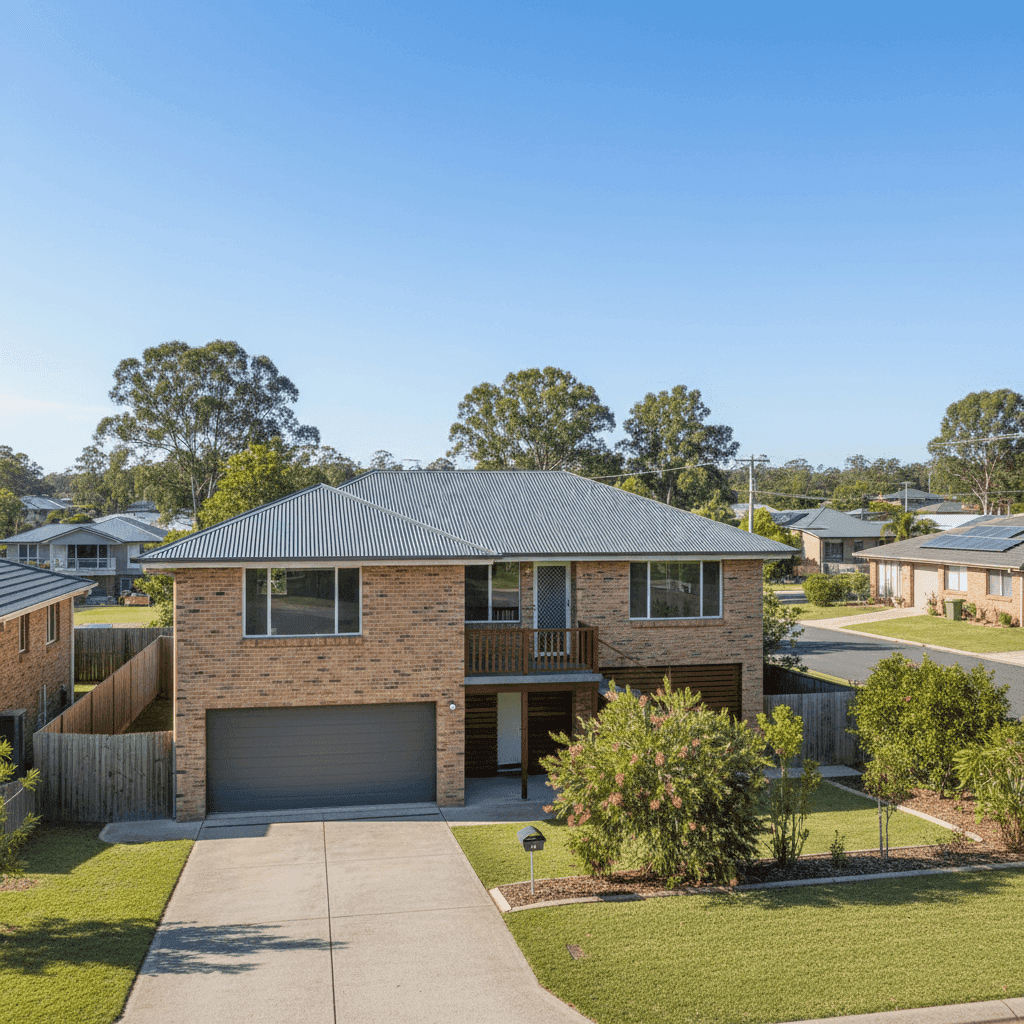
If you own a free standing home in Park Ridge South, QLD 4125, you've probably wondered whether you're paying a fair price for building insurance — or whether you could be doing better. This article breaks down a real building-only insurance quote for a three-bedroom home in the suburb, and places it in context against local, state, and national benchmarks to help you make a more informed decision.
---
Is This Quote Fair?
The short answer: yes — and then some. This quote came in at $2,419 per year (or roughly $225 per month) for building-only cover with a $1,000 excess on a home insured for $446,000. CoverClub's pricing analysis rates this as CHEAP — Below Average, meaning it sits well beneath what most homeowners in the area are paying.
To put that into perspective, the suburb average premium for Park Ridge South is $4,001 per year, and even the 25th percentile — the cheapest quarter of quotes — sits at $3,003 per year. This quote undercuts even that lower benchmark by more than $500 annually. For a homeowner on a tight budget, that's a meaningful saving.
It's worth noting that this analysis is based on a sample of 19 quotes from the Park Ridge South area, which provides a solid local snapshot. The consistency between the suburb average and median ($4,001 for both) suggests the local market is relatively uniform in its pricing — making this quote's value even more striking.
---
How Park Ridge South Compares
Understanding where Park Ridge South sits in the broader insurance landscape helps frame just how competitive this quote really is.
| Benchmark | Annual Premium |
|---|---|
| This Quote | $2,419 |
| Park Ridge South Suburb Average | $4,001 |
| Logan LGA Average | $4,617 |
| QLD State Median | $3,903 |
| QLD State Average | $9,129 |
| National Median | $2,764 |
| National Average | $5,347 |
A few things stand out here. First, the Queensland state average of $9,129 per year is dramatically higher than the state median of $3,903 — a gap that signals significant premium outliers, likely driven by high-risk coastal and cyclone-prone areas in Far North Queensland skewing the average upward. Park Ridge South, sitting in the Logan corridor south of Brisbane, doesn't carry that kind of exposure.
Second, when compared to the national average of $5,347 and national median of $2,764, this quote is competitive on both counts. It's slightly below the national median, suggesting the property's characteristics and location are working in the homeowner's favour.
The Logan LGA average of $4,617 per year further reinforces that this quote is a strong result — sitting nearly $2,200 below the broader local government area average.
---
Property Features That Affect Your Premium
Several characteristics of this particular home likely contribute to its favourable pricing.
Brick veneer construction is generally well-regarded by insurers. It's durable, fire-resistant, and widely understood — meaning less uncertainty in risk modelling. Compared to timber-framed or clad homes, brick veneer tends to attract lower premiums.
Steel/Colorbond roofing is another positive factor. Colorbond is a popular choice across Queensland for good reason — it's lightweight, resistant to corrosion, and holds up well in storms. Insurers typically view it favourably compared to older materials like terracotta tiles or asbestos-based sheeting.
Stump foundations are common in older Queensland homes and can introduce some risk factors, particularly around moisture, termite access, and structural movement over time. However, for a 1981-built home that has presumably been well-maintained, this is unlikely to be a significant pricing driver.
The 130 sqm floor area is relatively modest, which directly influences the building sum insured of $446,000. Smaller homes generally cost less to rebuild, and a lower sum insured typically translates to a lower premium — all else being equal.
The absence of a pool, solar panels, and ducted climate control also keeps the risk profile straightforward. Each of those features can add complexity and cost to a claim, so their absence simplifies the insurer's assessment.
Finally, Park Ridge South is not classified as a cyclone risk area, which is a meaningful advantage in Queensland. Cyclone-rated premiums in northern parts of the state can be eye-watering, so homes in the southeast corner of QLD benefit from sitting outside that risk corridor.
---
Tips for Homeowners in Park Ridge South
1. Don't set and forget your sum insured. Construction costs have risen sharply in recent years across Queensland. The $446,000 sum insured on this property may be appropriate today, but it's worth reviewing annually. Underinsurance is one of the most common and costly mistakes homeowners make — if your rebuild cost exceeds your sum insured, you'll be out of pocket for the difference.
2. Compare quotes at renewal time. Even if you're happy with your current insurer, premiums can shift significantly year to year. Given this quote is already below the suburb average, there's clear evidence that shopping around in Park Ridge South pays off. Use a comparison platform like CoverClub to benchmark your renewal offer before accepting it.
3. Consider your excess carefully. This policy carries a $1,000 excess. Opting for a higher excess — say, $2,000 — can reduce your annual premium meaningfully. If your home has a solid track record and you're unlikely to make small claims, a higher excess can be a smart trade-off.
4. Keep records of home improvements. If you've renovated since 1981 — updated the kitchen, added a bathroom, or improved the flooring — make sure your insurer knows. Undisclosed improvements can complicate claims. Conversely, if your fittings are genuinely standard (as listed here), you're unlikely to be over-paying for a high-end finish you don't have.
---
Ready to Compare Your Own Quote?
Whether you're a first-time buyer or a long-term homeowner in Park Ridge South, it pays to know where your premium sits relative to the market. CoverClub makes it easy to compare building and contents insurance quotes side by side, so you're never left wondering if you could be getting a better deal. Get a quote today at CoverClub and see how your home stacks up.