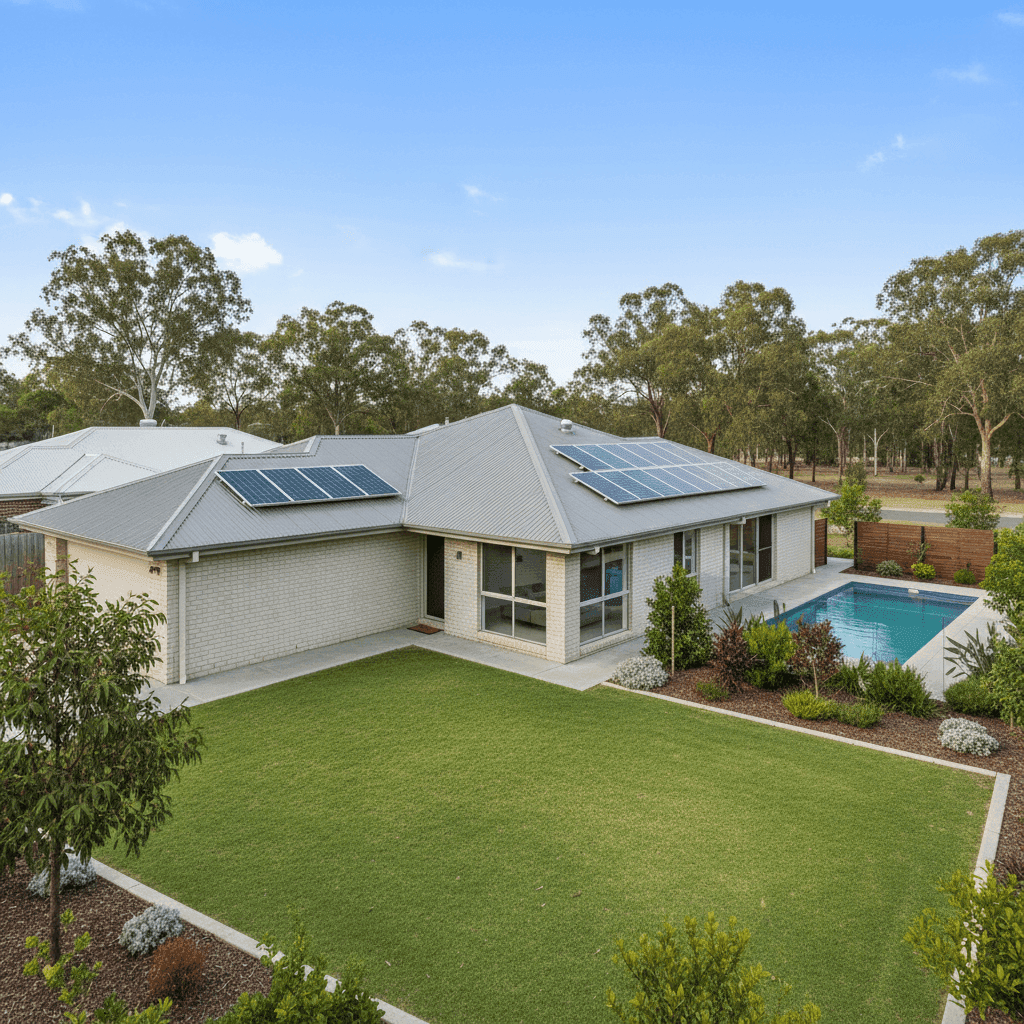
Parkhurst is a modern residential suburb on the northern fringe of Rockhampton, Queensland — and it's become one of the region's most popular growth corridors for new builds. If you own a free-standing home here, understanding what you should be paying for building insurance is essential. This article breaks down a real building-only insurance quote for a four-bedroom, two-bathroom home in Parkhurst (postcode 4702), and puts it in context against local, state, and national benchmarks.
---
Is This Quote Fair?
The quote in question comes in at $1,207 per year (or $120/month) for building-only cover on a home insured for $711,000, with a $1,000 building excess. Our rating? Cheap — well below average.
To put that in perspective:
- The suburb average for Parkhurst is $3,397/yr
- The Queensland state average is $4,547/yr
- The national average sits at $2,965/yr
At $1,207, this quote is roughly 64% cheaper than the Parkhurst suburb average and a remarkable 73% below the Queensland state average. Even compared to the national average, it's less than half the price. By any measure, this is an exceptionally competitive premium for a property of this size and specification in a cyclone-risk region of Central Queensland.
That said, "cheap" doesn't automatically mean "right for you." It's worth verifying that the sum insured accurately reflects your rebuild cost, that all relevant features are declared, and that the policy terms suit your needs.
---
How Parkhurst Compares
Drilling into the local data paints a clear picture of just how variable home insurance pricing can be — even within a single suburb. You can explore the full Parkhurst insurance statistics here.
| Benchmark | Annual Premium |
|---|---|
| This Quote | $1,207 |
| Parkhurst 25th Percentile | $2,776 |
| Parkhurst Median | $3,162 |
| Parkhurst Average | $3,397 |
| Parkhurst 75th Percentile | $3,971 |
| QLD State Average | $4,547 |
| National Average | $2,965 |
The spread between the 25th and 75th percentile in Parkhurst alone — $2,776 to $3,971 — illustrates how much premiums can vary depending on the insurer, the property's risk profile, and the level of cover chosen. This quote sits well below even the lowest local benchmark, which is a strong signal to shop around if your current premium is anywhere near the suburb average.
Queensland as a whole is one of Australia's most expensive states for home insurance, driven largely by cyclone exposure, flooding, and storm risk. You can see how QLD compares to other states here, and review national home insurance data here.
---
Property Features That Affect Your Premium
Several characteristics of this particular property influence how insurers assess and price the risk:
Newer Construction (Built 2021)
A home built in 2021 benefits from compliance with modern building codes, including Queensland's stringent cyclone-resistant construction standards. Newer homes typically attract lower premiums because they're less likely to have ageing infrastructure, outdated wiring, or structural wear that can lead to claims.
Brick Veneer Walls & Colorbond Roof
Brick veneer is considered a resilient and low-maintenance wall construction by most insurers, offering solid resistance to fire and general weather events. Paired with a steel Colorbond roof — which is durable, lightweight, and well-suited to Queensland's climate — this combination is generally viewed favourably at underwriting. Colorbond roofing in particular performs well in high-wind environments, which matters significantly in a cyclone-risk zone.
Slab Foundation
Concrete slab foundations are standard in modern Queensland builds and are generally regarded as structurally sound. They carry lower flood and subsidence risk compared to older raised timber stumped homes, which can work in your favour at premium time.
Swimming Pool
A pool adds to the insured value of the property and introduces some liability considerations. Most building policies will cover the pool structure itself, but it's worth confirming what's included — particularly around pump equipment, fencing compliance, and any liability component if you don't also hold contents or landlord cover.
Solar Panels
Solar panels are a fixed fixture and typically covered under building insurance, but it pays to check your policy's sub-limits for solar systems. With energy system costs rising, ensuring your sum insured accounts for a full panel replacement is important.
Cyclone Risk Area
Parkhurst falls within a designated cyclone risk zone. This is one of the primary drivers of elevated premiums across Queensland — and it's why the state average ($4,547/yr) sits so far above the national figure ($2,965/yr). The fact that this quote is priced so competitively despite the cyclone risk factor makes it particularly noteworthy.
No Ducted Climate Control
The absence of ducted air conditioning removes one of the more expensive fixed building elements to insure and potentially repair, which may contribute marginally to a lower premium.
---
Tips for Homeowners in Parkhurst
1. Don't Set and Forget Your Sum Insured
Construction costs in Queensland have risen significantly in recent years. A home built in 2021 for a certain amount could cost considerably more to rebuild today. Review your $711,000 sum insured annually and use a building cost calculator to ensure you're not underinsured — especially with materials and labour costs still elevated post-pandemic.
2. Cyclone Preparation Can Pay Off
Some insurers offer discounts or more favourable terms for homes that meet or exceed cyclone-resistant building standards. Since this home was built in 2021, it likely already complies — but it's worth mentioning this explicitly when obtaining quotes, as not all insurers automatically factor it in.
3. Compare Quotes Regularly
The gap between this quote ($1,207) and the suburb average ($3,397) is extraordinary — and it exists because insurers price risk very differently. Even if you're happy with your current insurer, getting a comparison quote every 12 months is one of the simplest ways to avoid overpaying. Loyalty doesn't always pay in insurance.
4. Check What Your Pool and Solar Are Worth
Both your swimming pool and solar panels should be reflected in your sum insured. If either has been upgraded or if panel costs have increased since you last reviewed your policy, it may be time to adjust your coverage to avoid a shortfall at claim time.
---
Ready to Compare Home Insurance in Parkhurst?
Whether your current premium looks more like the suburb average or you're hoping to find a deal closer to this one, the best way to know is to compare. CoverClub makes it easy to see real quotes from multiple insurers side by side — so you can make a confident, informed decision.