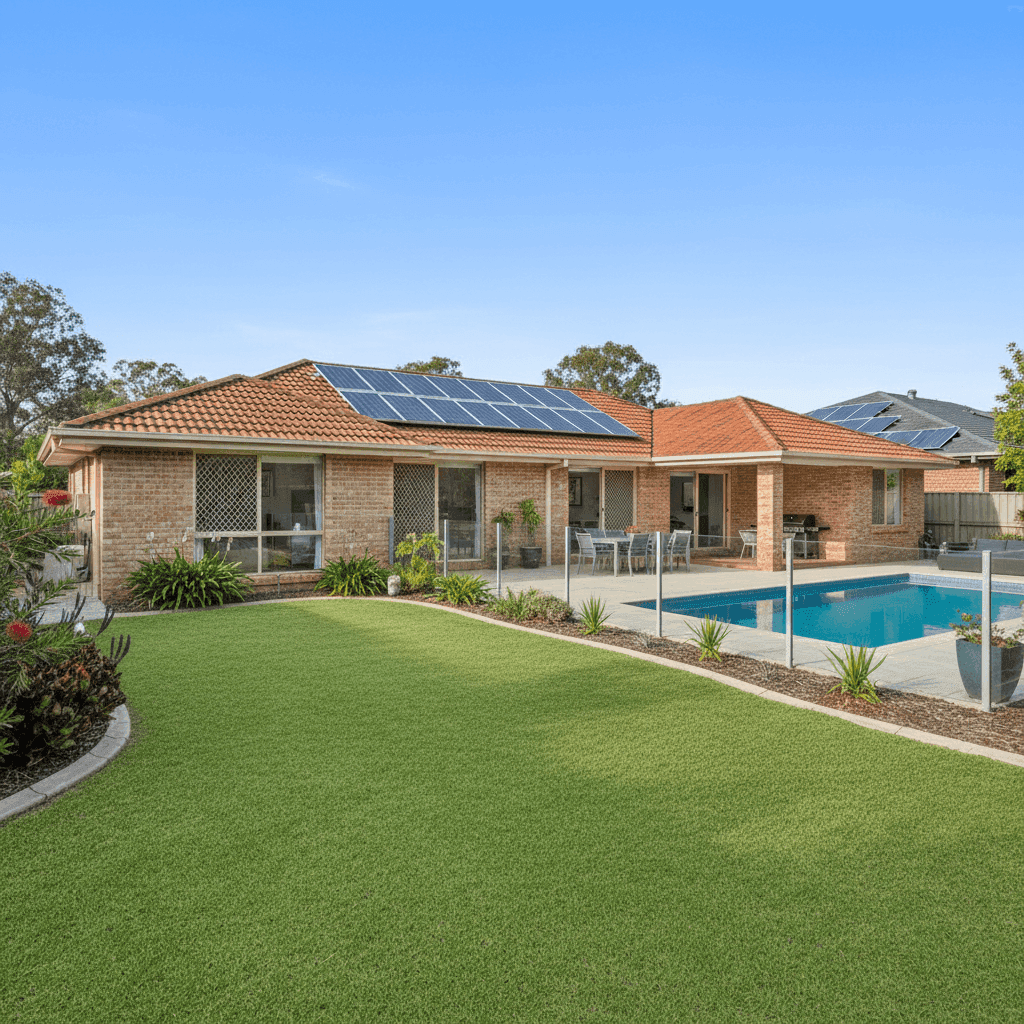
If you own a free standing home in Parkwood, QLD 4214, you've probably wondered whether you're paying a fair price for home insurance — or quietly overpaying while your neighbours snag a better deal. This article breaks down a real home and contents insurance quote for a four-bedroom brick veneer home in Parkwood, compares it against local, state, and national benchmarks, and offers practical tips to help you get the most value from your cover.
---
Is This Quote Fair?
The quote in question comes in at $2,462 per year (or $236/month) for combined home and contents cover, with a building sum insured of $673,000 and contents valued at $50,000. Both the building and contents excess are set at $5,000.
Our price rating for this quote is FAIR — Around Average, and the data backs that up. Based on 87 quotes collected for properties in Parkwood, the suburb average sits at $3,649/year and the median at $3,408/year. At $2,462, this quote lands just above the 25th percentile ($2,434/year) for the suburb — meaning roughly 75% of comparable quotes in the area come in higher.
That's genuinely good news. A "fair" rating here doesn't mean mediocre — it means the quote is competitive without being an outlier that might signal stripped-back cover or an unusually high excess. The $5,000 excess is on the higher side and will be contributing to the lower premium, so it's worth factoring that into any comparison.
---
How Parkwood Compares
To put this quote in proper context, it helps to zoom out and look at the broader picture.
| Benchmark | Premium |
|---|---|
| This Quote | $2,462/yr |
| Parkwood Suburb Average | $3,649/yr |
| Parkwood Suburb Median | $3,408/yr |
| Gold Coast LGA Average | $8,161/yr |
| QLD State Average | $9,129/yr |
| QLD State Median | $3,903/yr |
| National Average | $5,347/yr |
| National Median | $2,764/yr |
A few things stand out here. First, the QLD state average of $9,129/year is dramatically higher than both Parkwood's suburb average and this individual quote. That figure is heavily skewed by high-risk coastal and cyclone-prone areas in Far North Queensland, where premiums can be eye-watering. Parkwood, sitting comfortably in the Gold Coast hinterland, is not a designated cyclone risk area, which keeps premiums significantly more manageable.
Second, the national average of $5,347/year is also well above what Parkwood homeowners typically pay, again reflecting the outsized influence of high-risk regions on the national data. The national median of $2,764/year is a more useful comparison point — and this quote sits $302 below that figure.
For a deeper look at how Parkwood sits within the broader QLD insurance landscape, check out the Parkwood suburb stats page.
---
Property Features That Affect Your Premium
Every property has its own risk profile, and insurers price accordingly. Here's how the specific features of this home likely influence the premium:
Brick Veneer Walls & Tiled Roof Brick veneer is widely regarded by insurers as a solid, fire-resistant construction type. Combined with a tiled roof, this property sits in a favourable risk category compared to homes with timber weatherboard cladding or older corrugated iron roofing. These materials are durable, less susceptible to storm damage, and generally attract lower premiums.
Concrete Slab Foundation A slab foundation is standard for Queensland homes built in the 1990s and is generally viewed positively by insurers. It reduces the risk of subsidence and pest-related structural damage compared to older raised timber stumps.
Built in 1996 At nearly 30 years old, this home is past the "new build" stage but still well within a comfortable age range for insurers. Homes from this era typically have modern electrical wiring and plumbing, reducing the likelihood of claims related to aged infrastructure.
Swimming Pool A pool adds both value and liability to a property. Insurers factor in the cost to repair or replace pool infrastructure, and there may be liability considerations depending on your policy. It's worth confirming your policy explicitly covers pool-related damage and liability.
Solar Panels Solar panels are an increasingly common feature on Queensland homes, and most insurers now include them under building cover — but not all do automatically. It's essential to confirm your panels are listed under your sum insured and that the $673,000 building value accounts for their replacement cost.
No Ducted Climate Control The absence of ducted air conditioning simplifies the building's mechanical systems, marginally reducing the risk of claims related to HVAC failures or water damage from ducted systems.
214 sqm Building Footprint At 214 square metres, this is a mid-to-large family home. The building sum insured of $673,000 equates to roughly $3,145 per square metre — a reasonable rebuild cost estimate for a brick veneer home on the Gold Coast, though it's always worth having this figure independently validated by a quantity surveyor.
---
Tips for Homeowners in Parkwood
1. Verify Your Solar Panels Are Covered Don't assume your solar system is automatically included in your building sum insured. Contact your insurer to confirm the panels, inverter, and associated wiring are explicitly covered — and that the replacement cost is reflected in your total sum insured.
2. Review Your Sum Insured Annually Building costs in South East Queensland have risen sharply over recent years. A rebuild estimate that was accurate in 2022 may be significantly understated today. Consider engaging a quantity surveyor or using an online rebuild calculator to sense-check your $673,000 figure each year at renewal.
3. Weigh Up Your Excess Carefully The $5,000 excess on both building and contents is contributing to a lower annual premium — but it means you're self-insuring the first $5,000 of any claim. If a storm damages your roof or a burst pipe causes water damage, you'll need to cover that initial amount out of pocket. Consider whether a lower excess (and slightly higher premium) might better suit your financial position.
4. Shop Around at Renewal Even a "fair" quote can be beaten. Insurers regularly adjust their pricing models, and loyalty doesn't always pay. Using a comparison tool like CoverClub at renewal time takes only a few minutes and could save you hundreds of dollars per year.
---
Compare Your Home Insurance Today
Whether you're reviewing an existing policy or shopping for the first time, getting multiple quotes is the single most effective way to ensure you're not overpaying. At CoverClub, we make it easy to compare home and contents insurance quotes tailored to your property in Parkwood and across Australia. Enter your address to get started — it only takes a few minutes and could make a real difference to what you pay at your next renewal.