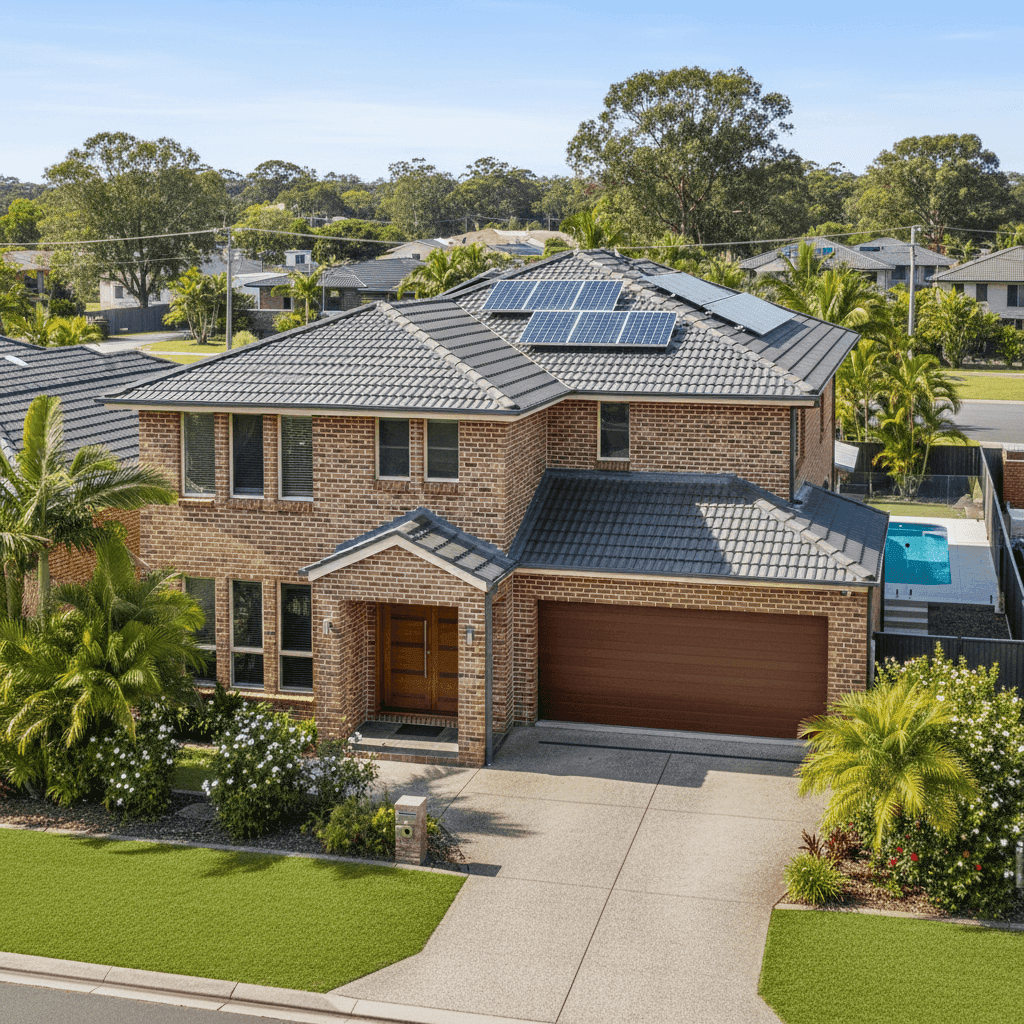
If you own a four-bedroom free standing home in Parkwood, QLD 4214, you're probably curious about whether you're paying a fair price for home and contents insurance — or leaving money on the table. This article breaks down a real insurance quote for a property in this Gold Coast suburb, benchmarks it against local, state, and national data, and offers practical tips to help you get the best value cover.
---
Is This Quote Fair?
The quote in question comes in at $1,927 per year (or $199/month) for combined home and contents cover, with a building sum insured of $590,000 and contents valued at $50,000. The building excess is $3,000 and the contents excess is $1,000.
Based on our pricing analysis, this quote is rated CHEAP — sitting well below average for the Parkwood area. That's genuinely good news for the homeowner. With the suburb average sitting at $3,649 per year and the median at $3,408, this quote represents a saving of more than $1,700 annually compared to what most Parkwood residents are paying.
To put it another way, this homeowner is paying less than the suburb's 25th percentile of $2,434 — meaning fewer than one in four quotes in the area come in this low. That's a strong result by any measure.
It's worth noting that the higher excess on the building ($3,000) does contribute to keeping the premium down. Agreeing to cover more of the cost yourself in the event of a smaller claim is a common and legitimate strategy for reducing your annual outlay — provided you're comfortable with that out-of-pocket exposure.
---
How Parkwood Compares
To fully appreciate this quote, it helps to zoom out and look at the broader pricing landscape. You can explore the full data on the Parkwood suburb insurance stats page.
| Benchmark | Annual Premium |
|---|---|
| This Quote | $1,927 |
| Parkwood Suburb Average | $3,649 |
| Parkwood Suburb Median | $3,408 |
| Parkwood 25th Percentile | $2,434 |
| Parkwood 75th Percentile | $4,360 |
| Gold Coast LGA Average | $8,161 |
| QLD State Average | $9,129 |
| QLD State Median | $3,903 |
| National Average | $5,347 |
| National Median | $2,764 |
A few things stand out here. First, the Gold Coast LGA average of $8,161 is dramatically higher than the suburb average of $3,649, which tells us that insurance costs vary enormously across the Gold Coast — likely driven by high-risk coastal and flood-prone pockets pulling the LGA figure upward. Parkwood, being an inland suburb, tends to attract more moderate premiums as a result.
Second, the Queensland state average of $9,129 is the highest of any state in Australia, largely due to the prevalence of cyclone, flood, and storm risk across much of the state. However, the QLD median of $3,903 is far more modest, indicating that a small number of very high-risk properties are skewing the average significantly. You can explore QLD-wide insurance data here.
At the national level, the average Australian home insurance premium sits at $5,347, with a median of $2,764. This quote of $1,927 sits comfortably below both figures — a solid outcome for a property of this size and specification.
---
Property Features That Affect Your Premium
Several characteristics of this particular property work in the homeowner's favour when it comes to insurance pricing.
Brick veneer construction is generally well-regarded by insurers. It offers good fire resistance and structural durability compared to weatherboard or lightweight cladding, which can translate to lower premiums. Combined with a tiled roof, the property presents as a lower-risk build from a weather and fire perspective.
The slab foundation is another positive. Slab-on-ground homes in Queensland are common and tend to be straightforward for insurers to assess. There's no underfloor cavity to worry about, which reduces certain risks associated with moisture, pests, and storm damage.
Tiled flooring throughout is also a minor premium-friendly feature — tiles are durable, non-combustible, and easy to replace compared to hardwood or carpet.
The property was built in 1993, which puts it in a comfortable middle ground. It's old enough to have settled structurally, but modern enough to have been built under relatively contemporary building codes. Very old homes (pre-1970s) can attract loading due to outdated materials or wiring.
The swimming pool adds a small amount to the contents or liability component of the policy, as pools introduce an element of public liability risk. Similarly, solar panels are increasingly common on Queensland rooftops and most insurers now include them under building cover — though it's always worth confirming this with your provider.
At 277 sqm, this is a generous home. Larger homes generally cost more to insure because rebuilding costs are higher, which is reflected in the $590,000 building sum insured. Ensuring your sum insured accurately reflects the full cost to rebuild (not the market value) is critical.
---
Tips for Homeowners in Parkwood
1. Double-check your sum insured annually Building costs in South East Queensland have risen sharply in recent years due to labour shortages and material price increases. A sum insured that was adequate two years ago may now be insufficient. Use a building cost calculator or speak to a quantity surveyor to make sure $590,000 still covers a full rebuild of your home.
2. Confirm your solar panels are covered Solar panel systems can be worth $8,000–$20,000 or more. Ask your insurer explicitly whether panels are included under your building sum insured, and whether damage from hail or storm is covered. Not all policies treat solar the same way.
3. Review your contents figure $50,000 in contents cover is on the lower end for a four-bedroom home. Do a room-by-room audit of your furniture, appliances, clothing, electronics, and valuables. Many homeowners are underinsured on contents without realising it.
4. Consider whether your excess level suits your situation A $3,000 building excess keeps premiums low, but means you'd pay the first $3,000 of any claim yourself. If a significant weather event caused moderate damage — say, $4,000 in repairs — you'd only receive $1,000 from your insurer. Make sure you have accessible savings to cover this gap if needed.
---
Compare Your Own Quote at CoverClub
Whether you're a Parkwood local or researching insurance for a property elsewhere in Queensland, CoverClub makes it easy to see how your premium stacks up. Our data covers thousands of quotes across Australia, so you can instantly benchmark what you're paying and find out if you're getting a fair deal. Get a quote and compare today — it only takes a few minutes.