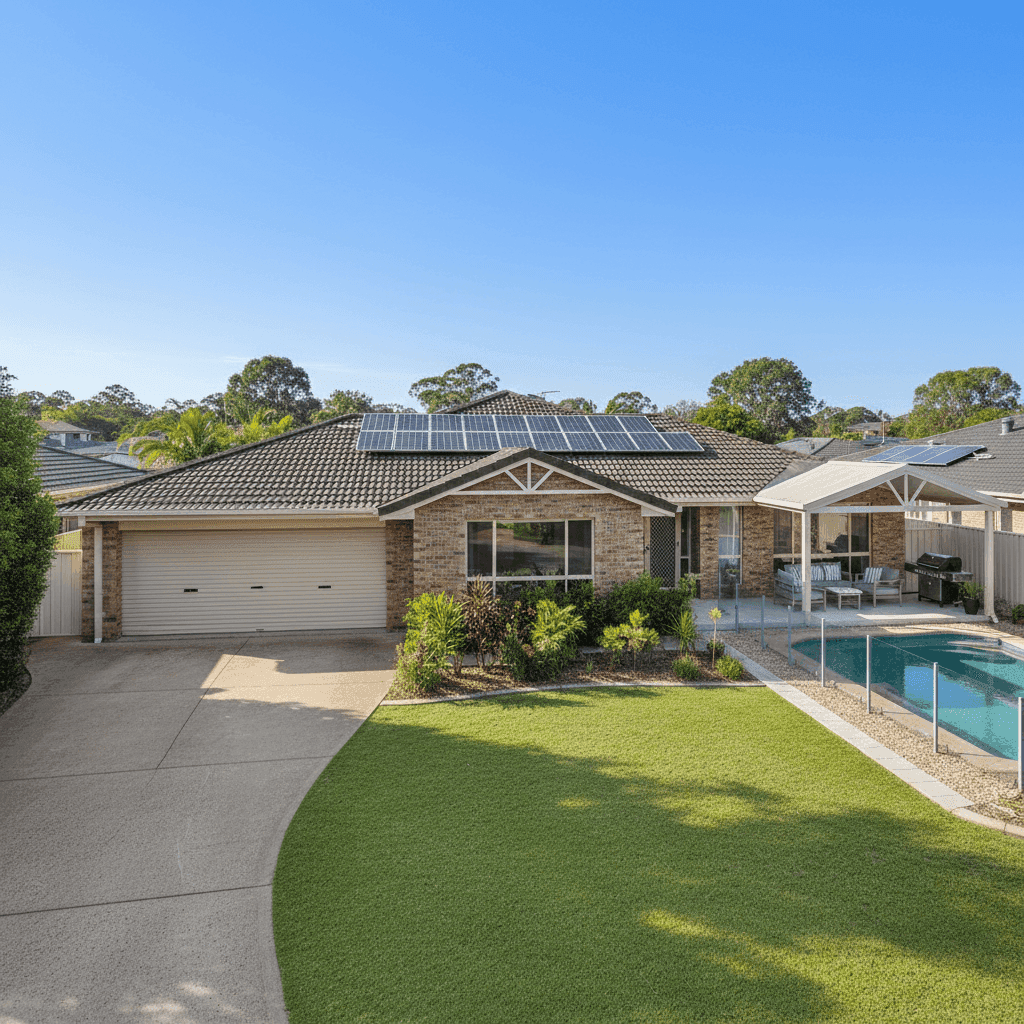
If you own a free standing home in Parkwood, QLD 4214, you're probably curious about whether you're paying a fair price for your building insurance — or leaving money on the table. This article breaks down a real building-only insurance quote for a four-bedroom property in Parkwood, benchmarks it against local, state, and national data, and offers practical tips to help you make smarter insurance decisions.
---
Is This Quote Fair?
The quote in question sits at $3,625 per year (or approximately $347 per month) for building-only cover, with a $1,000 building excess and a sum insured of $1,254,000.
Our price rating for this quote is FAIR — Around Average, and the numbers back that up. At $3,625 annually, this premium lands almost exactly on the Parkwood suburb average of $3,649/yr and comfortably within the middle of the local pricing range. The suburb's 25th percentile sits at $2,434/yr, while the 75th percentile reaches $4,360/yr — meaning this quote falls squarely in the second quartile of what Parkwood homeowners are paying.
In plain terms: you're not getting a bargain, but you're also not being overcharged. For a property of this size, age, and specification — including premium fittings, a pool, solar panels, and ducted climate control — landing near the suburb average is a reasonable outcome.
---
How Parkwood Compares
To put this quote in proper context, it helps to zoom out and look at the broader insurance landscape. Here's how Parkwood stacks up:
| Benchmark | Average Premium | Median Premium |
|---|---|---|
| Parkwood (QLD 4214) | $3,649/yr | $3,408/yr |
| Queensland (State) | $9,129/yr | $3,903/yr |
| Australia (National) | $5,347/yr | $2,764/yr |
A few things stand out here. The Queensland state average of $9,129/yr is dramatically higher than both the Parkwood average and the national figure — a reflection of the outsized impact that cyclone-prone and flood-affected regions across QLD have on the state's overall pricing. Areas like Far North Queensland, Townsville, and parts of the Sunshine Coast can attract premiums many times higher than what Gold Coast suburbanites pay, pulling the state average well above the median.
The Gold Coast LGA average of $8,161/yr tells a similar story — heavily skewed by higher-risk pockets across the region. Parkwood's suburb average of $3,649/yr sits well below this LGA figure, suggesting it's one of the more favourably priced areas within the Gold Coast.
Nationally, the median premium of $2,764/yr is actually lower than Parkwood's median, which reflects how diverse insurance pricing is across Australia — from low-risk metro suburbs to high-exposure coastal and regional areas.
For a deeper dive into local pricing trends, visit the Parkwood suburb insurance stats page, explore Queensland-wide insurance data, or check out national home insurance benchmarks.
---
Property Features That Affect Your Premium
Every home is different, and insurers price risk based on a wide range of property characteristics. Here's how the specific features of this Parkwood property influence the premium:
Construction & Age
Built in 1995, this home is about 30 years old — old enough to have some wear on systems like plumbing and electrical, but not so aged as to attract the significant loading that pre-1980s homes often do. Brick veneer walls are generally viewed favourably by insurers; they're durable, fire-resistant, and withstand weather well. The tiled roof is similarly well-regarded for longevity, though tiles can crack under impact and may be more costly to repair than Colorbond alternatives.
Foundation & Flooring
A concrete slab foundation is standard for Queensland homes of this era and is typically considered low-risk from a structural standpoint. Tiled flooring throughout is practical in Queensland's climate and doesn't carry the same water damage risk as carpet or timber floors.
Size & Sum Insured
At 214 sqm with a sum insured of $1,254,000, this is a substantial property. The sum insured reflects the cost to fully rebuild — not the market value — and for a home of this size with top-of-the-range fittings, that figure is plausible. Underinsurance is a common and costly mistake, so it's reassuring to see a sum insured that appears to reflect realistic rebuild costs.
Premium Features
Top-of-the-range fittings — think stone benchtops, high-end appliances, designer fixtures — increase both the sum insured and the premium, since they're more expensive to repair or replace. Similarly, a swimming pool, solar panel system, and ducted climate control all add to the insurable value of the property and can influence pricing. Solar panels in particular may require specific cover for storm or hail damage, so it's worth confirming this with your insurer.
No Cyclone Risk
Parkwood sits outside designated cyclone risk zones, which is a meaningful factor. Properties in cyclone-affected areas across Queensland can face dramatically higher premiums — sometimes two to three times what comparable homes pay in lower-risk suburbs. This property benefits from that favourable classification.
---
Tips for Homeowners in Parkwood
Whether you're reviewing an existing policy or shopping for a new one, here are four practical steps worth taking:
- Check your sum insured annually. Construction costs have risen significantly in recent years. A sum insured that was accurate in 2020 may now be well short of what it would actually cost to rebuild your home. Use a building cost calculator or speak to a quantity surveyor to validate your figure each year.
- Ask about solar panel and pool cover. Not all standard building policies automatically cover solar panel systems or pool equipment as standard inclusions. Read the Product Disclosure Statement (PDS) carefully and ask your insurer directly — especially given that solar and pool repairs can run into thousands of dollars.
- Compare quotes before renewal. Insurers often reserve their best rates for new customers. If you've been with the same provider for several years without shopping around, there's a reasonable chance you're paying a loyalty premium. Comparing quotes takes minutes and could save you hundreds.
- Consider your excess carefully. A $1,000 excess is fairly standard, but increasing your excess can lower your annual premium meaningfully. If you have a solid emergency fund and wouldn't claim for smaller incidents, a higher excess might make financial sense.
---
Compare Your Home Insurance at CoverClub
Whether this quote matches your own situation or you're simply exploring your options, CoverClub makes it easy to see what you should be paying. We analyse real insurance quotes across Australia to help homeowners make informed decisions — not just accept the first number they're given. Get a home insurance quote today and find out where your premium really sits.