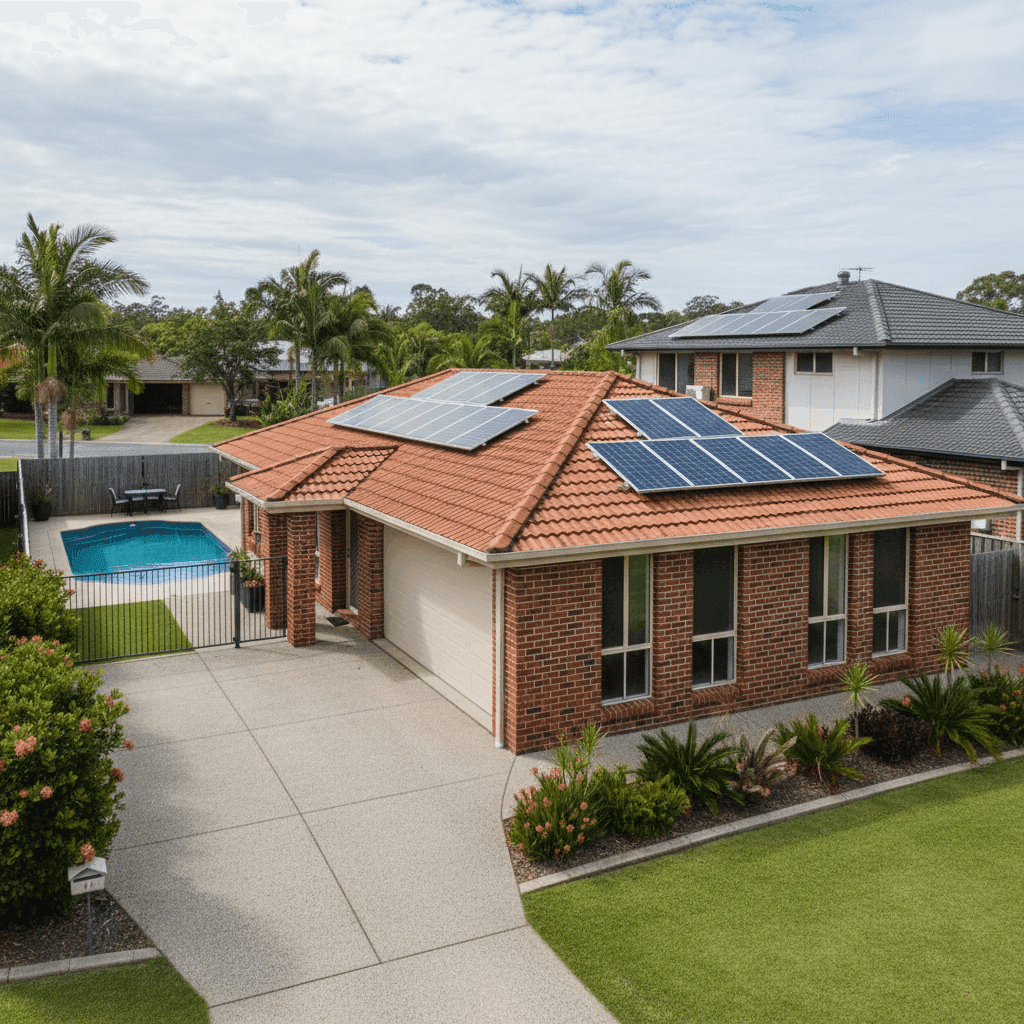
Parkwood is a well-established residential suburb on the Gold Coast, and like much of South East Queensland, it sits in a market where home insurance premiums can vary enormously from one property to the next. This analysis looks at a recent home and contents insurance quote for a four-bedroom, three-bathroom free standing home in Parkwood (QLD 4214) — breaking down whether the price stacks up, how it compares to local and national benchmarks, and what homeowners in the area can do to keep their premiums in check.
---
Is This Quote Fair?
The quoted annual premium of $2,849 (or roughly $280 per month) covers both building and contents, with a building sum insured of $1,055,000 and contents valued at $147,000. The building excess is set at $3,000, and the contents excess at $1,000.
Our price rating for this quote is FAIR — Around Average, which is a reasonable result for a property of this size and specification in Parkwood. It's not the cheapest quote on the market, but it's comfortably below both the suburb and state averages, which is a positive sign. Given the above-average fittings quality and the presence of a pool and solar panels — both of which can nudge premiums upward — landing near the middle of the range is a solid outcome.
That said, "fair" doesn't mean you shouldn't shop around. As the comparison data below shows, there's a wide spread of premiums in this suburb, and a better deal may well be available.
---
How Parkwood Compares
Understanding where a quote sits relative to the broader market is one of the most useful things a homeowner can do. Here's how this premium measures up:
| Benchmark | Premium |
|---|---|
| This quote | $2,849/yr |
| Parkwood suburb average | $3,769/yr |
| Parkwood suburb median | $3,215/yr |
| Parkwood 25th percentile | $2,399/yr |
| Parkwood 75th percentile | $5,543/yr |
| QLD state average | $4,547/yr |
| QLD state median | $3,931/yr |
| National average | $2,965/yr |
| National median | $2,716/yr |
| Gold Coast LGA average | $5,494/yr |
Based on 54 quotes collected for Parkwood, this premium sits below the suburb average by around $920 per year and well below the Gold Coast LGA average of $5,494. That's a meaningful saving.
Compared to Queensland-wide data, the quote is tracking about $1,700 below the state average — reflecting the fact that QLD premiums are broadly elevated due to weather risk, particularly in cyclone-prone and flood-affected areas. Parkwood itself is not classified as a cyclone risk area, which works in the homeowner's favour.
Looking at national benchmarks, the quote is very close to the national average of $2,965 and slightly above the national median of $2,716. This tells us that while Parkwood premiums are higher than typical Australian suburbs (as expected for Queensland), this particular quote is performing well relative to peers.
The wide gap between the 25th percentile ($2,399) and the 75th percentile ($5,543) in Parkwood is worth noting — it signals that insurers price this suburb quite differently depending on property characteristics and risk assessments. There's real value in comparing multiple quotes.
---
Property Features That Affect Your Premium
Several characteristics of this property directly influence what insurers are willing to charge:
Brick Veneer Walls & Tiled Roof Brick veneer construction with a tiled roof is generally viewed favourably by insurers. These materials offer good fire resistance and durability, and are common in Queensland homes built during the 1980s. Compared to weatherboard or lightweight cladding, brick veneer typically attracts lower premiums.
Slab Foundation A concrete slab foundation is a stable and well-regarded base for insurers. It reduces the risk of subsidence-related claims and is standard for homes of this era and region.
Construction Year: 1988 At around 36 years old, this home is in a middle age bracket. It's old enough that some systems (roofing, plumbing, electrical) may be approaching the end of their service life, but not so old as to be considered high-risk. Insurers may factor in the age of the build when assessing structural risk.
Swimming Pool A pool adds liability exposure and increases the replacement cost of the property, both of which can push premiums higher. It's important to ensure the pool is included in the building sum insured and that any pool fencing meets Queensland's strict safety requirements.
Solar Panels Solar panels are increasingly common on Queensland homes, but they do add to the rebuilding cost and can be damaged in storms or hail events. Ensuring they're adequately covered under the building sum insured is essential — and this quote's $1,055,000 building sum appears to account for the property's size and features.
Above-Average Fittings Quality Higher-quality fixtures, fittings and finishes cost more to repair or replace, which is reflected in the building sum insured and, in turn, the premium. This is appropriate — underinsuring a well-appointed home is a common and costly mistake.
No Ducted Climate Control The absence of ducted air conditioning marginally reduces the complexity and replacement cost of the home's mechanical systems, which can have a modest downward effect on premiums.
---
Tips for Homeowners in Parkwood
1. Review your building sum insured regularly Construction costs in South East Queensland have risen significantly in recent years. A sum insured of $1,055,000 for a 244 sqm home works out to roughly $4,320 per square metre — which is in a reasonable range for above-average fittings, but worth validating with a quantity surveyor or online calculator to avoid underinsurance.
2. Consider your excess settings carefully This quote carries a $3,000 building excess, which is on the higher side. While a higher excess generally reduces your annual premium, it also means a larger out-of-pocket cost at claim time. Think about what you could comfortably afford to pay in the event of storm damage or a burst pipe before locking in your excess level.
3. Make sure your pool and solar panels are explicitly covered Not all policies automatically include pools, pool equipment, or solar panel systems in their standard building cover. Read the Product Disclosure Statement (PDS) carefully and confirm these items are included — and at what value.
4. Shop the market at renewal The 25th-to-75th percentile spread in Parkwood ($2,399 to $5,543) shows just how much prices vary. Your current insurer's renewal quote isn't necessarily the best available. Comparing quotes annually is one of the simplest ways to avoid overpaying — especially as your property's risk profile and the competitive landscape both change over time.
---
Compare Your Home Insurance with CoverClub
Whether you're reviewing an existing policy or exploring cover for the first time, it pays to see the full picture. CoverClub makes it easy to benchmark your premium against real data from your suburb and state, so you always know where you stand. Get a home insurance quote today and find out if you could be paying less for the same level of protection.