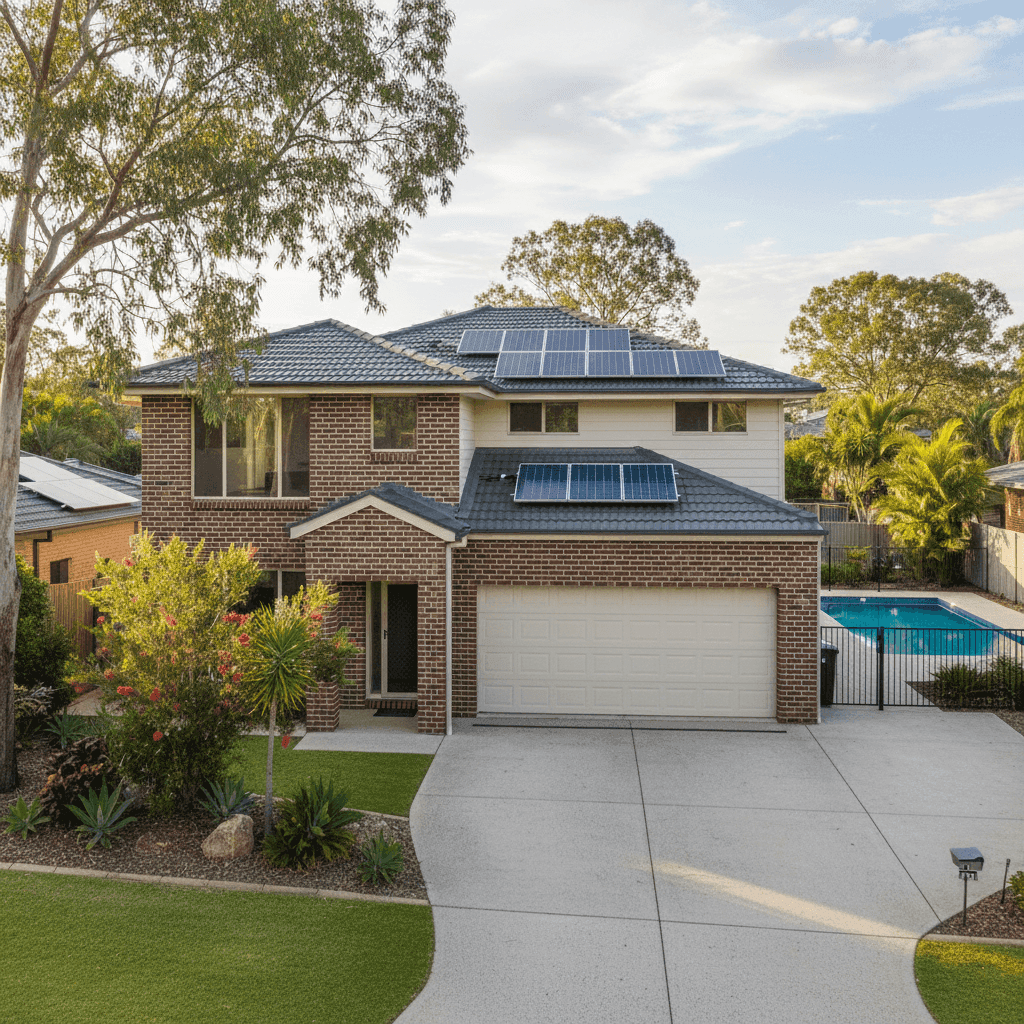
If you own a free standing home in Parkwood, QLD 4214, you're living in one of the Gold Coast's well-established residential pockets — and like many Queensland homeowners, you're probably wondering whether you're paying a fair price for your home insurance. This article breaks down a real home and contents insurance quote for a four-bedroom property in Parkwood, comparing it against local, state, and national benchmarks so you can make a truly informed decision.
---
Is This Quote Fair?
The quote in question comes in at $1,794 per year (or $175 per month) for combined home and contents cover, with a building sum insured of $740,000 and contents valued at $50,000. The building excess sits at $3,000 and the contents excess at $1,000.
Our price rating for this quote? Cheap — well below average.
To put that in perspective: the average home insurance premium across Parkwood suburbs is $3,769 per year, and the median sits at $3,215. This quote comes in at less than half the suburb average — a significant saving that's well worth understanding. Even against the suburb's 25th percentile (the cheapest quarter of quotes) of $2,399 per year, this premium is still notably lower.
So yes — by any reasonable measure, this is an exceptionally competitive quote for a property of this size and specification in Parkwood.
---
How Parkwood Compares
To give you a fuller picture, here's how Parkwood stacks up against broader benchmarks:
| Benchmark | Average Premium | Median Premium |
|---|---|---|
| Parkwood (QLD 4214) | $3,769/yr | $3,215/yr |
| Gold Coast LGA | $5,494/yr | — |
| Queensland | $4,547/yr | $3,931/yr |
| National | $2,965/yr | $2,716/yr |
A few things stand out here. First, Parkwood's average premium is notably lower than both the Gold Coast LGA average ($5,494) and the Queensland state average ($4,547). This suggests Parkwood benefits from relatively favourable risk characteristics compared to many other Gold Coast locations — likely due to its inland position away from coastal storm surge zones and its classification outside cyclone-designated risk areas.
Second, even the national average ($2,965) is considerably higher than the quote being analysed here. That's a meaningful data point: this property is being insured for less than the typical Australian home, despite being located in Queensland — a state that generally attracts higher premiums due to weather-related risks.
You can explore the full data for Parkwood's insurance statistics, compare against Queensland-wide trends, or view the national insurance benchmarks to see where your own property sits.
---
Property Features That Affect Your Premium
Several characteristics of this particular property work in the homeowner's favour when it comes to insurance pricing.
Brick veneer construction is generally viewed positively by insurers. Brick veneer walls offer solid fire resistance and structural durability, which typically translates to lower risk assessments compared to lightweight cladding or weatherboard homes. Combined with a tiled roof, this home presents a robust construction profile — tiles are long-lasting and perform well in high-wind events, though they can be more costly to repair or replace than corrugated metal roofing.
The slab foundation is another tick in the right column. Slab-on-ground construction is common in Queensland and is generally considered stable, with less exposure to subfloor moisture issues or pest ingress compared to raised stumped homes.
The 2000 construction year places this property in a relatively modern era of Australian building standards, meaning it was built to codes that account for contemporary safety and structural requirements. This is another factor that can positively influence premium calculations.
On the features side, the property includes a swimming pool and solar panels — both of which can add modest complexity to an insurance policy. Pools introduce liability considerations (particularly relevant for families with young children or rental properties), and solar panels increase the replacement value of the home's fixtures. However, neither feature appears to have pushed this particular premium into expensive territory.
The absence of ducted climate control and the property's location outside a cyclone risk zone are also meaningful. Cyclone-rated areas in Queensland — particularly north of Bundaberg — attract significantly higher premiums, so Parkwood's southerly Gold Coast position is a genuine financial advantage for homeowners here.
With standard fittings quality and tiled flooring throughout, the rebuild cost estimate of $740,000 for a 214 sqm home appears reasonable and well-calibrated to current construction costs in South East Queensland.
---
Tips for Homeowners in Parkwood
Whether you're reviewing your current policy or shopping around for the first time, here are four practical steps to make sure you're getting the best deal.
1. Don't over-insure — or under-insure — your building. Your sum insured should reflect the cost to rebuild your home from scratch, not its market value. At $740,000 for a 214 sqm brick veneer home in South East Queensland, this quote appears sensibly calibrated. Use a building cost calculator annually to keep your sum insured current, especially as construction costs continue to rise.
2. Review your contents value carefully. $50,000 in contents cover is a starting point, but many households underestimate the replacement cost of their belongings. Do a room-by-room audit — electronics, furniture, appliances, clothing, and jewellery add up quickly. Underinsuring your contents can leave you significantly out of pocket after a claim.
3. Consider your excess strategically. This quote carries a $3,000 building excess and a $1,000 contents excess. Higher excesses generally reduce your premium, but make sure the excess is an amount you could comfortably pay in the event of a claim. If the excess feels uncomfortably high, it may be worth comparing quotes with a lower excess to find the right balance.
4. Factor in your pool and solar panels. Confirm with your insurer that your pool and solar panel system are explicitly covered under your policy. Some policies include these by default; others require endorsements or have specific sublimits. It's worth a five-minute phone call to verify, particularly for solar systems that may have significant replacement value.
---
Compare Your Own Quote Today
Whether the quote above matches your situation or not, the most powerful thing you can do as a homeowner is compare. Insurance premiums vary enormously between providers — even for identical properties — and the difference can run into thousands of dollars per year.
Get a home insurance quote at CoverClub and see how your property stacks up against real data from your suburb, your state, and across Australia. It takes just a few minutes and could save you significantly.