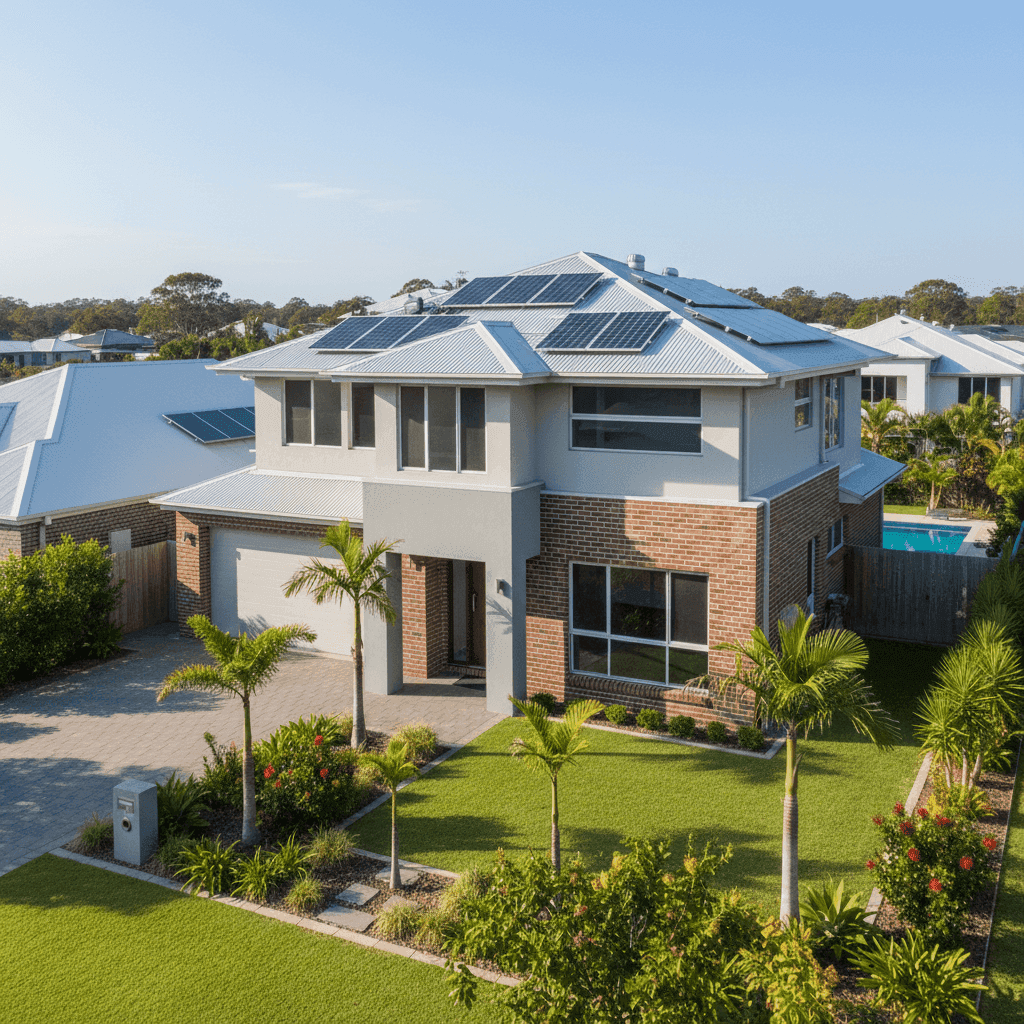
Parkwood is a well-established suburb on the Gold Coast, known for its family-friendly streets, proximity to Harbour Town, and easy access to the M1. For owners of larger free standing homes in the area, understanding what drives your home insurance premium — and whether you're paying a fair price — is an important part of managing household finances. This article breaks down a recent home and contents insurance quote for a five-bedroom property in Parkwood (QLD 4214) and puts it in context against local, state, and national benchmarks.
---
Is This Quote Fair?
The quote in question comes in at $3,963 per year (or $388/month) for combined home and contents cover, with a building sum insured of $1,078,000 and contents valued at $103,000. Both the building and contents excess are set at $1,000.
Based on pricing data collected by CoverClub, this quote has been rated FAIR — around average. That's a reasonable outcome for a property of this size and specification. At 334 sqm with five bedrooms, four bathrooms, a pool, solar panels, and ducted climate control, this is a substantial home with several features that insurers factor into their risk and replacement cost calculations.
"Fair" doesn't mean you can't do better — it simply means the quote is broadly in line with what similar properties in the area are attracting. It's worth shopping around, but you're not being significantly overcharged.
---
How Parkwood Compares
To understand whether $3,963/yr represents good value, it helps to look at the broader pricing landscape.
Parkwood (QLD 4214)
Based on 54 quotes collected for Parkwood:
| Metric | Premium |
|---|---|
| 25th Percentile | $2,399/yr |
| Median | $3,215/yr |
| This Quote | $3,963/yr |
| Average | $3,769/yr |
| 75th Percentile | $5,543/yr |
This quote sits above the suburb median ($3,215) and the suburb average ($3,769), but comfortably below the 75th percentile ($5,543). Given the size of the home and its features, landing above the median is entirely expected — smaller or less-equipped properties naturally attract lower premiums.
Queensland vs National
Zooming out, the picture becomes even more interesting. According to Queensland home insurance data, the state average sits at $4,547/yr with a median of $3,931/yr. This quote comes in below both the QLD average and median — a positive sign.
Nationally, the average home insurance premium across Australia is $2,965/yr (median: $2,716/yr). Queensland consistently tracks higher than the national average, largely due to the state's elevated exposure to severe weather events including storms, flooding, and hail.
One figure that stands out is the Gold Coast LGA average of $8,161/yr — significantly higher than both this quote and the Parkwood suburb average. This likely reflects the diversity of property types across the Gold Coast, including high-value waterfront and beachside homes that pull the LGA average upward. Parkwood, sitting further inland, benefits from a more moderate risk profile.
---
Property Features That Affect Your Premium
Several characteristics of this property have a direct bearing on what insurers charge. Here's how they play out:
Size and bedrooms: At 334 sqm with five bedrooms and four bathrooms, this is a large home. A higher building sum insured ($1,078,000) reflects the genuine cost to rebuild a property of this scale, and insurers price accordingly.
Brick veneer construction: Brick veneer external walls are generally viewed favourably by insurers. They offer solid fire resistance and structural durability compared to lightweight cladding alternatives, which can help moderate premiums.
Colorbond steel roof: Steel roofing is durable and low-maintenance, and performs well in storm conditions. It's a common choice in Queensland and is generally well-regarded by insurers.
Slab foundation and tiled flooring: A concrete slab foundation is standard for Queensland homes built post-2000 and presents minimal additional risk. Tiled flooring throughout is practical and durable, with no significant impact on premium.
Swimming pool: A pool adds to the replacement value of the property and can introduce liability considerations, both of which contribute to a higher premium. Pool fencing compliance is also something insurers may enquire about.
Solar panels: Solar systems add to the insured value of the home. Depending on the policy, panels may be covered under building or contents — it's worth confirming exactly how your policy treats them and whether the sum insured adequately accounts for their replacement cost.
Ducted climate control: A full ducted system represents a significant capital investment. Like solar, it contributes to the overall replacement cost of the building and is reflected in the sum insured.
No cyclone risk: Parkwood falls outside designated cyclone risk zones, which is a meaningful factor in keeping premiums lower than coastal or far-north Queensland properties. Cyclone cover can add substantially to premiums in affected areas.
Construction year (2015): A home built in 2015 benefits from modern building codes, which generally means better structural integrity and compliance with contemporary safety standards — factors that can work in your favour at renewal time.
---
Tips for Homeowners in Parkwood
1. Review your sum insured regularly With a building sum insured of $1,078,000, it's important to ensure this figure keeps pace with rising construction costs. Building costs in South East Queensland have increased significantly in recent years. Use a building cost estimator annually and adjust your coverage before renewal — being underinsured can leave you seriously out of pocket after a major claim.
2. Confirm how solar panels are covered Not all policies treat solar panels the same way. Some cover them under building insurance, others under contents, and some require a separate endorsement. Check your Product Disclosure Statement (PDS) carefully and confirm the replacement value of your system is adequately captured in your sum insured.
3. Shop around at renewal Even with a "fair" rating, there can be meaningful price differences between insurers for equivalent cover. Insurers regularly reprice their books, and loyalty doesn't always pay. Use a comparison platform like CoverClub to benchmark your renewal quote before accepting it.
4. Check your pool fencing and safety compliance Queensland has strict pool safety regulations, and non-compliance can affect both your legal standing and your insurance coverage in the event of an incident. Ensure your pool fence meets current standards and keep documentation of any inspections — this protects you both legally and under your policy.
---
Compare Your Home Insurance Quote
Whether you're renewing your existing policy or shopping for the first time, it pays to know where your premium sits relative to the market. CoverClub makes it easy to benchmark your quote against real data from properties in your suburb and across Queensland.
Get a home insurance quote today at CoverClub and see how your premium stacks up — in just a few minutes.