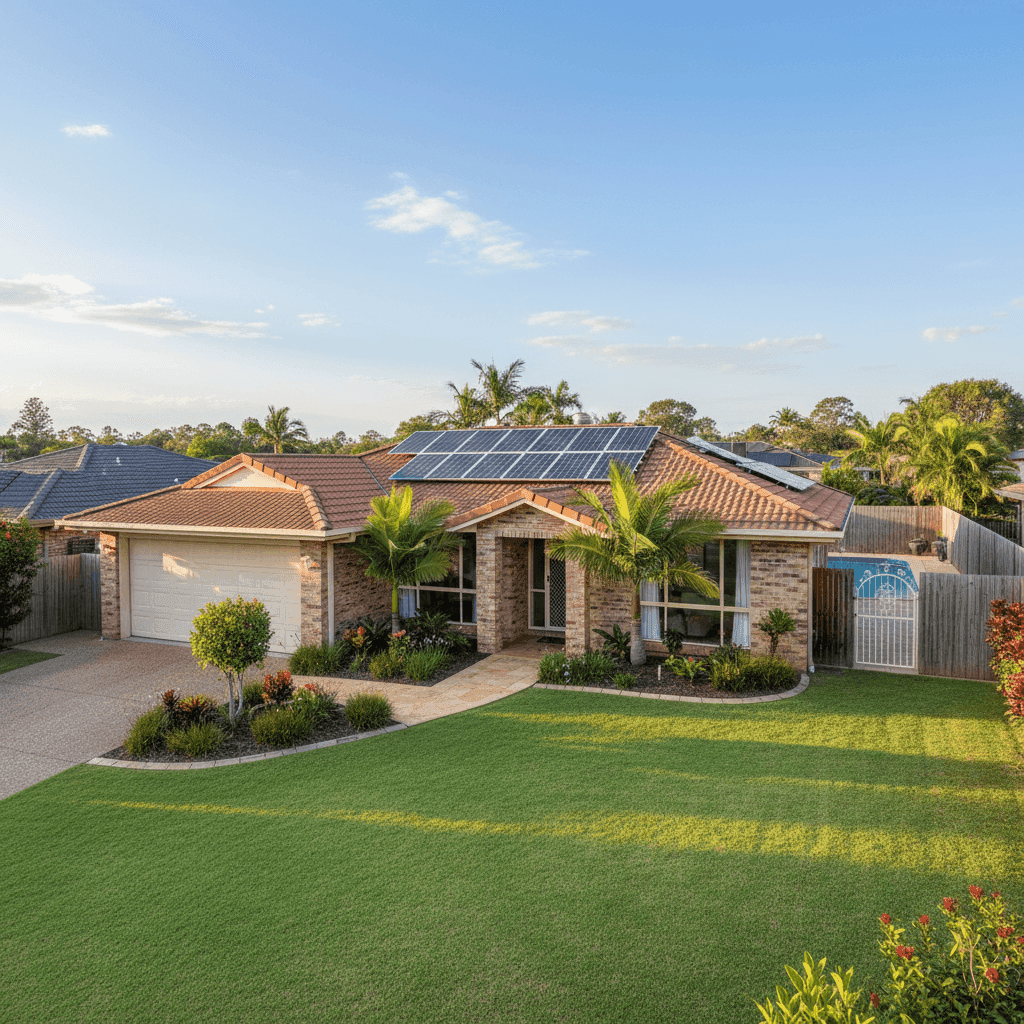
Parkwood is a well-established suburb on the Gold Coast, known for its family-friendly streets, proximity to Griffith University, and easy access to the M1. If you own a free standing home here, you're in one of Queensland's more sought-after residential pockets — and that means your home insurance premium is worth scrutinising carefully. This article breaks down a real home and contents insurance quote for a four-bedroom, two-bathroom brick veneer home in Parkwood (postcode 4214), and puts it in context against local, state, and national benchmarks.
---
Is This Quote Fair?
The annual premium in question comes in at $2,470 per year (or $237 per month), covering both building and contents for a property with a building sum insured of $677,000 and contents valued at $50,000. Both the building and contents excess sit at $1,000.
Our price rating for this quote is FAIR — Around Average, and the data backs that up. Based on 87 quotes collected for Parkwood (4214), the suburb's average annual premium is $3,649 and the median sits at $3,408. This quote at $2,470 lands just above the 25th percentile of $2,434 — meaning it's meaningfully cheaper than what most Parkwood homeowners are paying, while still being within a reasonable range of the lower end of the market.
In plain terms: this isn't a bargain-basement price, but it's also well below what many comparable households in the area are forking out. For a property of this size and specification, it represents solid value without raising any red flags about underinsurance or suspiciously low cover.
---
How Parkwood Compares
To really appreciate where this quote sits, it helps to zoom out and look at the broader picture.
| Benchmark | Average Premium | Median Premium |
|---|---|---|
| Parkwood (4214) | $3,649/yr | $3,408/yr |
| Gold Coast LGA | $8,161/yr | — |
| Queensland | $9,129/yr | $3,903/yr |
| National | $5,347/yr | $2,764/yr |
A few things stand out immediately. Queensland's average premium of $9,129 is extraordinarily high compared to both the national average and Parkwood's own suburb average. This is largely driven by cyclone-prone and flood-affected regions in Far North Queensland and other high-risk coastal areas, which pull the state average up dramatically. The Queensland state insurance data tells a complex story — averages alone can be misleading when the spread is this wide.
Similarly, the Gold Coast LGA average of $8,161 is eye-catching, but again reflects the diversity of risk profiles across the region, from hinterland properties to beachfront homes with significant flood or storm surge exposure.
When you look at the median figures — which are less distorted by extreme outliers — the picture normalises considerably. Queensland's median of $3,903 and the national median of $2,764 bracket Parkwood's median of $3,408 quite neatly. This quote at $2,470 sits below all three medians, which is a positive sign for the policyholder.
---
Property Features That Affect Your Premium
Several characteristics of this property directly influence how insurers price the risk.
Brick Veneer Construction & Tiled Roof Brick veneer walls and a tiled roof are generally viewed favourably by insurers. Brick offers strong resistance to fire and wind-driven debris, while tiles are durable and perform well in Queensland's storm season. This combination typically attracts lower premiums compared to timber-framed or clad homes with metal or Colorbond roofing in some risk models.
Slab Foundation A concrete slab foundation is standard for homes of this era in South East Queensland and is considered a stable, low-risk construction method. It reduces concerns about subfloor moisture damage or pest ingress that can affect older raised foundations.
Built in 1996 At roughly 28–29 years old, this home sits in a comfortable middle ground. It's old enough that some building components may be approaching end-of-life (roofing, plumbing, electrical), but it predates many of the construction quality concerns associated with the early 2000s building boom. Insurers generally treat homes of this vintage as moderate risk.
Swimming Pool A pool adds to the insured value of the property and can introduce liability considerations. It's important to ensure the pool and its associated equipment (pumps, fencing, filtration) are adequately reflected in your building sum insured.
Solar Panels Solar panels are increasingly common on Queensland rooftops, but they do add complexity to insurance. Panels need to be included in your building sum insured, and it's worth confirming with your insurer whether storm damage, hail impact, or inverter failure are covered under your policy.
Ducted Climate Control Ducted air conditioning is a significant fixed asset. As with solar, ensure it's captured in your building sum insured. Replacement costs for ducted systems have risen sharply in recent years, and being underinsured here could leave you out of pocket after a claim.
No Cyclone Risk Parkwood is not classified as a cyclone risk area, which is a meaningful factor in keeping premiums lower than many other Queensland postcodes. Homeowners in Cairns, Townsville, or the Whitsundays face substantial cyclone loading on their premiums — Parkwood residents benefit from sitting outside that zone.
---
Tips for Homeowners in Parkwood
1. Review Your Building Sum Insured Annually Construction costs in South East Queensland have risen significantly over the past few years. A sum insured of $677,000 for a 214 sqm home works out to roughly $3,163 per square metre — which is within a reasonable range, but worth rechecking against current builder's rates each year. Underinsurance is one of the most common and costly mistakes homeowners make.
2. Confirm Solar Panels and Pool Equipment Are Covered Don't assume these are automatically included. Ask your insurer explicitly whether your solar system (panels, inverter, mounting hardware) and pool equipment are covered, and at what value. If they're not listed, you may need to add them or increase your sum insured.
3. Compare Quotes Before Renewal The spread of premiums in Parkwood is wide — from $2,434 at the 25th percentile to $4,360 at the 75th. That's nearly a $2,000 annual difference for broadly similar properties. Shopping around at renewal time is one of the simplest ways to avoid drifting into the upper end of that range. Compare home insurance quotes at CoverClub to see what's available for your address.
4. Check Your Contents Estimate $50,000 in contents cover is on the modest side for a four-bedroom home. Consider doing a room-by-room audit of your furniture, appliances, electronics, clothing, and valuables. Many households underestimate their contents value, which can result in a shortfall when making a claim after theft, fire, or storm damage.
---
Ready to Compare?
Whether you're reviewing an existing policy or shopping for the first time, CoverClub makes it easy to see how your premium stacks up. Explore suburb-level insurance data for Parkwood (4214) or get a personalised home insurance quote in minutes. With premiums varying so widely across the Gold Coast, a quick comparison could make a real difference to what you pay.