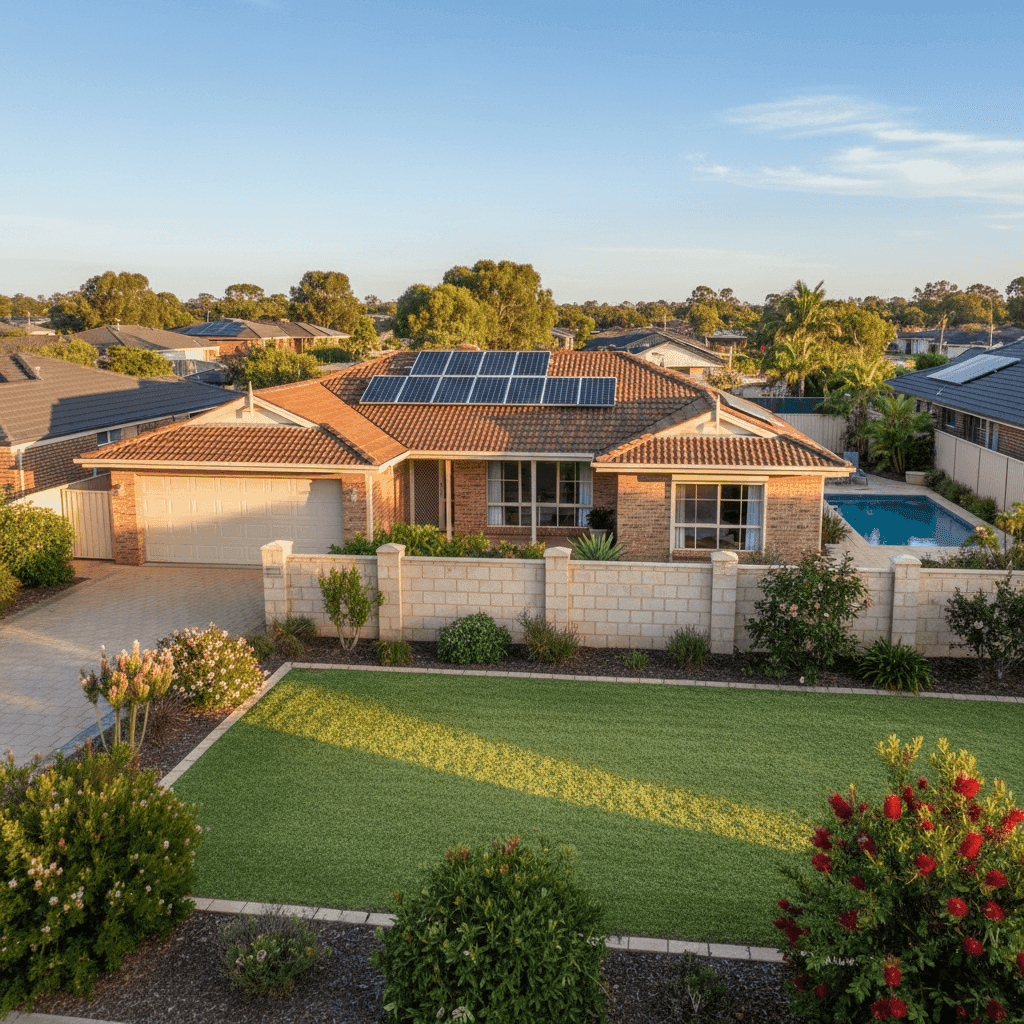
Parkwood is a well-established residential suburb in the City of Gosnells, sitting about 16 kilometres south-east of Perth's CBD. It's a family-friendly area known for its generous block sizes and solid brick homes — exactly the kind of property that warrants careful attention when it comes to home and contents insurance. This article breaks down a recent insurance quote for a six-bedroom, three-bathroom free standing home in Parkwood (postcode 6147), and helps you understand whether the premium stacks up against what others are paying locally, across Western Australia, and nationally.
---
Is This Quote Fair?
The annual premium on this quote comes in at $2,019 per year (or $197/month), covering both building and contents. The building is insured for $816,000 and contents for $127,000 — a combined coverage package that reflects the scale of a six-bedroom home with premium features including a pool, solar panels, and ducted climate control.
Our price rating for this quote is Expensive (Above Average). That label isn't arbitrary — it's based on how this premium sits relative to what other homeowners in Parkwood are currently paying for comparable cover.
The suburb average premium sits at just $1,549 per year, and the median is nearly identical at $1,552. Even the 75th percentile — meaning 75% of Parkwood quotes fall below this figure — is only $1,560. At $2,019, this quote is sitting noticeably above what most Parkwood homeowners are paying, which suggests there may be room to shop around.
That said, it's worth putting this in broader context. Compared to the Western Australian state average of $2,811/year and a national average of $5,347/year, this quote is actually quite reasonable in the bigger picture. The elevated local rating is largely a reflection of how affordable Parkwood tends to be relative to other parts of the country — not necessarily that this quote is grossly overpriced in absolute terms.
---
How Parkwood Compares
To give you a clearer picture, here's how this quote sits across different benchmarks:
| Benchmark | Premium |
|---|---|
| This Quote | $2,019/yr |
| Parkwood (6147) Suburb Average | $1,549/yr |
| Parkwood Suburb Median | $1,552/yr |
| LGA (Gosnells) Average | $1,427/yr |
| WA State Average | $2,811/yr |
| WA State Median | $2,127/yr |
| National Average | $5,347/yr |
| National Median | $2,764/yr |
A few things stand out here. First, Parkwood — and the broader Gosnells LGA — is one of the more affordable areas in WA for home insurance. The LGA average of $1,427/year is well below both the state and national benchmarks, which reflects the area's relatively low risk profile (no cyclone zone, lower catastrophe exposure compared to coastal or northern WA regions).
Second, while this quote is above the local suburb average, it's still below the WA state median of $2,127 and comfortably below the national median of $2,764. So while Parkwood homeowners might find a cheaper deal locally, this premium is far from alarming in a broader Australian context.
It's also worth noting the suburb sample size here is five quotes — a relatively small dataset. As more data becomes available, these averages may shift. You can always check the latest figures on the Parkwood suburb stats page.
---
Property Features That Affect Your Premium
Several characteristics of this property have a direct bearing on the premium quoted. Understanding them can help you make sense of the figure — and potentially identify levers to pull when comparing policies.
Double brick construction is generally viewed favourably by insurers. It's durable, fire-resistant, and less susceptible to storm damage than lightweight alternatives like weatherboard or fibrous cement. For a home built in 1985, double brick is a strong indicator of structural integrity, which typically works in the homeowner's favour at renewal time.
Tiled roof is another positive signal. Tiles are long-lasting and perform well in Perth's hot, dry climate. They're considered a lower-risk roofing material compared to older iron or asbestos-cement sheeting, which can increase premiums significantly.
Slab foundation is standard for WA homes of this era and generally poses no particular risk concern for insurers in non-reactive soil zones.
Swimming pool is one feature that can push premiums upward. Pools introduce liability exposure — particularly if a third party is injured on the property — and also add to the replacement cost of the home. Insurers factor this in when calculating building cover.
Solar panels add value to the property and can increase the cost to rebuild or repair after an event. Some insurers include solar panels under building cover automatically; others may require them to be specified. It's worth confirming exactly what's covered under this policy.
Ducted climate control is a significant fixed installation that contributes to the building sum insured. At $816,000, the insured value here accounts for the full cost of rebuilding a 214 sqm home with these kinds of inclusions — which is an important distinction from market value.
Vinyl flooring throughout is a practical, cost-effective choice that won't materially affect the premium in either direction.
---
Tips for Homeowners in Parkwood
1. Review your sum insured regularly Building costs in Perth have risen sharply in recent years. A sum insured of $816,000 for a 214 sqm home with a pool and solar panels is a reasonable estimate, but it's worth cross-checking against a current building cost calculator to ensure you're not underinsured — or paying for more cover than you need.
2. Confirm how your solar panels and pool are covered Not all policies treat these features the same way. Ask your insurer whether solar panels are covered under the building sum insured or need to be listed separately, and check whether your pool equipment (pumps, filters, heating) is included. Gaps here can be costly at claim time.
3. Shop around — Parkwood has competitive rates The local data suggests premiums in this suburb are relatively affordable. If your quote is coming in above the suburb average, it's a strong signal to compare. Even a modest saving of $200–$400 per year adds up significantly over time. Use CoverClub's free quote comparison tool to see what other insurers are offering for your specific property.
4. Consider your excess settings This quote carries a $2,000 building excess and a $1,000 contents excess. Opting for a higher voluntary excess can reduce your annual premium — a worthwhile trade-off if you're unlikely to make small claims. Just make sure the excess amount is something you could comfortably cover in an emergency.
---
Compare Your Home Insurance Options
Whether you're reviewing an existing policy or shopping for the first time, it pays to see the full picture. CoverClub makes it easy to compare home and contents insurance quotes tailored to your property and suburb. Get a free quote today and find out if there's a better deal waiting for you in Parkwood.