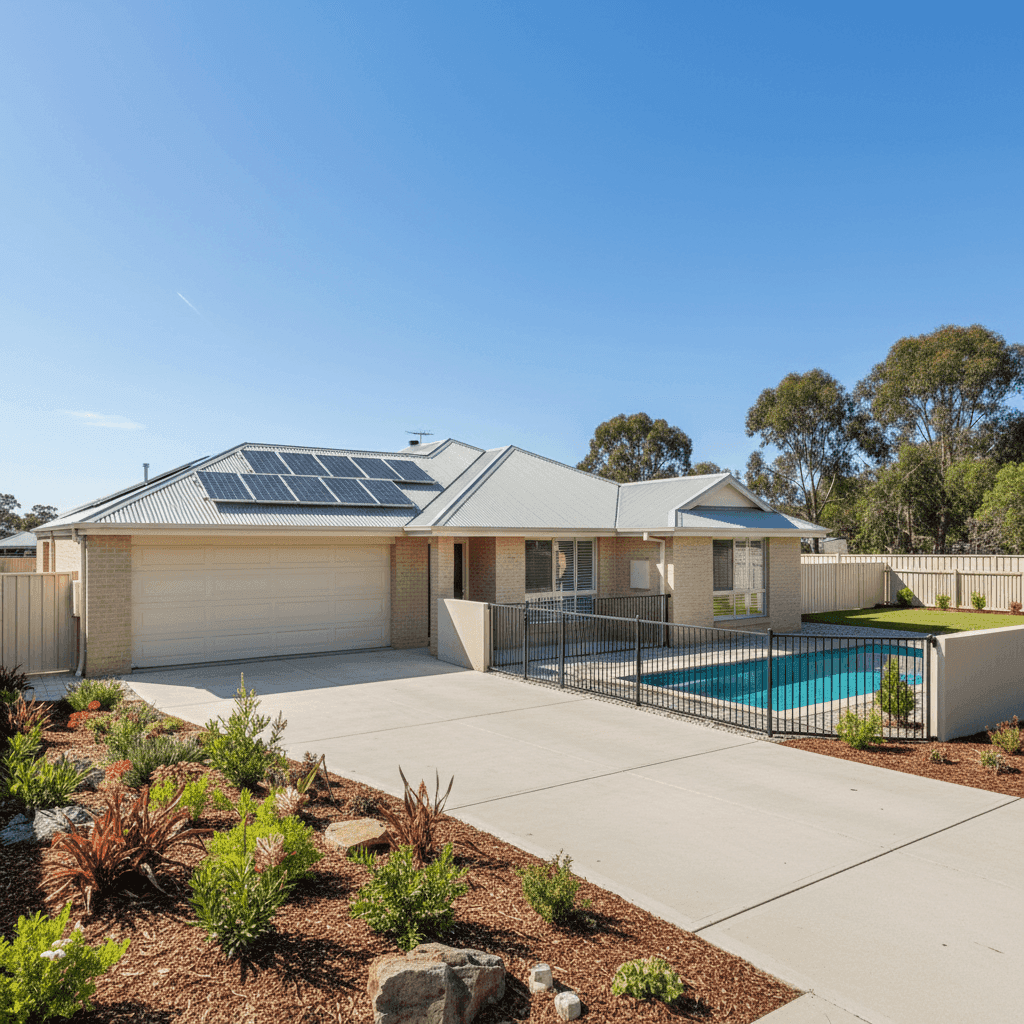
If you own a four-bedroom free standing home in Parkwood, WA 6147, you're probably curious whether your home insurance premium is competitive — or whether you're quietly overpaying. This article breaks down a real home and contents insurance quote for a property in this suburb, compares it against local, state, and national benchmarks, and offers practical tips to help you get better value on your cover.
---
Is This Quote Fair?
The quote in question comes to $2,288 per year (or $219/month) for combined home and contents cover, with a building sum insured of $666,000 and contents valued at $156,000. Both the building and contents excess are set at $500.
Our price rating for this quote is EXPENSIVE — above average for the Parkwood area.
To put that in perspective: the suburb average premium sits at just $1,549/year, and the median is virtually identical at $1,552/year. That means this quote is running approximately $739 above the local average — a 48% premium over what comparable Parkwood homeowners are typically paying.
It's worth noting that the suburb sample currently includes five quotes, so the local data is indicative rather than exhaustive. That said, the gap is significant enough to warrant a closer look at what's driving the higher price — and whether there's room to negotiate or shop around.
---
How Parkwood Compares
Understanding where Parkwood sits in the broader insurance landscape is useful context for any homeowner.
| Benchmark | Annual Premium |
|---|---|
| This Quote | $2,288 |
| Parkwood Suburb Average | $1,549 |
| Parkwood Suburb Median | $1,552 |
| LGA (Gosnells) Average | $1,427 |
| WA State Average | $2,811 |
| WA State Median | $2,127 |
| National Average | $5,347 |
| National Median | $2,764 |
Interestingly, while this quote looks expensive relative to the suburb, it actually sits below the WA state average of $2,811 and well below the national average of $5,347. Home insurance costs vary enormously across Australia — properties in cyclone-prone regions of Queensland and Northern Australia, or flood-affected areas in New South Wales and Victoria, can attract eye-watering premiums.
Parkwood, located in Perth's southern suburbs within the City of Gosnells, benefits from a relatively benign risk profile. It's not classified as a cyclone risk area, and the LGA average of $1,427/year reflects that lower-risk positioning. You can explore detailed premium data for the area on the Parkwood suburb stats page, or broaden your view with WA state insurance statistics and national home insurance data.
---
Property Features That Affect Your Premium
Several characteristics of this particular property influence how insurers calculate risk and, ultimately, the premium charged.
Double Brick Construction
This home features double brick external walls — a construction type that is generally well-regarded by insurers in Western Australia. Double brick is durable, fire-resistant, and structurally robust, which can work in your favour at renewal time. Many Perth homes from this era were built this way, and it's considered a lower-risk material compared to timber or lightweight cladding.
Steel / Colorbond Roof
The Colorbond steel roof is another positive. It's lightweight, resistant to corrosion, and performs well in fire conditions compared to older tile roofs. Insurers typically view Colorbond favourably, particularly in WA's hot and dry climate.
Construction Year: 1982
At over 40 years old, the property is ageing — and this can influence premiums. Older homes may carry higher risk of plumbing or electrical issues, and some insurers apply age-related loadings. However, a well-maintained double brick home from this era can still attract competitive rates.
Swimming Pool
The presence of a pool adds to the insured value of the property and introduces some liability considerations. Pool equipment, fencing compliance, and potential water damage risks are all factors that insurers weigh up. This is likely contributing to a higher-than-average premium for this property.
Solar Panels
Solar panels are an increasingly common feature on Perth homes, and they do add to the replacement cost of the building. A standard 6–10kW system can cost $5,000–$15,000 to replace, and insurers need to account for this in the building sum insured. It's worth confirming your solar system is explicitly covered under your policy.
Ducted Climate Control
Ducted air conditioning is another fixed asset that adds value to the building sum insured. In Perth's climate, ducted systems are almost essential — but they're also expensive to repair or replace, which insurers factor into the overall risk assessment.
Building Size and Sum Insured
At 214 sqm with a building sum insured of $666,000, the per-square-metre rebuild cost works out to approximately $3,112/sqm. This is broadly in line with current Perth construction costs, particularly for a double brick home with quality fixtures and the additional features mentioned above. Ensuring your sum insured accurately reflects current rebuild costs is critical — underinsurance remains one of the most common and costly mistakes homeowners make.
---
Tips for Homeowners in Parkwood
1. Shop Around — Seriously
The most impactful thing you can do is compare multiple quotes. With this property sitting nearly 50% above the local suburb average, there's a strong case for exploring alternatives. Premiums for identical properties can vary by hundreds of dollars between insurers. Get a quote on CoverClub to see what's available for your specific address.
2. Review Your Sum Insured Annually
Construction costs in Perth have risen sharply in recent years. Make sure your $666,000 building sum insured still reflects what it would actually cost to rebuild your home from scratch — including the pool, solar system, and ducted air conditioning. If it's too low, you risk being underinsured. If it's higher than necessary, you may be paying more than you need to.
3. Consider Your Excess
Both the building and contents excesses on this quote are set at $500. Opting for a higher voluntary excess — say, $1,000 or $2,000 — can meaningfully reduce your annual premium. If you have a good claims history and sufficient savings to cover a larger out-of-pocket cost in an emergency, this can be a smart trade-off.
4. Bundle Strategically, But Verify the Value
Many insurers offer discounts for combining home and contents cover under a single policy, which is already the case here. However, bundling doesn't always guarantee the best deal — it's worth checking whether separate policies from different providers might actually cost less in total.
---
Compare Your Options with CoverClub
Whether this quote is right for you depends on your full coverage needs, risk tolerance, and how much value you place on the specific policy features on offer. But given the gap between this premium and what other Parkwood homeowners are paying, it's well worth taking 60 seconds to compare.
[Run a free quote comparison at CoverClub](https://coverclub.com.au/?focus=address) and see whether you could be getting the same level of cover for less. With home insurance, loyalty doesn't always pay — but shopping around usually does.