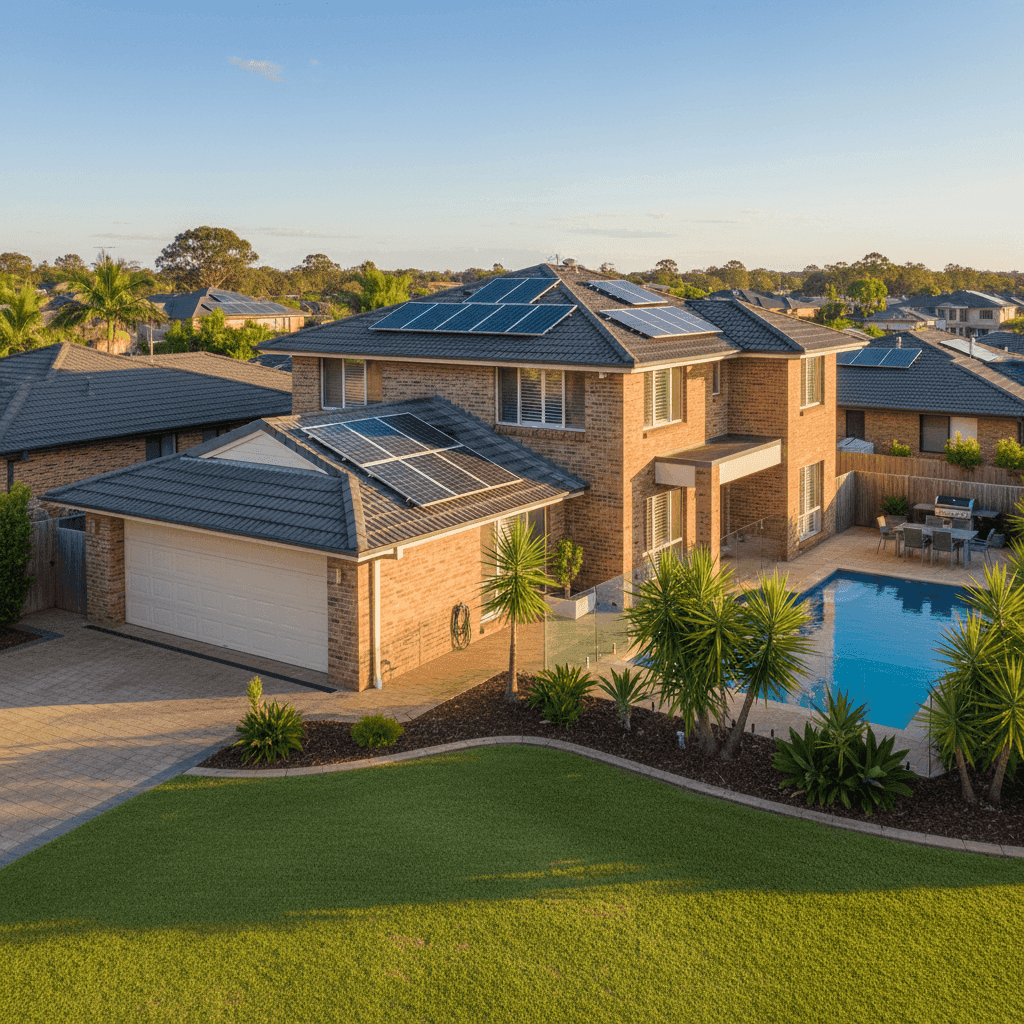
Parrearra is a quiet, leafy suburb on Queensland's Sunshine Coast — a place where generous family homes sit close to waterways and coastal lifestyle is part of the everyday. For a five-bedroom, three-bathroom free-standing home in this suburb, understanding what you should be paying for home and contents insurance is just as important as finding the right policy. This article breaks down a recent quote of $3,637 per year (or $356 per month) for a property in Parrearra QLD 4575, and puts it in context against local, state, and national benchmarks.
---
Is This Quote Fair?
In short — yes, and then some. This quote has been rated CHEAP (Below Average), meaning it sits well below what most homeowners in the area are paying. With a building sum insured of $862,000 and contents cover of $50,000, this is a comprehensive home and contents policy, not a bare-bones offering. Both the building and contents excess are set at $1,000, which is a standard and reasonable level.
To put the annual premium of $3,637 in perspective: the average premium across 36 quotes sampled in Parrearra is $5,208 per year, and the suburb median sits at $4,579. That means this quote is approximately $942 below the suburb median and a significant $1,571 below the suburb average. Even the cheapest quarter of Parrearra quotes — the 25th percentile — averages $4,057 per year, which is still more than $400 above this figure. By any local measure, this is an excellent result.
---
How Parrearra Compares
Zooming out to a broader picture reveals just how varied home insurance pricing can be across Queensland and the country.
| Benchmark | Premium |
|---|---|
| This Quote | $3,637/yr |
| Parrearra Suburb Average | $5,208/yr |
| Parrearra Suburb Median | $4,579/yr |
| Sunshine Coast LGA Average | $7,249/yr |
| QLD State Average | $9,129/yr |
| QLD State Median | $3,903/yr |
| National Average | $5,347/yr |
| National Median | $2,764/yr |
A few things stand out here. The Queensland state average of $9,129 per year is extraordinarily high — a reflection of the significant proportion of Queensland properties located in cyclone-prone, flood-affected, or extreme-weather regions. The state median of $3,903, however, tells a different story: half of QLD homeowners are paying under $3,903, which suggests a large number of very high-risk properties are pulling the average upward. This quote, at $3,637, sits just below that state median.
At the national level, the average premium is $5,347 and the median is $2,764. The national median being lower than Queensland's reflects the relatively elevated risk profile of insuring property in the Sunshine State compared to, say, Victoria or the ACT.
For Parrearra specifically, the Sunshine Coast LGA average of $7,249 per year is notably higher than the suburb's own average of $5,208 — suggesting that other parts of the Sunshine Coast (particularly low-lying or flood-prone areas) attract significantly steeper premiums. Parrearra appears to be a relatively favourable pocket within the LGA. You can explore more local data on the Parrearra suburb stats page.
---
Property Features That Affect Your Premium
Several characteristics of this property influence how insurers price the risk — some favourably, others less so.
Brick Veneer Walls & Tiled Roof This combination is generally well-regarded by insurers. Brick veneer offers solid resistance to fire and wind, and tiled roofs, while heavier, tend to perform well in storms when properly maintained. Compared to properties with lightweight cladding or metal roofing in poor condition, this construction profile typically attracts more competitive premiums.
Slab Foundation A concrete slab foundation is the norm in Queensland and is generally viewed positively by underwriters. It reduces the risk of subsidence and pest-related structural damage compared to older raised or timber-framed subfloor systems.
Timber and Laminate Flooring Flooring type can influence contents and building valuations. Timber and laminate floors are a popular mid-range choice — not as costly to replace as solid hardwood, but more susceptible to water damage than tiles. In a subtropical climate like Parrearra's, this is worth keeping in mind when assessing contents cover.
Swimming Pool A pool adds to both the replacement value of the property and, in some cases, the liability exposure. Homeowners should ensure their policy explicitly covers pool infrastructure, including pumps, filtration systems, and fencing — these can be expensive to repair or replace.
Solar Panels Solar panels are increasingly common on Queensland rooftops, but they're not always automatically covered under standard building policies. It's worth confirming with your insurer that your solar system — panels, inverter, and mounting hardware — is included in the building sum insured of $862,000.
Ducted Climate Control A ducted air conditioning system is a significant fixed asset that forms part of the building rather than contents. At standard fittings quality, this is likely already factored into the building sum insured, but it's worth verifying that the replacement cost is accurately reflected.
No Cyclone Risk Despite being in Queensland, this property is not classified as being in a cyclone risk area — a meaningful factor in keeping the premium lower than many other parts of the state. Properties north of around Bundaberg or those in exposed coastal zones often face cyclone-specific loadings that can dramatically increase premiums.
1980 Construction Homes built in the early 1980s can present mixed signals to insurers. On one hand, the construction is mature and well-understood; on the other, older homes may have ageing plumbing, electrical systems, or roofing that increases the likelihood of a claim. Keeping on top of maintenance is especially important for homes of this era.
---
Tips for Homeowners in Parrearra
1. Review your building sum insured regularly At $862,000, the sum insured for this property is substantial — and rightly so for a 286 sqm, five-bedroom home in a desirable coastal suburb. Building costs have risen sharply in recent years, so it's worth reassessing your sum insured annually to avoid being underinsured in the event of a major claim. Use a building cost calculator or ask your insurer to help you determine an appropriate figure.
2. Confirm solar panel and pool coverage explicitly Don't assume these features are automatically included. Ask your insurer directly whether your solar system and pool equipment are covered, what limits apply, and whether any exclusions exist. Getting this in writing can save significant heartache at claim time.
3. Shop around — even when your current premium seems reasonable This quote is already competitively priced, but the insurance market changes constantly. New entrants, policy changes, and shifting risk assessments mean the best deal today may not be the best deal next year. Comparing quotes annually through a platform like CoverClub takes only minutes and could save you hundreds.
4. Consider your contents cover carefully A contents sum insured of $50,000 is on the modest side for a five-bedroom, three-bathroom home with timber flooring, ducted air conditioning, and standard fittings. Take the time to do a proper room-by-room inventory of your belongings — furniture, appliances, clothing, electronics, and valuables — to make sure you're not left short in the event of a total loss.
---
Compare Your Own Quote
Whether you're a long-time Parrearra resident or new to the area, it pays to know where your premium sits relative to the market. CoverClub makes it easy to compare home and contents insurance quotes from a range of Australian insurers, all in one place. Get a quote today and find out if you're getting a fair deal — or if there's a better one waiting for you.