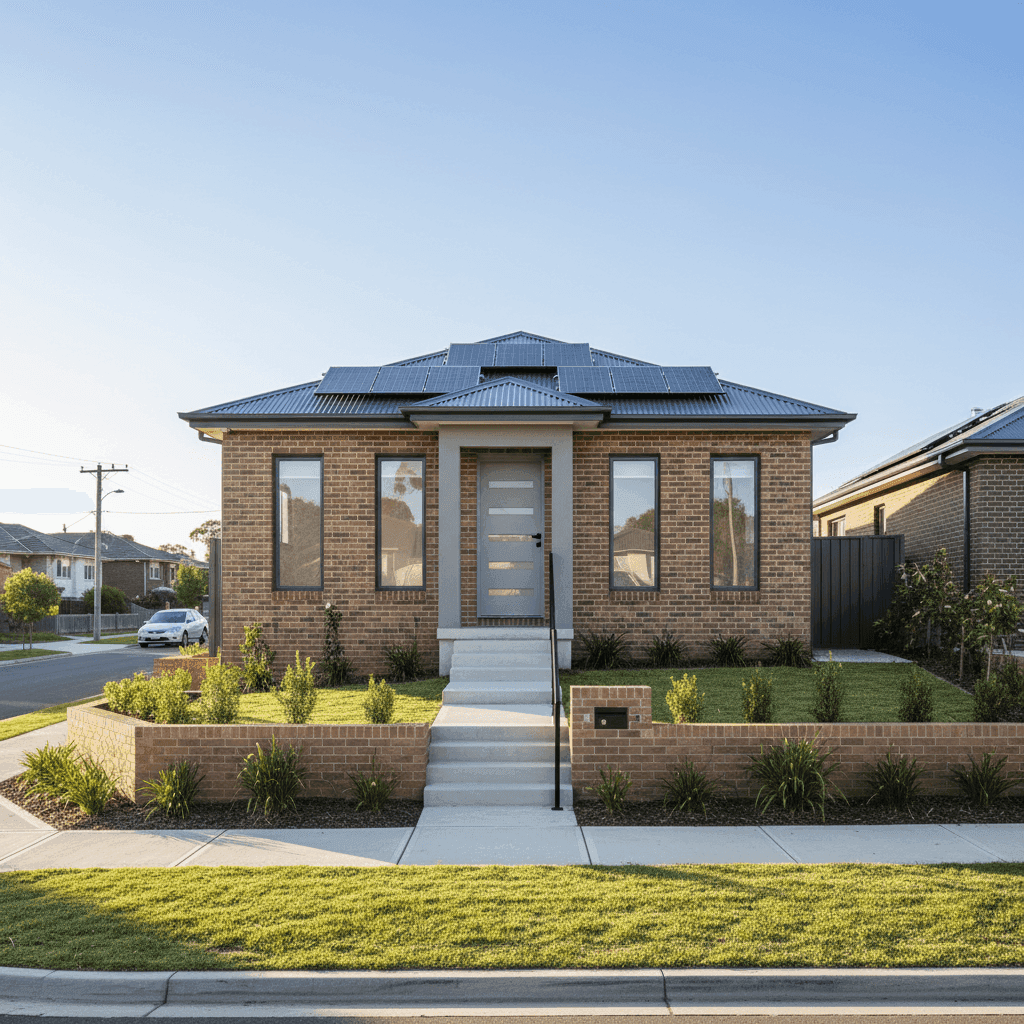
Pascoe Vale South is a well-established inner-northern suburb of Melbourne, popular for its tree-lined streets, proximity to the city, and a mix of period homes and newer builds. This analysis looks at a home and contents insurance quote for a modern, 3-bedroom semi detached property in the area — breaking down whether the premium is competitive, what's driving the cost, and what local homeowners can do to get better value.
---
Is This Quote Fair?
The quoted annual premium of $1,268 (or roughly $127 per month) covers both building and contents, with a building sum insured of $1,004,000 and contents valued at $248,000. The building excess sits at $3,000, while the contents excess is a more modest $1,000.
CoverClub's pricing engine has rated this quote as Fair — Around Average, which is a reasonable assessment when you dig into the numbers. It's not a bargain, but it's also not overpriced for what's on offer. Given that the property is a newer build (constructed in 2020) with top-of-the-range fittings and a relatively high building sum insured, a premium in this range is broadly in line with what you'd expect.
The key question, of course, is how it stacks up against what others in the area are paying.
---
How Pascoe Vale South Compares
Looking at data drawn from 62 quotes in the Pascoe Vale South area, the suburb's average annual premium sits at $1,409, with a median of $1,464. This quote, at $1,268, comes in below both the suburb average and median — a positive sign for the policyholder.
The spread across the suburb is notable: the 25th percentile sits at $915 per year, while the 75th percentile reaches $1,736. That's a fairly wide range, reflecting the diversity of properties and coverage levels across the postcode. This quote falls comfortably within the middle of that distribution.
Zoom out to the broader Victorian state picture, and the comparison becomes even more favourable. The VIC average premium is $2,921 and the state median is $2,694 — more than double what's quoted here. Even the LGA average for Moreland (the local government area covering Pascoe Vale South) sits at $1,724, still well above this quote.
At the national level, the gap is even wider. The Australian average home and contents premium is $2,965, with a national median of $2,716. This quote is less than half the national average — a reflection of how relatively low-risk inner-Melbourne suburbs can be compared to coastal, cyclone-prone, or flood-affected regions elsewhere in the country.
| Benchmark | Annual Premium |
|---|---|
| This Quote | $1,268 |
| Suburb Average (3044) | $1,409 |
| Suburb Median (3044) | $1,464 |
| LGA Average (Moreland) | $1,724 |
| VIC State Average | $2,921 |
| National Average | $2,965 |
---
Property Features That Affect Your Premium
Several characteristics of this property have a meaningful influence on the quoted premium — both positively and negatively.
Newer Construction (2020) A build year of 2020 is a significant advantage. Modern homes are constructed to current Australian building standards, which means better structural integrity, improved fire resistance, and updated electrical and plumbing systems. Insurers typically view newer properties as lower risk, which tends to translate into more competitive premiums.
Brick Veneer Walls and Colorbond Roof Brick veneer is one of the most common and well-regarded external wall types in Victoria. It offers solid fire and impact resistance. Combined with a steel Colorbond roof — which is durable, lightweight, and resistant to corrosion — this property presents a favourable risk profile for insurers. Both materials are widely understood by Australian underwriters and priced accordingly.
Slab Foundation A concrete slab foundation is standard for modern Australian homes and is generally viewed positively by insurers. It eliminates the risk of subfloor damage, pest ingress, and certain structural vulnerabilities associated with older stumped or pier-and-beam foundations.
Elevated by at Least 1 Metre This is an interesting feature for a slab-on-ground construction era property. Being elevated by at least a metre can reduce flood and stormwater inundation risk, which may contribute positively to the premium calculation — particularly as insurers become increasingly attentive to water damage exposure.
Top-of-the-Range Fittings High-quality fittings — think stone benchtops, premium appliances, designer tapware — are wonderful to live with, but they do push up the cost to rebuild or repair. This is one reason the building sum insured of $1,004,000 is relatively high for a 153 sqm property. It's important that this figure accurately reflects replacement cost, not market value.
Solar Panels Solar panels are an increasingly common feature on Australian homes, and this property has them. From an insurance perspective, panels add value to the building sum insured and can be a source of claims (hail damage, for instance). It's worth confirming with your insurer that solar panels are explicitly covered under the policy.
Contents Value of $248,000 A contents sum of $248,000 is on the higher end for a 3-bedroom home, but consistent with top-of-the-range fittings throughout. Ensuring this figure is accurate — not underinsured — is critical. Many Australians significantly underestimate the replacement value of their belongings.
---
Tips for Homeowners in Pascoe Vale South
1. Review Your Building Sum Insured Annually Construction costs in Victoria have risen sharply in recent years. A building sum insured set even two or three years ago may no longer reflect the true cost of rebuilding your home. Use a building cost calculator or speak with a quantity surveyor to ensure your coverage keeps pace with current labour and materials costs.
2. Confirm Solar Panel Coverage Not all home insurance policies automatically cover solar panels as part of the building, and some have sublimits or exclusions for storm and hail damage. Given that Melbourne can experience severe hailstorms, it's worth reading the Product Disclosure Statement carefully or asking your insurer directly.
3. Consider a Higher Excess to Reduce Your Premium This quote carries a $3,000 building excess. If you're financially comfortable absorbing a higher out-of-pocket cost in the event of a claim, opting for an even higher excess can bring the premium down further. Conversely, if cash flow is a concern, a lower excess with a slightly higher premium may offer better peace of mind.
4. Don't Set and Forget Even if this quote is fair today, insurance markets shift. Premiums can change significantly at renewal — sometimes without major changes to your property or claims history. Make a habit of comparing quotes each year, especially given how much premiums can vary even within a single postcode.
---
Compare Your Options with CoverClub
Whether you're renewing your current policy or shopping for the first time, it pays to compare. CoverClub makes it easy to see how your quote stacks up against real data from your suburb and across Australia. Get a home insurance quote today and find out if you're getting the best deal for your Pascoe Vale South home.