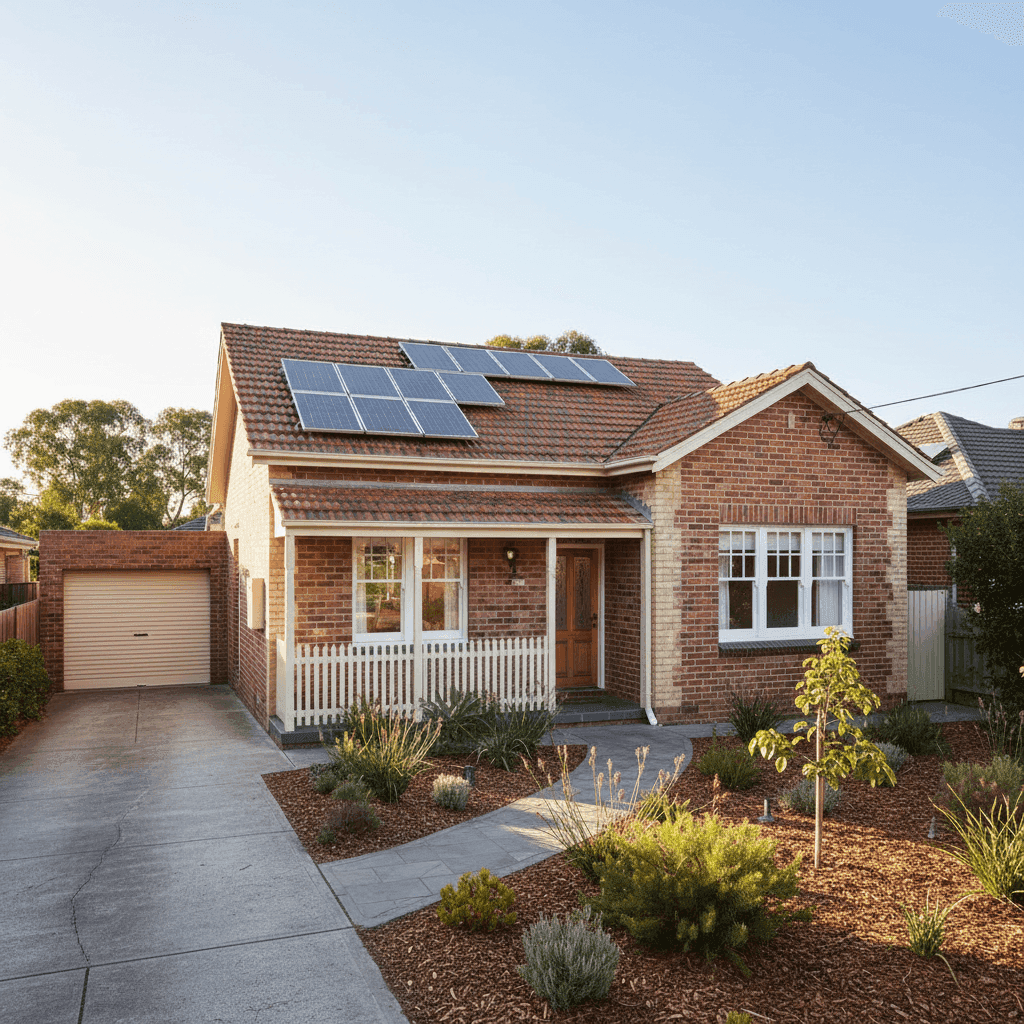
If you own a free standing home in Pascoe Vale, VIC 3044, you're likely paying close attention to the cost of home and contents insurance — especially as premiums across Australia continue to shift. This article takes a detailed look at a recent quote of $1,734 per year (or $179/month) for a 3-bedroom, 2-bathroom brick veneer home in this inner-northern Melbourne suburb, and puts it in context against local, state, and national benchmarks.
---
Is This Quote Fair?
The short answer: yes, broadly speaking — but there's room to explore.
This quote has been rated Fair (Around Average) based on CoverClub's pricing analysis. At $1,734 annually, it sits above the suburb average of $1,487/yr and the suburb median of $1,379/yr, but comfortably within the 75th percentile of $1,782/yr for Pascoe Vale. In other words, roughly three-quarters of comparable quotes in the area come in at or below this price — so while it's not the cheapest option available, it's not out of step with the market either.
A few factors push this quote toward the higher end of the local range. The building sum insured of $913,000 is substantial — reflecting top-of-the-range fittings and a well-appointed 153 sqm home — and the contents cover of $199,000 adds meaningful additional protection. Together, these represent a significant total insured value, which naturally flows through to the premium.
The building excess of $3,000 is on the higher side, which typically helps reduce the annual premium. The contents excess of $1,000 is more standard. If you're comfortable absorbing a larger out-of-pocket cost in the event of a claim, these excess levels are reasonable trade-offs for the coverage provided.
---
How Pascoe Vale Compares
Pascoe Vale homeowners are, by most measures, in a relatively favourable position when it comes to insurance costs. Here's how the numbers stack up:
| Benchmark | Premium |
|---|---|
| This quote | $1,734/yr |
| Pascoe Vale suburb average | $1,487/yr |
| Pascoe Vale suburb median | $1,379/yr |
| LGA (Moreland) average | $1,551/yr |
| VIC state average | $3,000/yr |
| VIC state median | $2,718/yr |
| National average | $5,347/yr |
| National median | $2,764/yr |
The contrast with state and national figures is striking. At $1,734/yr, this quote is 42% below the Victorian state average and a remarkable 68% below the national average. Much of that national average is driven up by high-risk regions — particularly cyclone-prone areas in Queensland and Western Australia, as well as flood-affected zones — which bear little resemblance to the risk profile of a suburb like Pascoe Vale.
Compared to the broader VIC insurance market, Pascoe Vale is an affordable postcode. And zooming out to the national picture, the difference is even more pronounced. For a deeper look at how premiums in this suburb are trending, visit the Pascoe Vale insurance stats page.
It's worth noting that this analysis draws on a sample of 37 quotes for the Pascoe Vale area, which provides a reasonable (if not exhaustive) basis for comparison.
---
Property Features That Affect Your Premium
Several characteristics of this particular home play a meaningful role in how insurers assess and price the risk:
Brick Veneer Construction Brick veneer walls are generally viewed favourably by insurers. They offer solid fire resistance and structural durability, which can help moderate premiums compared to weatherboard or other timber-heavy constructions.
Tiled Roof A tiled roof is another risk-positive feature. Tiles are durable, weather-resistant, and long-lasting — particularly relevant in Melbourne's variable climate, where hail events can cause significant damage to lesser roofing materials.
Stump Foundation The home sits on stumps, which is common in older Melbourne properties. While stumps can require periodic maintenance (particularly timber stumps), they don't typically attract a significant premium loading unless there are known structural issues.
Solar Panels The presence of solar panels is worth flagging. Many policies cover solar panels as part of the building, but it's essential to confirm this with your insurer — and to ensure the sum insured adequately reflects their replacement value.
Ducted Climate Control Ducted heating and cooling systems are considered a fixed building feature and should be captured within the building sum insured. Given the cost of replacing these systems, it's a detail worth double-checking when reviewing your coverage.
Top-of-the-Range Fittings High-quality fittings — think stone benchtops, premium appliances, quality flooring — significantly influence both the building sum insured and the overall premium. Underinsuring a home with premium finishes is a common and costly mistake.
Construction Year: 1995 A home built in 1995 is relatively modern by Melbourne standards, generally meaning it was constructed to more robust building codes than older stock. This can be a positive signal for insurers.
---
Tips for Homeowners in Pascoe Vale
1. Review your sum insured regularly With construction costs rising across Australia, the cost to rebuild your home can increase significantly year on year. A sum insured of $913,000 may be appropriate today, but it's worth revisiting annually — or after any renovations — to avoid being underinsured. Consider using a professional building cost estimator if you're unsure.
2. Confirm solar panel coverage Solar panels are a valuable asset, but coverage can vary between policies. Some insurers include them automatically under the building definition; others require a specific endorsement. Check your Product Disclosure Statement (PDS) carefully to ensure your panels are fully covered for damage, theft, and breakdown.
3. Consider your excess settings The building excess on this quote is $3,000 — higher than many standard policies. While this helps reduce the annual premium, it means you'll need to cover that amount out of pocket before your insurer steps in. Make sure this aligns with your financial comfort level, and compare quotes with different excess options to find the right balance.
4. Compare quotes before renewal Loyalty doesn't always pay in insurance. Premiums can vary widely between providers for essentially the same coverage, and insurers often reserve their best rates for new customers. Using a comparison platform like CoverClub at renewal time is one of the simplest ways to ensure you're not overpaying.
---
Ready to Compare?
Whether you're buying a new policy or your renewal is coming up, it pays to see what else is on the market. Get a home and contents insurance quote at CoverClub and compare options tailored to your Pascoe Vale property — in minutes, with no obligation.