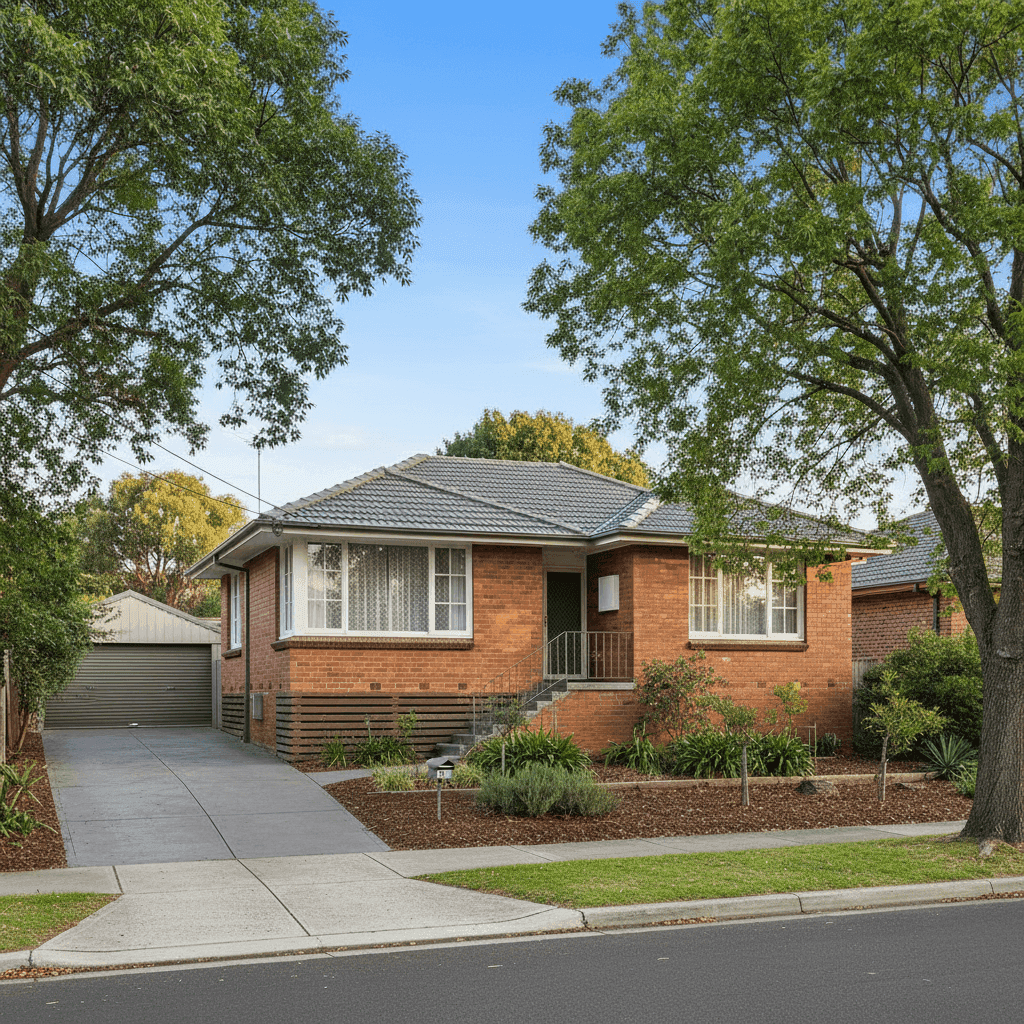
If you own a free standing home in Pascoe Vale, VIC 3044, you've probably wondered whether you're paying a fair price for home and contents insurance — or quietly overpaying year after year. This article breaks down a real insurance quote for a four-bedroom, two-bathroom brick veneer home in the suburb, compares it against local and national benchmarks, and offers practical tips to help you make a more informed decision.
---
Is This Quote Fair?
The annual premium on this quote comes in at $2,017 per year (or $193/month), covering both building (sum insured: $900,000) and contents ($87,000), each with a $1,000 excess.
Our pricing analysis rates this quote as Expensive — above average for the area.
To put that in context: the suburb average for Pascoe Vale sits at $1,487 per year, with a median of $1,379. This quote is roughly $530 above the suburb average — a meaningful difference that, over five years, adds up to more than $2,600 in extra premiums.
That said, "expensive" doesn't automatically mean "wrong." A higher-than-average premium can be justified by a combination of factors — particularly the building's sum insured, its age, construction type, and specific risk characteristics. In this case, the $900,000 building sum insured is on the higher end and will naturally push the premium up compared to properties insured for less. Still, it's worth shopping around to ensure the price reflects genuine risk rather than simply insurer pricing variation.
---
How Pascoe Vale Compares
Understanding where a suburb sits in the broader pricing landscape is key to evaluating any quote.
| Benchmark | Annual Premium |
|---|---|
| This Quote | $2,017 |
| Pascoe Vale Suburb Average | $1,487 |
| Pascoe Vale Suburb Median | $1,379 |
| Pascoe Vale 25th Percentile | $1,175 |
| Pascoe Vale 75th Percentile | $1,782 |
| Moreland LGA Average | $1,551 |
| VIC State Average | $3,000 |
| VIC State Median | $2,718 |
| National Average | $5,347 |
| National Median | $2,764 |
(Suburb data based on a sample of 37 quotes in postcode 3044.)
What stands out here is that Pascoe Vale is actually a relatively affordable suburb for home insurance by Victorian and national standards. The VIC state average is $3,000/year — more than double the suburb median — and the national average of $5,347 reflects the outsized impact of high-risk regions like cyclone-prone Queensland and flood-affected areas of NSW. Pascoe Vale homeowners, by comparison, benefit from a lower natural disaster risk profile.
This quote, while above the local average, still sits well below both the state and national averages. Homeowners in Pascoe Vale are, broadly speaking, in a favourable position — but that's no reason to leave money on the table if a comparable policy is available at a lower price.
---
Property Features That Affect Your Premium
Several characteristics of this property directly influence the cost of insurance. Understanding them can help you have a more informed conversation with your insurer — or identify areas where adjustments might be possible.
Brick Veneer Construction (1970)
Brick veneer is generally viewed favourably by insurers for its fire resistance and structural durability. However, homes built around 1970 may attract a modest loading due to ageing materials — particularly plumbing, wiring, and roofing — that carry a higher likelihood of claim. Insurers often factor in the cost of bringing older homes up to current building codes following a loss event.
Tiled Roof
Terracotta or concrete tiles are a common and generally well-regarded roofing material in Victoria. They're durable and perform well in the local climate, though they can be more costly to repair or replace than metal roofing if damaged. This is a neutral-to-positive factor for insurers.
Slab Foundation
A concrete slab foundation is standard for many Melbourne suburban homes and is typically not a premium risk driver. It provides good structural stability and is less susceptible to subsidence than some other foundation types.
Elevated by At Least 1 Metre
This is a notable feature. Homes elevated by at least one metre can attract different risk assessments depending on the insurer — particularly in relation to flood risk and underfloor exposure. In some cases, elevation is a positive (reducing flood inundation risk); in others, it may factor into calculations around storm damage or structural exposure. It's worth confirming with your insurer exactly how this characteristic is being treated in your premium calculation.
Ducted Climate Control
The presence of ducted climate control adds to the overall replacement value of the home and can contribute modestly to a higher premium, as it represents a significant cost to repair or replace following a covered event.
Building Size: 235 sqm
At 235 square metres, this is a substantial family home. Larger floor areas directly correlate with higher rebuild costs, which supports a higher sum insured — and in turn, a higher premium. Ensuring your sum insured accurately reflects current construction costs (rather than market value) is critical.
---
Tips for Homeowners in Pascoe Vale
1. Review Your Sum Insured Annually
Construction costs in Melbourne have risen sharply in recent years. Underinsurance is a serious risk — but so is overinsurance. Use a building cost calculator to verify that your $900,000 sum insured is aligned with actual rebuild costs for a 235 sqm brick veneer home in the area. An independent quantity surveyor can provide a precise figure.
2. Compare Multiple Quotes — Every Year
Insurer pricing models vary significantly, and loyalty doesn't always pay. Given that this quote sits above the suburb average, comparing at least three to four quotes at renewal time is a straightforward way to identify potential savings. CoverClub makes it easy to compare quotes across multiple insurers in one place.
3. Consider Your Excess Strategically
Both the building and contents excess on this policy are set at $1,000. Increasing your voluntary excess — say, to $2,000 — can meaningfully reduce your annual premium. If you have a solid emergency fund and are unlikely to make small claims, a higher excess is often a smart trade-off.
4. Check What's Included in Contents Cover
At $87,000, the contents sum insured is moderate for a four-bedroom home. Take the time to do a proper room-by-room inventory — furniture, appliances, clothing, electronics, and valuables all add up quickly. Underinsuring your contents can leave you significantly out of pocket after a major loss, while overinsuring means you're paying for cover you don't need.
---
Ready to Find a Better Deal?
Whether you're renewing your current policy or shopping for the first time, comparing quotes is the single most effective way to ensure you're not overpaying. Get a home insurance quote through CoverClub and see how your premium stacks up against the Pascoe Vale market — in minutes, with no obligation.
For more suburb-level data and pricing insights, visit the Pascoe Vale insurance stats page or explore Victoria-wide trends.