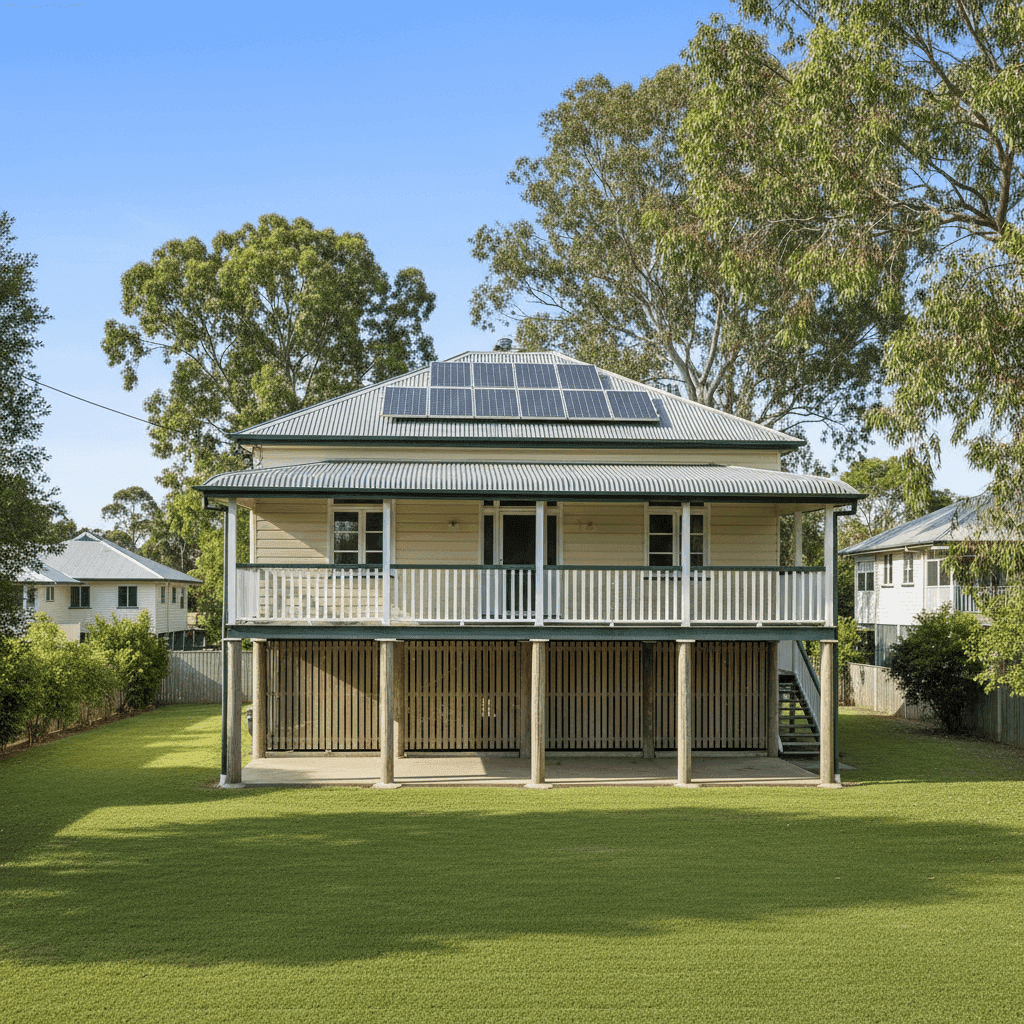
Home insurance in regional Queensland can vary enormously depending on where you live, what your home is made of, and how it sits on the land. This article takes a close look at a real home and contents insurance quote for a four-bedroom, two-bathroom free standing home in Patrick Estate, QLD 4311 — a quiet locality in the Lockyer Valley region west of Brisbane — and unpacks whether the premium stacks up against what other Queenslanders and Australians are paying.
---
Is This Quote Fair?
The quote in question comes in at $30,330 per year (or $2,907/month), covering a building sum insured of $760,000 and contents valued at $50,000. The building excess is $2,000 and the contents excess is $1,000.
Our price rating for this quote is EXPENSIVE — Above Average. That's not a label we apply lightly. To put it in perspective:
- The Queensland state average premium is $9,129/yr, and the median sits at $3,903/yr
- The national average is $5,347/yr, with a national median of $2,764/yr
- The Lockyer Valley LGA average is $11,404/yr
This quote is more than 3× the Queensland state average and nearly 6× the national median. Even within the Lockyer Valley LGA — which already trends well above the national average — this premium stands out significantly. That said, the property has a number of characteristics that insurers consistently price at a premium, which we'll explore below.
You can explore how other properties in the postcode are priced at our Patrick Estate insurance stats page.
---
How Patrick Estate Compares
Patrick Estate sits within the Lockyer Valley Local Government Area, a region that has historically experienced significant flood and storm damage events. Insurers factor in both historical claims data and forward-looking risk modelling when pricing premiums, and the Lockyer Valley's track record means properties here attract higher base rates than much of the country.
| Benchmark | Annual Premium |
|---|---|
| This Quote | $30,330 |
| Lockyer Valley LGA Average | $11,404 |
| QLD State Average | $9,129 |
| QLD State Median | $3,903 |
| National Average | $5,347 |
| National Median | $2,764 |
Even against the elevated Lockyer Valley LGA average of $11,404, this quote is nearly 2.7× higher. While the LGA average captures a wide range of property types and risk profiles, the gap here is large enough to warrant scrutiny — and potentially, a comparison shop.
Browse Queensland home insurance statistics or national home insurance data to see how your area fits into the broader picture.
---
Property Features That Affect Your Premium
Several characteristics of this property are likely pushing the premium well above typical benchmarks. Here's what insurers are likely factoring in:
Age of Construction — 1900
At over 120 years old, this home is well into heritage territory. Older homes present a higher replacement risk for insurers: materials may no longer be readily available, tradespeople with the relevant skills are scarcer, and ageing infrastructure (wiring, plumbing, structural timbers) increases the likelihood of a claim. Insurers often apply significant loadings to pre-1950 homes, and a home built in 1900 sits at the extreme end of that scale.
Weatherboard Timber Walls
Weatherboard construction is a beloved feature of Queensland's architectural identity, but from an insurance standpoint, timber external walls carry a higher fire risk than brick or rendered masonry. They're also more susceptible to moisture ingress and pest damage over time. Combined with the age of the home, this is a notable risk factor.
Stump Foundation
Homes on stumps — particularly older ones — can be vulnerable to subfloor moisture, pest activity, and stump deterioration. While elevated foundations can actually help with flood resilience (more on that below), they introduce their own maintenance and structural risk considerations that insurers weigh up.
Elevated by At Least 1 Metre
Being elevated can be a double-edged sword. On one hand, it provides meaningful protection against inundation during flood or storm surge events, which is a genuine positive in the Lockyer Valley context. On the other, elevated homes can suffer greater wind damage, and the subfloor space introduces additional exposure. Insurers assess this holistically.
Timber and Laminate Flooring
Timber flooring — especially original boards in a home of this age — can be costly to repair or replace. Water damage, warping, and the difficulty of matching heritage-grade timber all contribute to higher potential claim costs.
Solar Panels and Ducted Climate Control
Both of these inclusions add to the replacement value of the home. Solar panel systems and ducted air conditioning are expensive to reinstate after a total loss or major damage event, and insurers factor this into the building sum insured assessment.
High Building Sum Insured — $760,000
The sum insured of $760,000 for a 214 sqm home reflects a high per-square-metre rebuild cost — approximately $3,551/sqm. For a heritage weatherboard home with original features, this may well be accurate, but it's worth having a quantity surveyor or building valuation specialist confirm the figure. Over-insuring drives premiums up unnecessarily, while under-insuring exposes you to significant financial risk.
---
Tips for Homeowners in Patrick Estate
1. Get an Independent Building Valuation
Given the age and construction type of this home, it's worth commissioning a professional building replacement cost assessment. If the sum insured is higher than necessary, even a modest reduction could meaningfully lower your annual premium. Conversely, if it's too low, you could face a shortfall in the event of a total loss.
2. Compare Quotes from Multiple Insurers
Not all insurers price heritage weatherboard homes the same way. Some specialise in older or non-standard construction and may offer more competitive rates. Use a comparison platform like CoverClub to see quotes side by side without having to ring around individually.
3. Review Your Contents Sum Insured
At $50,000, the contents cover is relatively modest for a four-bedroom home. Take a room-by-room inventory to make sure you're neither over- nor under-insured. Contents under-insurance is surprisingly common and can leave you significantly out of pocket after a major event.
4. Ask About Stump and Subfloor Maintenance Discounts
Some insurers offer better terms when homeowners can demonstrate regular pest inspections and stump maintenance. Keeping records of annual pest reports and any remediation work can support your case when negotiating with insurers or brokers.
---
Ready to Find a Better Rate?
If this quote has left you wondering whether you're paying too much, the best move is to compare. CoverClub makes it easy to benchmark your premium against real data from across Queensland and Australia — and to get competing quotes in minutes. Start comparing home insurance quotes today and make sure you're getting the right cover at a fair price.