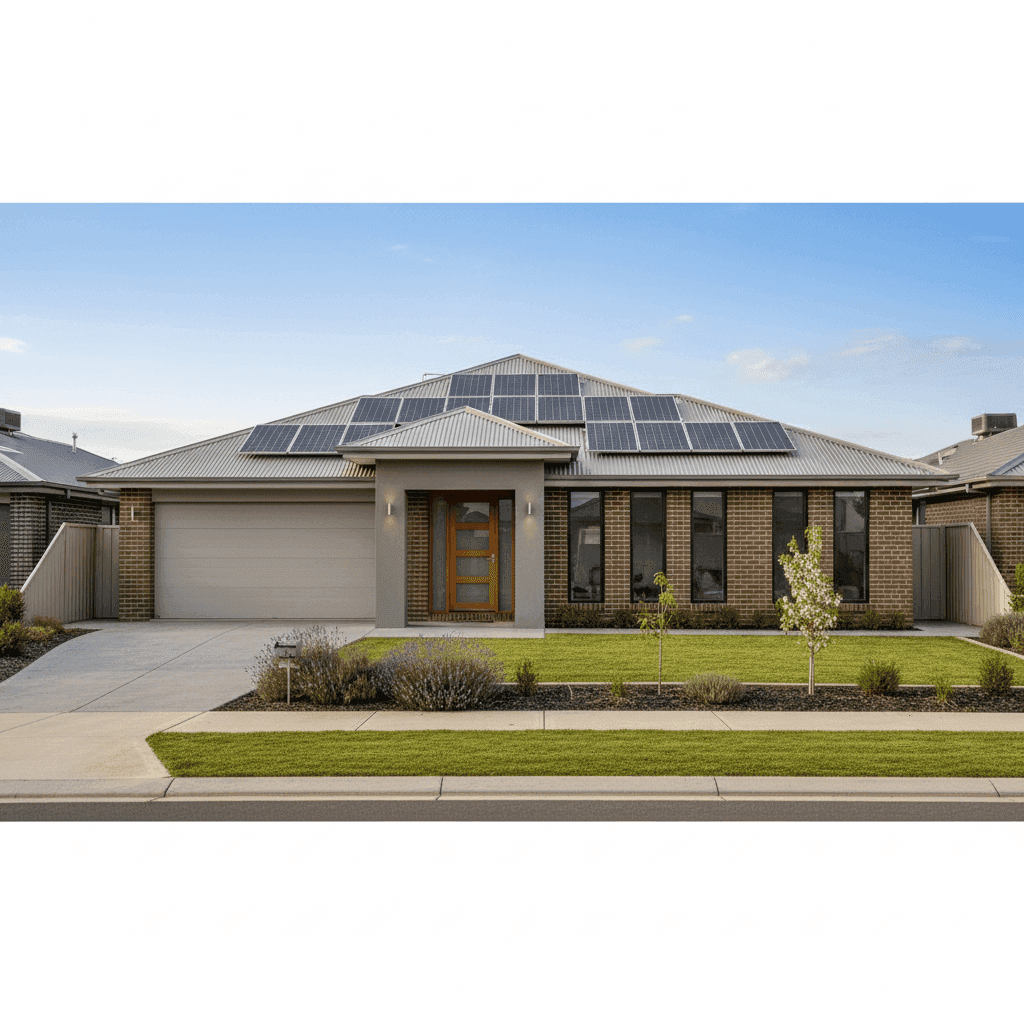
Paynesville is a picturesque waterfront town in Victoria's East Gippsland region, known for its canals, boating culture, and relaxed coastal lifestyle. It's also a place where getting your home insurance right really matters — properties here face a unique mix of environmental and geographic risk factors that can push premiums in unexpected directions. In this article, we take a close look at a real home and contents insurance quote for a four-bedroom, free-standing home in Paynesville (VIC 3880) and unpack what's driving the cost, how it stacks up against local and national benchmarks, and what you can do to make sure you're not overpaying.
---
Is This Quote Fair?
The quote in question comes in at $3,054 per year (or $299/month) for combined home and contents cover, with a building sum insured of $813,000 and contents valued at $79,000. Both the building and contents excess are set at $1,000.
Our price rating for this quote is Expensive — Above Average relative to other quotes in the Paynesville area.
To put that in context: the suburb average premium sits at $2,217/year, and the median is even lower at $2,020/year. That means this quote is running about 38% above the suburb average and more than 50% above the suburb median. Even compared to the 75th percentile for Paynesville — meaning 75% of quotes are cheaper — this premium at $3,054 still exceeds the $2,729 mark.
That said, "expensive" doesn't automatically mean "wrong." A higher sum insured, specific insurer pricing models, and individual property characteristics can all justify a premium above the local average. The key question is whether the cover and the price are genuinely aligned with the property's risk profile — and whether a better deal is available elsewhere.
---
How Paynesville Compares
Understanding where Paynesville sits in the broader insurance landscape helps put this quote in sharper perspective.
| Benchmark | Premium |
|---|---|
| Paynesville suburb average | $2,217/yr |
| Paynesville suburb median | $2,020/yr |
| Paynesville 25th percentile | $1,475/yr |
| Paynesville 75th percentile | $2,729/yr |
| VIC state average | $3,000/yr |
| VIC state median | $2,718/yr |
| National average | $5,347/yr |
| National median | $2,764/yr |
| Wellington LGA average | $4,409/yr |
(Based on 39 quotes sampled for the Paynesville area. See full [Paynesville suburb insurance stats](https://coverclub.com.au/stats/VIC/3880/paynesville) and [VIC state stats](https://coverclub.com.au/stats/VIC).)
A few things stand out here. First, this quote at $3,054 is actually very close to the Victorian state average of $3,000/year, suggesting the insurer is pricing this property more in line with broader state risk than local suburb risk. Second, the Wellington LGA average is notably high at $4,409/year, which tells us that across the wider local government area, insurance costs are significantly elevated — likely driven by bushfire and flood exposure in surrounding regions. Paynesville itself, as a coastal township, may benefit from slightly different risk characteristics than some inland parts of the LGA.
At the national level, the average premium of $5,347/year reflects the heavy influence of high-risk areas like Queensland's cyclone-prone north and flood-affected regions across the country. Compared to that benchmark, this Paynesville quote looks relatively modest. You can explore national home insurance cost data for more context.
---
Property Features That Affect Your Premium
Several characteristics of this property play a meaningful role in how insurers calculate the premium.
Brick veneer construction with a Colorbond roof is generally viewed favourably by insurers. Brick veneer offers solid fire resistance and structural durability, while steel Colorbond roofing is lightweight, long-lasting, and performs well in high-wind conditions. This combination typically attracts more competitive pricing compared to timber-framed homes with tile roofs.
Slab foundation is another positive signal — slab homes tend to be more resistant to subsidence and pest-related structural issues, which reduces risk in the eyes of underwriters.
Solar panels are worth noting. While they add value to the property and are increasingly common, they can slightly complicate insurance assessments. Some insurers factor in the replacement cost of panels within the building sum insured, and panels can be a target for theft or storm damage. It's worth confirming with your insurer that your solar system is adequately covered under your policy.
A building sum insured of $813,000 for a 235 sqm home built in 2005 is on the higher end. This works out to roughly $3,460 per square metre, which is above typical rebuild cost estimates for standard-finish homes in regional Victoria. While it's always better to be adequately covered than under-insured, an inflated sum insured will directly increase your premium. It may be worth obtaining a professional building replacement cost assessment to ensure your coverage is calibrated correctly.
Standard fittings and carpet flooring suggest a mid-range interior finish, which is consistent with the property's age and type. This shouldn't be pushing the premium up unnecessarily.
---
Tips for Homeowners in Paynesville
1. Get multiple quotes and compare carefully With a suburb average of $2,217/year and this quote sitting at $3,054, there's a meaningful gap worth exploring. Insurers price risk differently, and shopping around — particularly through a comparison platform — can surface significantly cheaper options for the same level of cover. Get a home insurance quote and see what's available for your property.
2. Review your building sum insured As noted above, the $813,000 sum insured equates to a high per-square-metre rebuild cost for a standard-finish home of this age. Consider commissioning a quantity surveyor's report or using an online building calculator to verify whether this figure is appropriate. Reducing an inflated sum insured can meaningfully lower your annual premium without leaving you exposed.
3. Confirm your solar panels are covered Solar panel systems can represent a significant asset — often $10,000–$20,000 or more. Check whether your policy explicitly covers panels for damage, theft, and loss of power generation. Some policies include this automatically; others require an endorsement. Don't assume.
4. Consider your excess level Both the building and contents excess on this policy are set at $1,000. Opting for a higher voluntary excess — say, $2,000 — can reduce your annual premium noticeably. Just make sure you're comfortable covering that amount out of pocket in the event of a claim.
---
Compare Your Home Insurance Today
Whether this quote is right for your situation depends on your specific needs, risk tolerance, and what other insurers are willing to offer. The good news is that comparing home insurance in Australia has never been easier. At CoverClub, we help homeowners across Paynesville and the rest of Victoria find competitive quotes tailored to their property. Start your comparison now and see if you could be paying less for the same peace of mind.