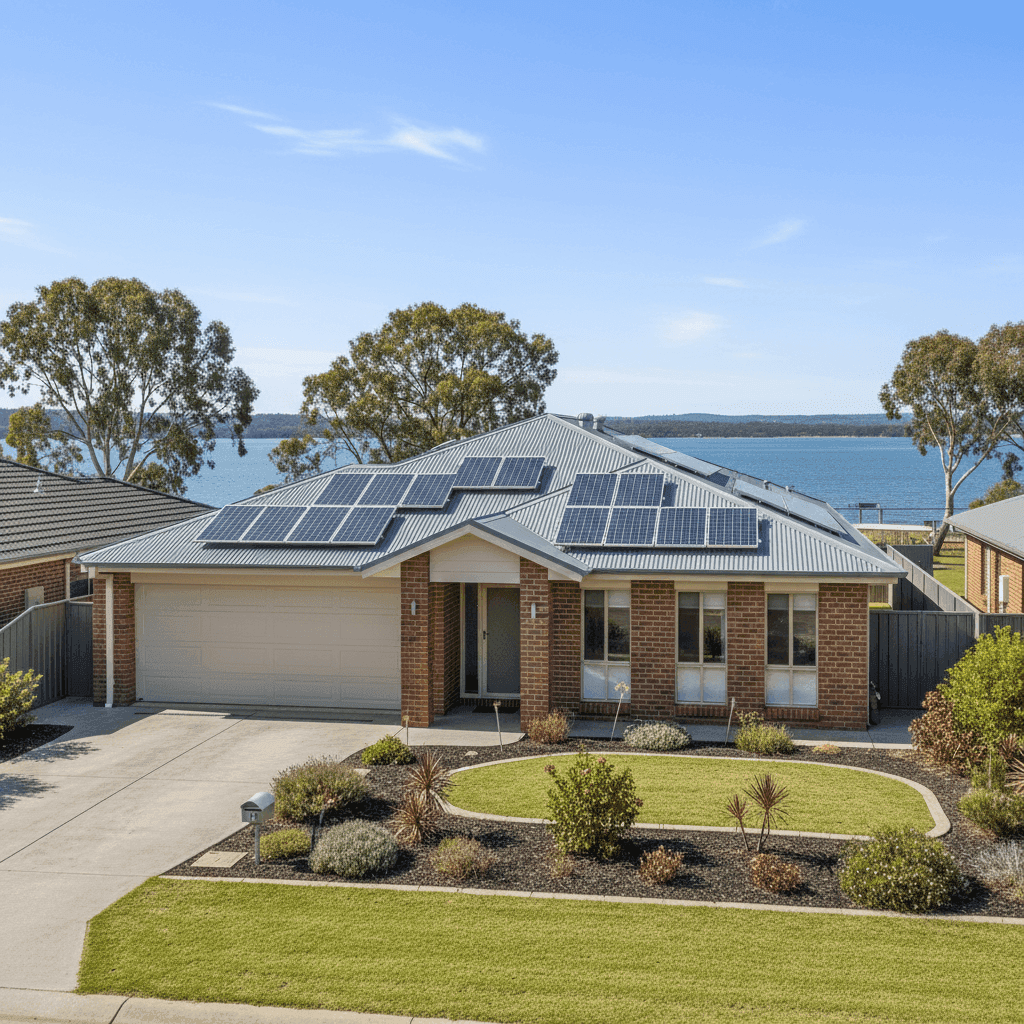
Paynesville is a picturesque waterfront town on the Gippsland Lakes in eastern Victoria — and like many regional coastal communities, home insurance here comes with its own set of considerations. This article takes a close look at a real home and contents insurance quote for a four-bedroom, two-bathroom free standing home in Paynesville (VIC 3880), built in 2005 with brick veneer walls and a Colorbond steel roof. We'll break down whether the quoted premium is fair, how it stacks up against local and national benchmarks, and what steps homeowners can take to potentially reduce their costs.
---
Is This Quote Fair?
The quoted annual premium for this property is $2,994 per year (or roughly $283 per month), covering both building ($813,000 sum insured) and contents ($77,000). Based on CoverClub's pricing data, this quote is rated Expensive — above average for the Paynesville area.
To put that in context: the suburb average premium sits at $2,217 per year, and the median is even lower at $2,020. That means this quote is running approximately 35% above the suburb average and nearly 48% above the median. For a homeowner who hasn't shopped around recently, that gap could represent several hundred dollars in unnecessary spending each year.
That said, "expensive" doesn't automatically mean "wrong." A higher sum insured for the building ($813,000) and a combined contents cover of $77,000 will naturally push premiums upward compared to properties with lower insured values. The excess structure — $1,000 for both building and contents — is fairly standard and doesn't flag any obvious concern.
Still, the gap between this quote and the suburb median is wide enough to warrant a comparison. Insurers price risk differently, and what one provider charges for this profile, another may offer at a meaningfully lower rate for equivalent cover.
---
How Paynesville Compares
Understanding where Paynesville sits in the broader pricing landscape is useful context for any homeowner reviewing their policy. Here's how the numbers line up:
| Benchmark | Annual Premium |
|---|---|
| This Quote | $2,994 |
| Paynesville Suburb Average | $2,217 |
| Paynesville Suburb Median | $2,020 |
| Paynesville 25th Percentile | $1,475 |
| Paynesville 75th Percentile | $2,729 |
| VIC State Average | $3,000 |
| VIC State Median | $2,718 |
| National Average | $5,347 |
| National Median | $2,764 |
| Wellington LGA Average | $4,409 |
(Based on 39 quotes sampled for the Paynesville suburb. See full [Paynesville suburb insurance stats](https://coverclub.com.au/stats/VIC/3880/paynesville), [VIC state stats](https://coverclub.com.au/stats/VIC), and [national stats](https://coverclub.com.au/stats/national).)
A few things stand out here. First, while this quote is above the suburb average, it actually sits just below the Victorian state average of $3,000 — suggesting that on a state-wide basis, the premium isn't dramatically out of line. Second, the Wellington LGA average of $4,409 is notably high, which may reflect the broader risk profile of the region, including flood-prone and low-lying areas around the Gippsland Lakes. Paynesville's proximity to the water is likely a factor that insurers weigh carefully.
Nationally, the average premium of $5,347 — heavily influenced by high-risk areas in Queensland and Northern Australia — makes this quote look quite reasonable by comparison. The national median of $2,764 is a more meaningful reference point, and this quote sits only modestly above it.
---
Property Features That Affect Your Premium
Several characteristics of this property will be influencing the quoted premium, both positively and negatively.
Brick veneer construction is generally viewed favourably by insurers. It offers solid resistance to fire and wind compared to lightweight cladding materials, which can translate into lower risk assessments. Combined with a slab foundation, this home has a structural profile that most insurers consider low-to-moderate risk.
The Colorbond steel roof is another plus. Steel roofing is durable, resistant to ember attack, and performs well in storms — all factors that reduce the likelihood of a claim. It's a common choice in regional Victoria and tends to be priced competitively by insurers.
Solar panels are worth noting. While they add value to the property and reduce energy costs, they can also add a small amount to insurance premiums. Panels need to be covered as part of the building sum insured, and some insurers apply a loading for the added replacement cost or potential roof penetration risk. It's worth confirming with your insurer that your solar system is fully covered under your current policy.
The 2005 construction year places the home in a relatively modern bracket. Newer builds generally benefit from updated wiring, plumbing, and structural standards, reducing the risk of certain types of claims compared to older homes.
No pool and no ducted climate control both simplify the risk profile. Pools carry liability considerations, and ducted systems can be costly to replace — their absence keeps the contents and building sum insured more straightforward.
Finally, the location itself is a key factor. Paynesville sits on a peninsula surrounded by the Gippsland Lakes, and while it's not classified as a cyclone risk area, proximity to water raises questions around flood, storm surge, and drainage risk. Insurers will factor in the postcode's historical claims data, and the elevated Wellington LGA average suggests that regional risk is being priced into policies across the area.
---
Tips for Homeowners in Paynesville
1. Compare quotes before your renewal date The spread between the 25th percentile ($1,475) and 75th percentile ($2,729) in Paynesville is wide — nearly $1,250 per year. That variation reflects real differences between insurers, not just in price but in cover. Use a comparison tool like CoverClub to benchmark your renewal quote at least 30 days before it rolls over.
2. Review your building sum insured carefully At $813,000, the building sum insured is the largest driver of this premium. Make sure this figure reflects the actual cost to rebuild — not the market value of the property. Overcovering can inflate your premium unnecessarily, while undercovering leaves you exposed. A quantity surveyor or your insurer's calculator can help you arrive at an accurate figure.
3. Confirm your solar panels are covered Solar systems are often an afterthought in policy reviews, but they represent a meaningful asset. Check whether your panels are included in the building sum insured, and ask your insurer whether there are any specific exclusions or sub-limits that apply to solar equipment.
4. Ask about flood cover and policy inclusions Given Paynesville's lakeside location, it's essential to understand exactly what your policy covers when it comes to water damage. "Storm" and "flood" are defined differently across policies — flood cover (from rising bodies of water) is not always included by default. Review your Product Disclosure Statement carefully and consider adding flood cover if it's not already part of your policy.
---
Compare Your Home Insurance Today
Whether you're renewing soon or simply want to know if you're getting a fair deal, CoverClub makes it easy to compare home and contents insurance quotes from multiple providers in one place. With pricing benchmarks drawn from real quotes across Paynesville and the broader Wellington region, you'll have the context you need to make a confident decision. Get a quote now at CoverClub and see how your premium stacks up.