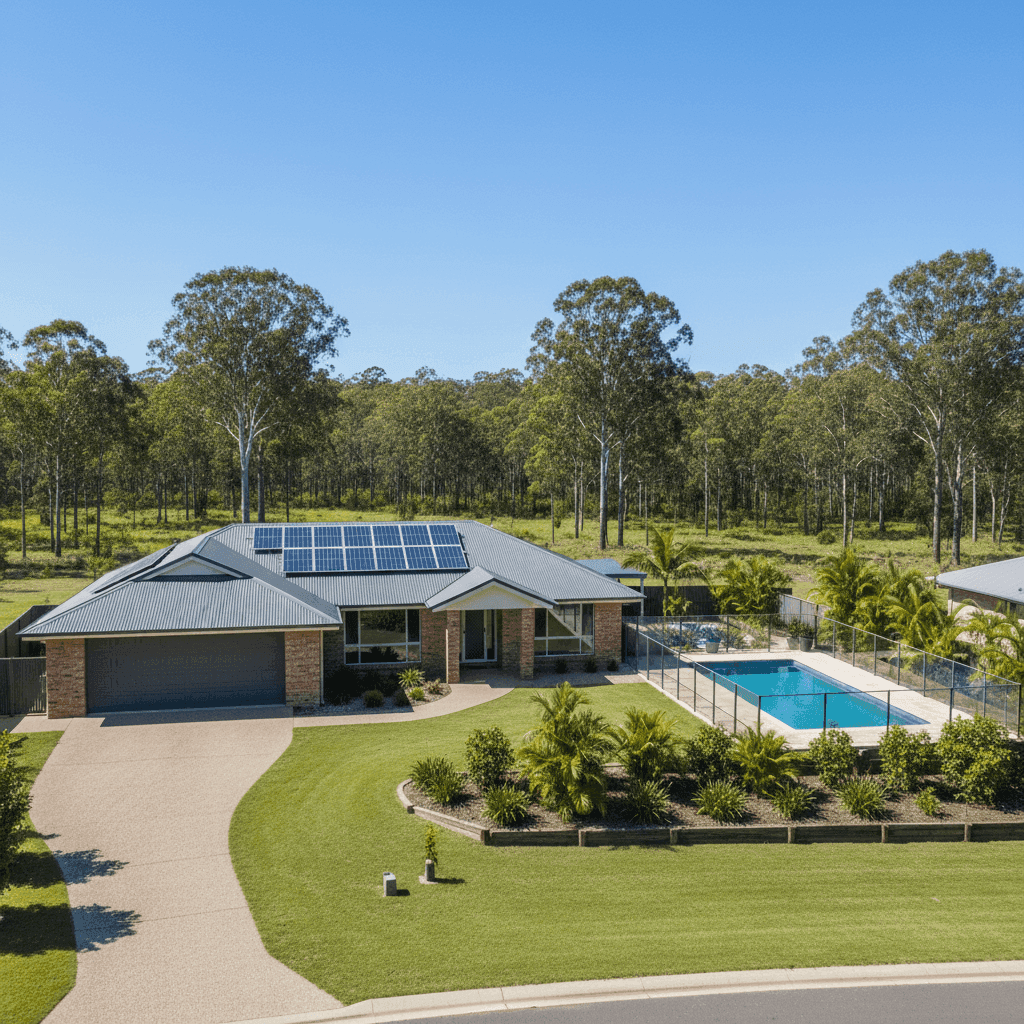
If you own a free standing home in Peachester, QLD 4519, you're likely aware that insurance costs across Queensland can vary dramatically depending on where you live and what your property looks like. This article breaks down a real home and contents insurance quote for a four-bedroom, two-bathroom home in Peachester — and puts it in context against suburb, state, and national benchmarks — so you can judge whether your own premium is fair.
---
Is This Quote Fair?
The quote in question comes in at $2,748 per year (or $270/month) for combined home and contents cover, with a building sum insured of $850,000 and contents valued at $75,000. The building excess is $3,000 and the contents excess is $1,000.
Our pricing analysis rates this quote as CHEAP — below average for the area. That's a meaningful finding. In a suburb like Peachester, where the average annual premium sits at $3,555, landing a quote nearly $800 below that benchmark is genuinely good value. Even compared to the suburb's 25th percentile (the cheapest quarter of quotes sampled), this premium of $2,748 still comes in below — suggesting this is among the more competitive prices available in the postcode.
For homeowners used to seeing eye-watering Queensland insurance bills, a sub-$2,800 annual premium for a substantial 214 sqm brick veneer home with a pool and solar panels is worth paying attention to.
---
How Peachester Compares
To fully appreciate this quote, it helps to zoom out and look at the broader pricing landscape. Here's how Peachester stacks up:
| Benchmark | Annual Premium |
|---|---|
| This Quote | $2,748 |
| Peachester Suburb Average | $3,555 |
| Peachester Suburb Median | $3,430 |
| Peachester 25th Percentile | $3,059 |
| Sunshine Coast LGA Average | $4,608 |
| QLD State Average | $4,547 |
| QLD State Median | $3,931 |
| National Average | $2,965 |
| National Median | $2,716 |
A few things stand out here. First, Peachester premiums are notably lower than the broader Sunshine Coast LGA average of $4,608 and the Queensland state average of $4,547. This reflects the fact that Peachester sits in a relatively lower-risk zone compared to coastal and cyclone-prone parts of Queensland.
Second, this particular quote is also below the national average of $2,965 and sits very close to the national median of $2,716 — meaning it's competitive not just locally, but across the country.
For a more detailed breakdown of what homeowners in this postcode are paying, visit the Peachester suburb insurance stats page.
---
Property Features That Affect Your Premium
Insurance underwriters don't pull premiums out of thin air — every feature of your home feeds into the risk calculation. Here's how the characteristics of this particular property likely influence the final price:
Brick Veneer Walls Brick veneer is one of the more favourable wall materials from an insurer's perspective. It offers solid fire resistance and durability, which typically translates to lower premiums compared to weatherboard or lightweight cladding.
Steel / Colorbond Roof A Colorbond steel roof is another tick in the insurer's favour column. It's resistant to fire, won't rot, and holds up well in storms — all of which reduce the likelihood of a major claim. This is a meaningful advantage in South East Queensland, where severe storm events are not uncommon.
Concrete Slab Foundation Slab foundations are generally considered low-risk by insurers. They're less susceptible to subsidence and pest damage than older stumped or timber-framed foundations, which keeps risk — and premiums — lower.
Swimming Pool A pool adds liability risk and can increase the cost of a rebuild, which is why it's factored into the building sum insured. Homeowners with pools should ensure their policy includes adequate public liability cover.
Solar Panels Solar panels are an increasingly common feature across Queensland homes. Most standard home insurance policies cover panels as a fixture of the building, but it's worth confirming this with your insurer — particularly for battery storage systems, which may need to be specified separately.
Timber / Laminate Flooring Timber and laminate floors can be more expensive to repair or replace after a water damage event compared to tiles. This can nudge contents and building claims slightly higher, though the impact on premiums is generally modest.
No Cyclone Risk Peachester is not classified as a cyclone risk area, which is a significant premium advantage. Properties in cyclone zones — particularly in North Queensland — can face dramatically higher premiums due to the elevated risk of catastrophic wind damage.
Standard Fittings With standard-quality fittings (rather than premium or high-end finishes), the cost to repair or rebuild is more predictable and typically lower, which insurers reward with more competitive pricing.
---
Tips for Homeowners in Peachester
Even with a competitive quote in hand, there are always ways to make sure you're getting the best possible value from your home insurance.
1. Review Your Building Sum Insured Regularly Construction costs in Queensland have risen sharply in recent years. A building sum insured of $850,000 for a 214 sqm home is substantial, but it's worth checking whether this figure reflects current rebuild costs in your area — not just the market value of the property. Underinsurance is one of the most common and costly mistakes homeowners make.
2. Check What Your Policy Says About Solar Panels With solar panels on the roof, it's important to read the fine print. Confirm whether your panels are covered under the building section, whether there are any exclusions for storm or hail damage, and whether a battery storage system (if you have or plan to install one) requires separate listing.
3. Consider Your Excess Levels Carefully This quote carries a $3,000 building excess and a $1,000 contents excess. A higher excess is one of the most effective ways to reduce your annual premium, but make sure you can genuinely afford to pay it in the event of a claim. If $3,000 would be a financial stretch, it may be worth adjusting.
4. Compare Quotes at Renewal Time Insurers don't always reward loyalty with competitive pricing. Even if your current premium looks reasonable, running a fresh comparison at renewal — especially through a platform like CoverClub — can surface better deals you might otherwise miss.
---
Ready to Compare?
Whether you're a first-time buyer or a long-term homeowner in Peachester, making sure you're not overpaying for insurance is one of the simplest ways to protect your household budget. At CoverClub, we make it easy to compare home and contents quotes from multiple insurers in minutes. Get a quote today and see how your current premium stacks up.