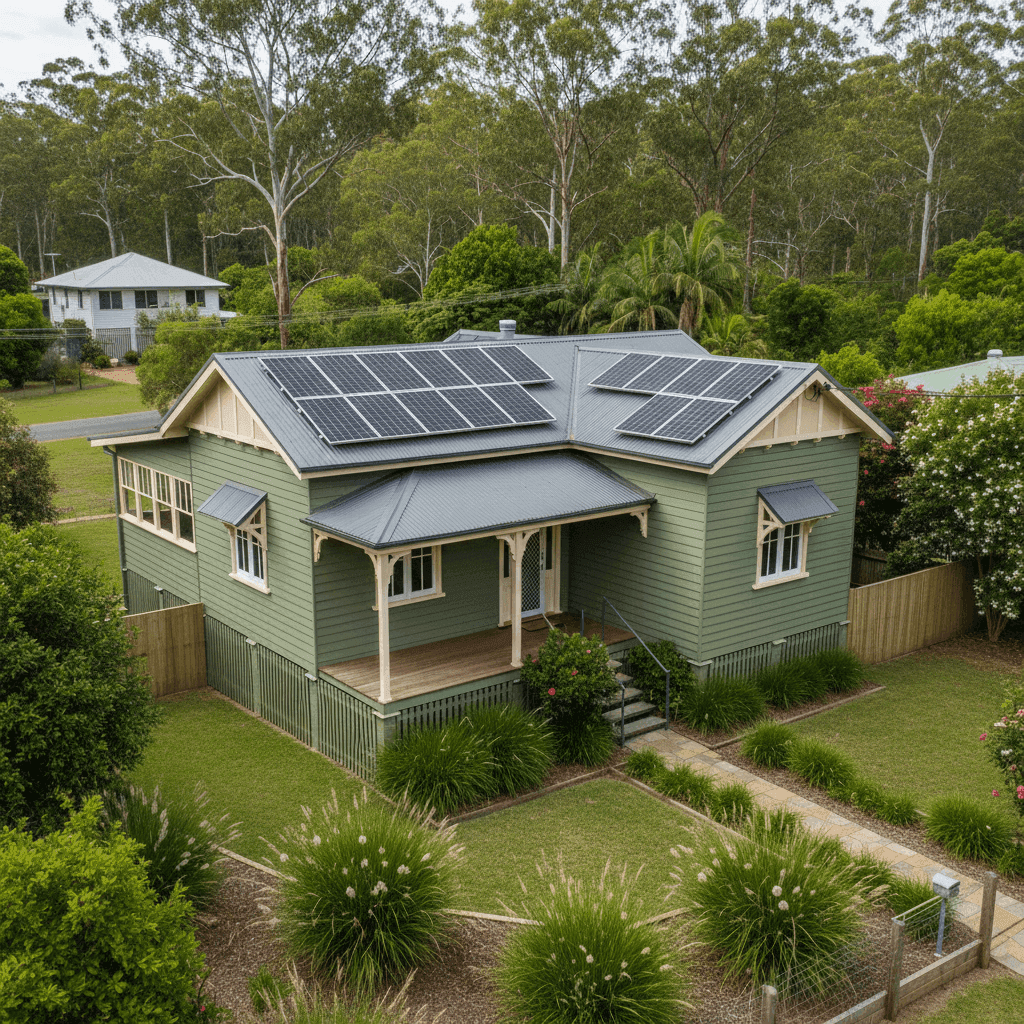
If you own a free standing home in Peachester, QLD 4519, you already know this hinterland pocket of the Sunshine Coast offers a relaxed lifestyle — but that doesn't mean your insurance bill should be anything but sharp. This article breaks down a real home and contents insurance quote for a four-bedroom weatherboard property in the area, compares it against local, state, and national benchmarks, and offers practical advice for keeping your premium in check.
---
Is This Quote Fair?
The quote in question comes in at $3,376 per year (or $324/month) for combined home and contents cover, with a building sum insured of $550,000 and contents valued at $50,000. Both the building and contents excess are set at $1,000.
Our pricing engine has rated this quote as FAIR — Around Average, which is a reasonable outcome for a property of this type and age in the Peachester area. It sits just below the suburb average of $3,476/yr and comfortably within the middle band of the local pricing range (25th–75th percentile: $2,560–$3,699). In other words, you're not overpaying, but there's still room to potentially do better.
It's worth noting that "fair" doesn't mean "the best available." Depending on your insurer, your claims history, and the specific policy features included, a comparable quote could sit closer to the 25th percentile — a meaningful saving of over $800 per year.
---
How Peachester Compares
Understanding where your premium sits relative to broader markets helps put the number in perspective. Here's how Peachester stacks up:
| Benchmark | Premium |
|---|---|
| This quote | $3,376/yr |
| Peachester suburb average | $3,476/yr |
| Peachester suburb median | $3,148/yr |
| Sunshine Coast LGA average | $7,249/yr |
| QLD state average | $9,129/yr |
| QLD state median | $3,903/yr |
| National average | $5,347/yr |
| National median | $2,764/yr |
(Based on [Peachester suburb data](https://coverclub.com.au/stats/QLD/4519/peachester) from 27 quotes, [QLD state data](https://coverclub.com.au/stats/QLD), and [national benchmarks](https://coverclub.com.au/stats/national).)
A few things stand out here. The QLD state average of $9,129/yr is dramatically higher than this quote — but that figure is heavily skewed by high-risk coastal and cyclone-prone areas of Queensland, where premiums can be eye-watering. Peachester, situated in the hinterland west of the Sunshine Coast, is not classified as a cyclone risk area, which is a significant factor in keeping premiums more manageable.
Similarly, the national average of $5,347/yr is pulled upward by flood-prone and cyclone-exposed regions across the country. The national median of $2,764/yr is a more grounded comparison point, and this quote sits about $600 above it — reasonable given the $550,000 building sum insured.
The Sunshine Coast LGA average of $7,249/yr is notably higher than the Peachester suburb average, reflecting the wide variation in risk profiles across the broader LGA, particularly for coastal properties.
---
Property Features That Affect Your Premium
Several characteristics of this property directly influence how insurers price the risk:
Weatherboard Timber Walls
Timber weatherboard construction is one of the most common wall types in older Queensland homes, but it does carry a higher fire risk rating compared to brick veneer or double brick. Insurers factor this in, and it can push premiums slightly higher than equivalent brick homes. On the upside, weatherboard homes are generally cheaper to repair than brick structures, which can partially offset this.
Steel / Colorbond Roof
A Colorbond steel roof is viewed favourably by most insurers. It's durable, fire-resistant, and performs well in high-wind events — all of which reduce claim likelihood. This is a positive factor for your premium.
1985 Construction
Homes built in the mid-1980s sit in a moderate risk bracket. They predate modern building codes but are generally past the highest-risk age range (pre-1970s). Electrical and plumbing systems may be ageing, which some insurers consider when pricing, so it's worth ensuring these have been updated or inspected.
Concrete Slab Foundation
A slab foundation is generally considered stable and low-risk, particularly in non-flood-prone areas. It reduces the likelihood of subsidence-related claims and is viewed positively by underwriters.
Solar Panels
This property has solar panels installed, which are typically covered under a home and contents policy — but it's worth confirming with your insurer. Some policies cover solar panels as part of the building sum insured; others may require a specific endorsement. Ensure your $550,000 building sum insured accounts for the replacement cost of the system.
Ducted Climate Control
Ducted air conditioning adds to the replacement value of the home and is a factor in the contents or building sum insured, depending on whether it's fixed to the structure. Make sure your policy clearly covers this system, as it can be a costly item to replace.
---
Tips for Homeowners in Peachester
1. Review Your Sum Insured Annually
Building costs in Queensland have risen sharply in recent years. A $550,000 sum insured may have been accurate at the time of the quote, but construction cost inflation means your rebuild cost could be higher today. Underinsurance is one of the most common — and costly — mistakes homeowners make. Use a building cost calculator or speak to a quantity surveyor if you're unsure.
2. Compare Quotes Before Renewing
Insurers often reserve their best pricing for new customers. If you've been with the same provider for several years, your renewal premium may have crept up quietly. With this quote sitting near the suburb average, shopping around could bring you closer to the 25th percentile ($2,560/yr) — a potential saving of over $800 annually.
3. Check Your Solar Panel Coverage
As mentioned above, solar panels are a meaningful asset. Confirm in writing with your insurer whether they're covered under the building sum insured or as a separate item, and whether accidental damage and inverter failure are included. Not all standard policies cover these scenarios automatically.
4. Consider Bushfire Preparedness
While Peachester is not in a cyclone risk zone, the hinterland setting means bushfire risk is a relevant consideration. Maintaining a defensible space around your home — clearing gutters, trimming overhanging branches, and keeping grass short — can reduce your risk profile and may support a better premium at renewal time. Some insurers also offer discounts for properties with specific bushfire mitigation measures in place.
---
Ready to See If You Can Do Better?
A "fair" rating is a solid starting point, but it's not the finish line. The best way to know whether you're getting genuine value is to compare. At CoverClub, we make it easy to benchmark your current premium against the market and explore options that suit your property and budget.