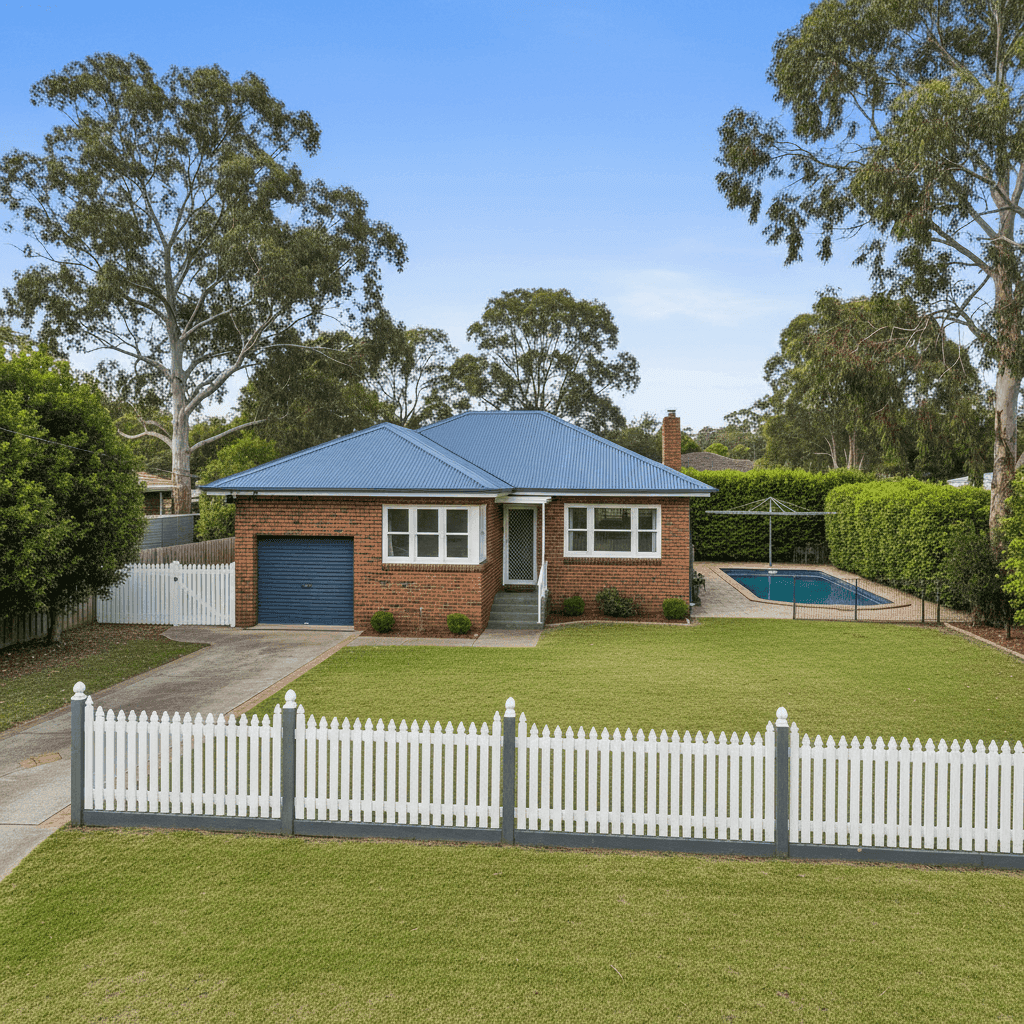
Peakhurst is a well-established suburb in Sydney's south, sitting within the Canterbury-Bankstown Local Government Area. Homes here tend to be older, character-filled properties on generous blocks — and this four-bedroom, three-bathroom free standing home is a textbook example. Built in 1950 and sitting on stumps with brick veneer walls and a Colorbond roof, it's the kind of property that has real charm but also a few quirks that insurers take a close look at when pricing cover.
This article breaks down a recent Home and Contents insurance quote for this property — $3,218 per year (or $308/month) — and puts it in context against what other homeowners in Peakhurst, across NSW, and nationally are paying.
---
Is This Quote Fair?
The short answer: this quote is rated Expensive — above average for the area.
With a building sum insured of $950,000 and contents covered at $50,000, this is a meaningful level of protection. But when you stack the $3,218 annual premium against the suburb average of $1,407/yr for Peakhurst, it's sitting at more than double what many local homeowners are paying. Even the 75th percentile for the suburb — meaning 75% of quotes come in below this level — sits at $1,950/yr. That puts this quote well above what most comparable properties in the area are attracting.
That said, context matters. The building sum insured here ($950,000) is likely higher than many of the quotes in the suburb sample, which will naturally push the premium up. A higher rebuild cost means more risk for the insurer, and that's reflected in the price. Still, it's worth shopping around — there can be significant variation between insurers for the same property.
---
How Peakhurst Compares
Here's how the premium stacks up across different benchmarks:
| Benchmark | Average Premium | Median Premium |
|---|---|---|
| Peakhurst (suburb) | $1,407/yr | $1,383/yr |
| NSW (state) | $9,528/yr | $3,770/yr |
| National | $5,347/yr | $2,764/yr |
| Canterbury-Bankstown LGA | $9,344/yr | — |
A few things stand out here. First, the NSW state average of $9,528/yr is dramatically higher than the suburb average — this is largely driven by high-value properties and high-risk areas (such as flood-prone or bushfire-prone zones) pulling the average up. The median of $3,770/yr is a more reliable indicator for typical NSW homeowners.
Compared to the national median of $2,764/yr, this quote of $3,218/yr is above average but not dramatically so. The Canterbury-Bankstown LGA average of $9,344/yr suggests there are some very expensive properties and risk profiles in the area bringing that figure up — so Peakhurst itself appears to be a more affordable pocket within the LGA.
The suburb sample of 39 quotes gives us a reasonable baseline, with a 25th percentile of just $828/yr — indicating that simpler properties or lower sum insured values can attract quite competitive pricing in Peakhurst.
---
Property Features That Affect Your Premium
Several characteristics of this property will be influencing the premium, both up and down.
Age of construction (1950): A home built over 70 years ago introduces greater uncertainty around the condition of wiring, plumbing, and structural elements. Insurers factor this in, as older homes can be more susceptible to certain claims — particularly water damage and electrical faults.
Stump foundation: Homes on stumps (also called stumped or raised foundations) are common in older Sydney suburbs. While they offer great ventilation and can make pest inspections easier, they can also be more vulnerable to movement and subfloor damage. Some insurers price this risk differently.
Timber and laminate flooring: Timber floors are a beautiful feature but can be more costly to repair or replace following water damage or fire. This can nudge contents and building premiums slightly higher.
Brick veneer walls and Colorbond roof: Brick veneer is generally well-regarded by insurers — it's durable and fire-resistant. A steel Colorbond roof is similarly low-maintenance and performs well in storms, which is a positive from a risk perspective.
Swimming pool: The presence of a pool adds liability exposure to a policy. Accidents involving pools are a real concern for insurers, and this is typically reflected in the premium.
Ducted climate control: Ducted systems are expensive to repair or replace, and their presence increases the overall insured value of the home's fixtures and fittings — contributing to a higher building sum insured.
Standard fittings quality: With standard (rather than premium) fittings, the rebuild cost per square metre is more moderate, which helps keep the sum insured — and therefore the premium — from escalating further.
---
Tips for Homeowners in Peakhurst
1. Review your sum insured carefully At $950,000, the building sum insured is substantial. Make sure it accurately reflects the cost to rebuild your home from scratch (not the market value), including demolition and professional fees. Overinsuring pushes your premium up unnecessarily, while underinsuring can leave you badly exposed at claim time. Use a building cost calculator or get a professional assessment.
2. Shop around — seriously With this quote sitting well above the suburb average, comparing insurers could yield meaningful savings. Premiums for the same property can vary by hundreds — sometimes thousands — of dollars between providers. Use CoverClub to compare quotes and see what the market is actually offering for your specific property.
3. Consider your excess settings Both the building and contents excess are set at $1,000. Opting for a higher voluntary excess can reduce your annual premium noticeably. If you have a solid emergency fund and are unlikely to make small claims, this can be a smart trade-off.
4. Maintain your older home proactively Insurers reward lower-risk properties. Keeping on top of maintenance — particularly electrical systems, plumbing, and the condition of your stumps — not only protects your home but can also support your position when negotiating with insurers or disputing a claim. Document improvements you've made to the property, as some insurers will take these into account.
---
Ready to Find a Better Rate?
Whether you're happy with your current cover or convinced it's time to explore your options, CoverClub makes it easy to compare home and contents insurance quotes for properties across Peakhurst and the rest of Australia. Get a quote today and see how much you could save — or simply confirm that your current policy is genuinely competitive. You can also explore local premium data for Peakhurst to see exactly where your quote sits in the market.