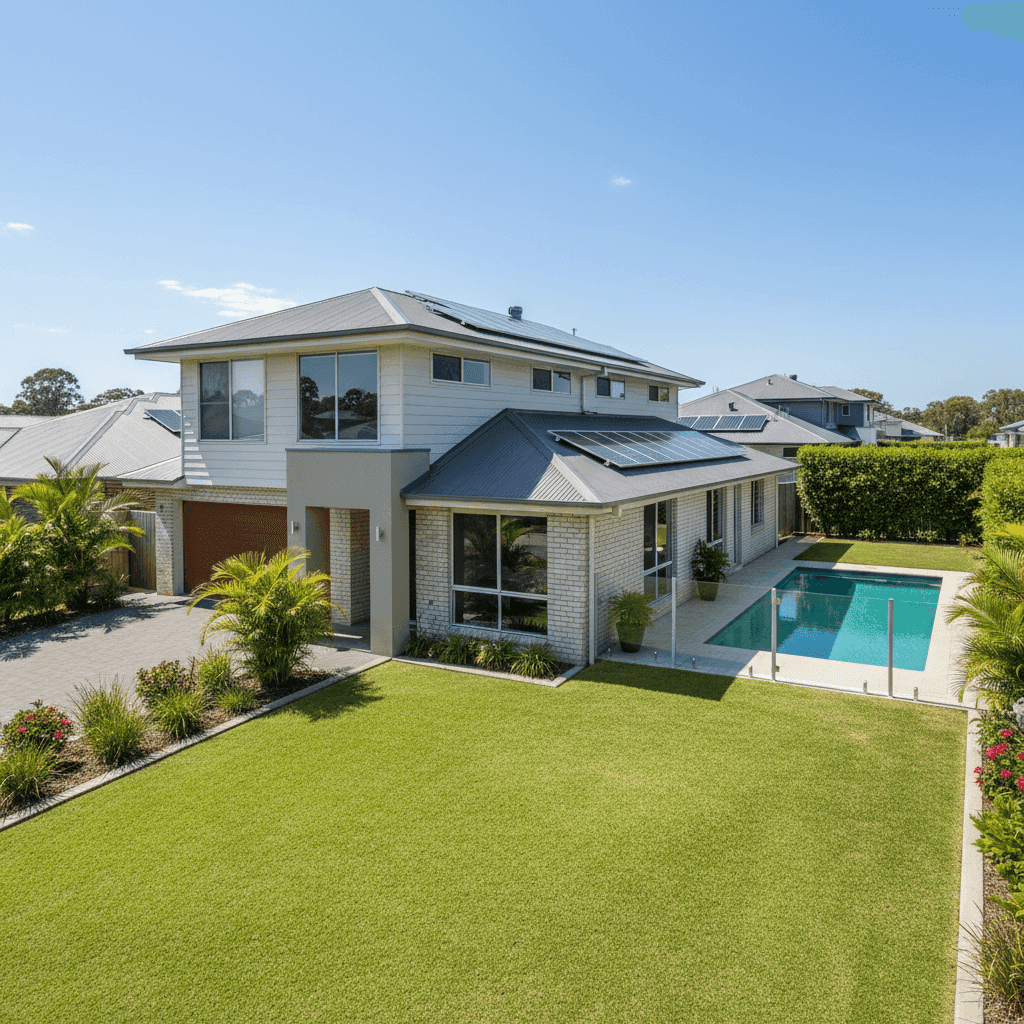
Pelican Waters is one of the Sunshine Coast's most sought-after residential addresses — a master-planned canal community in postcode 4551 known for its waterfront lifestyle, quality housing stock, and proximity to Caloundra's beaches. If you own a substantial free standing home here, you'll already know that insuring it properly is no small matter. This article breaks down a real building insurance quote for a five-bedroom property in Pelican Waters, puts the premium in context, and offers practical guidance for homeowners looking to get the best value cover.
---
Is This Quote Fair?
The quote in question sits at $4,899 per year (or $463/month) for building-only cover on a five-bedroom, two-bathroom brick veneer home with a sum insured of $1,400,000. Our price rating for this quote is Expensive — Above Average.
That assessment is grounded in real data. Based on 130 quotes collected for Pelican Waters (postcode 4551), the suburb average premium is $3,758/yr and the median sits at $3,243/yr. This quote lands well above both benchmarks — and even above the 75th percentile of $4,202/yr — meaning it is more expensive than at least three-quarters of comparable quotes in the area.
That said, "expensive" doesn't automatically mean "wrong." A $1,400,000 sum insured is on the higher end for residential building cover, and the property's features — including a swimming pool, solar panels, and above-average fittings — all contribute to a higher replacement cost and, consequently, a higher premium. The key question for any homeowner is whether the price reflects genuine risk and rebuild value, or whether there's room to shop around for a more competitive rate.
---
How Pelican Waters Compares
To understand whether this premium is reasonable in a broader context, it helps to zoom out:
| Benchmark | Premium |
|---|---|
| This quote | $4,899/yr |
| Pelican Waters suburb average | $3,758/yr |
| Pelican Waters suburb median | $3,243/yr |
| Sunshine Coast LGA average | $7,249/yr |
| QLD state average | $9,129/yr |
| QLD state median | $3,903/yr |
| National average | $5,347/yr |
| National median | $2,764/yr |
A few things stand out here. First, while this quote feels steep compared to the local suburb median, it actually sits below both the Sunshine Coast LGA average ($7,249/yr) and the Queensland state average ($9,129/yr). Queensland's elevated averages are largely driven by high-risk coastal and cyclone-prone areas in the north of the state, which push figures up considerably.
Compared to the national average of $5,347/yr, this quote is actually slightly below par — suggesting the property is being priced in line with, or modestly better than, what you'd expect to pay across Australia for a home of this size and value.
You can explore the full picture for Queensland home insurance premiums here, or dive into the Pelican Waters-specific data to see how your own situation stacks up.
---
Property Features That Affect Your Premium
Every home is different, and insurers weigh up a range of property characteristics when calculating your premium. Here's how the key features of this particular home are likely influencing the quote:
Size and Sum Insured
At 277 sqm and a sum insured of $1,400,000, this is a large home with a high rebuild cost. Insurers price building cover based on what it would cost to fully reconstruct the property from scratch — and with above-average fittings, that figure is understandably elevated.
Brick Veneer Construction and Colorbond Roof
Brick veneer walls are generally viewed favourably by insurers — they offer solid fire resistance and structural durability. A steel Colorbond roof is similarly well-regarded: it's lightweight, low-maintenance, and performs well in storm conditions. These construction choices typically attract more competitive premiums compared to timber or fibrous cement alternatives.
Slab Foundation and Tile Flooring
A concrete slab foundation is considered low-risk from an insurer's perspective — there's no subfloor cavity to trap moisture or harbour pests. Tile flooring throughout further reduces risk associated with water damage and wear, and may contribute positively to how the property is assessed.
Swimming Pool
A pool adds meaningful replacement value to the property and can introduce additional liability considerations. Insurers factor in the cost of pool equipment, fencing compliance, and potential water-related damage when pricing cover for homes with pools.
Solar Panels
Solar panel systems — including inverters, mounting hardware, and wiring — add to the insurable value of a home. Depending on the policy, solar panels may be covered as part of the building sum insured or may require separate consideration. It's worth confirming exactly what your policy covers here.
Above-Average Fittings
Kitchens with stone benchtops, quality appliances, and premium bathroom fixtures all increase the cost to rebuild or repair. Homes rated as having above-average fittings will generally attract higher premiums to reflect this reality.
No Cyclone Risk
Pelican Waters sits outside Australia's designated cyclone risk zones, which is a meaningful premium advantage for homeowners in this area. Properties in cyclone-prone regions of Queensland can face dramatically higher premiums, so this is a genuine cost saving.
---
Tips for Homeowners in Pelican Waters
1. Shop around — even if your current insurer seems reasonable Given that this quote sits above the local suburb median, it's worth comparing offers from multiple insurers. Premiums for the same property can vary by hundreds — sometimes thousands — of dollars depending on the provider. Getting a fresh quote through CoverClub takes minutes and could reveal meaningfully cheaper options.
2. Review your sum insured carefully A $1,400,000 sum insured is substantial, and while it's important not to be underinsured, it's equally worth ensuring the figure accurately reflects your home's current rebuild cost — not its market value. Consider commissioning a professional building valuation every few years, particularly after renovations or significant market shifts in construction costs.
3. Ask about discounts for security and safety features Many insurers offer premium reductions for homes with monitored alarm systems, deadbolts, smoke detectors, and pool safety compliance. If your home has these features, make sure your insurer knows — and ask whether they translate to a discount.
4. Consider your excess strategically The building excess on this quote is $1,000. Opting for a higher voluntary excess can reduce your annual premium, which makes sense if you have the financial buffer to cover a larger out-of-pocket cost in the event of a claim. Run the numbers over a two-to-three year period to see whether the savings outweigh the increased risk exposure.
---
Compare Your Options with CoverClub
Whether you're reviewing an existing policy or shopping for cover on a new purchase, CoverClub makes it easy to compare home insurance quotes side by side. Our data is drawn from real quotes across Australia, so you can see exactly how your premium stacks up against your neighbours and the broader market. Start your comparison today at CoverClub and make sure you're getting the right cover at a fair price.