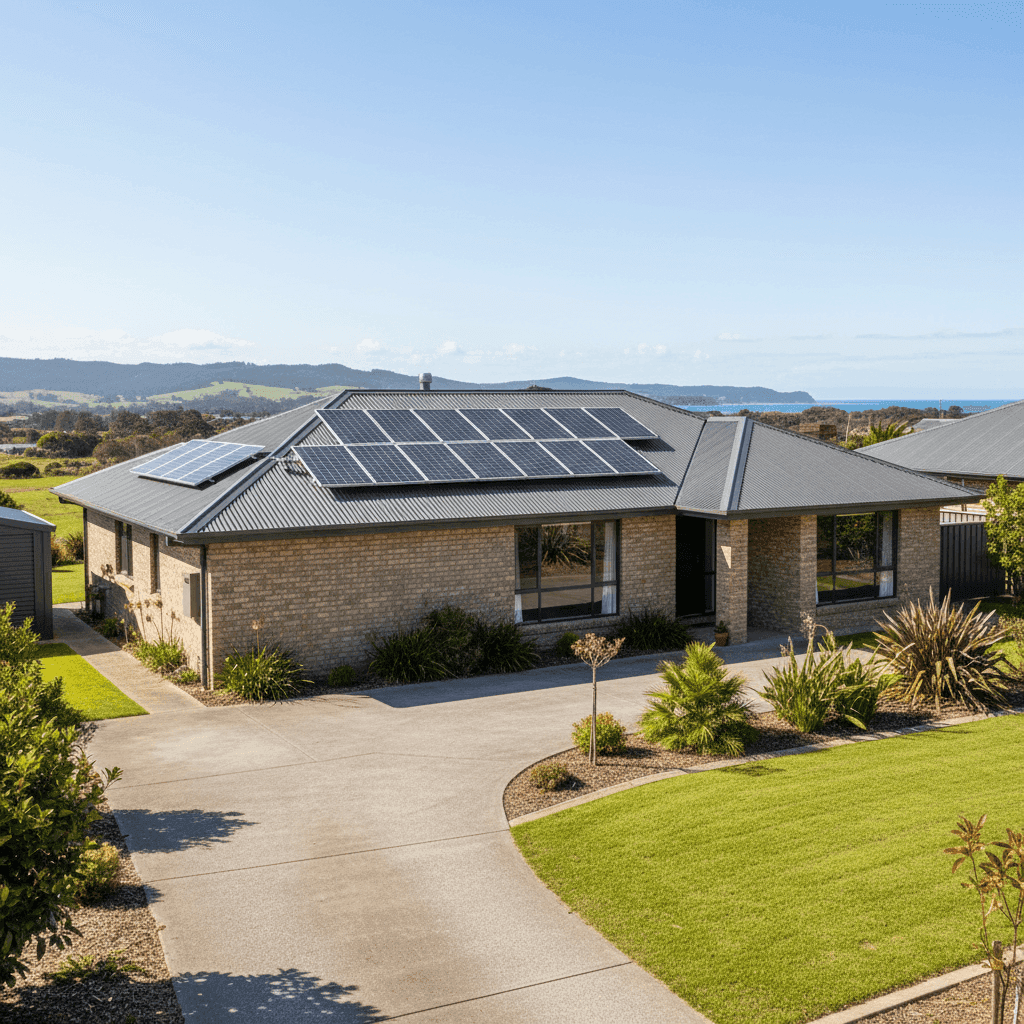
Nestled along Tasmania's picturesque north-west coast, Penguin is a charming seaside town that offers residents a relaxed lifestyle with easy access to Burnie and the broader region. If you own a free-standing home here, you'll know that protecting your property is just as important as enjoying the view. This article breaks down a real home and contents insurance quote for a 3-bedroom, 2-bathroom property in Penguin (TAS 7316), compares it against local, state, and national benchmarks, and offers practical guidance for homeowners in the area.
---
Is This Quote Fair?
The quote in question comes in at $836 per year (or about $78 per month) for combined home and contents cover — with a building sum insured of $550,000 and contents cover of $180,000. Our price rating for this quote is CHEAP (Below Average), meaning it sits well below what most comparable properties in the area are paying.
To put that into perspective:
- The suburb average for Penguin is $1,680/yr — this quote is roughly 50% cheaper
- The suburb median sits at $1,322/yr — still nearly $500 more than this quote
- Even the 25th percentile (the cheapest quarter of quotes in the suburb) is $1,021/yr — this quote undercuts that too
In short, this is an exceptionally competitive result. For a property with a $550,000 building sum insured and $180,000 in contents, securing cover for under $840 a year is a strong outcome by any measure.
---
How Penguin Compares
Looking beyond the suburb, the value of this quote becomes even clearer when you stack it against Tasmania-wide data and national benchmarks.
| Benchmark | Average Premium | Median Premium |
|---|---|---|
| Penguin (7316) | $1,680/yr | $1,322/yr |
| LGA (Burnie) | $2,099/yr | — |
| Tasmania | $2,458/yr | $2,272/yr |
| National | $2,965/yr | $2,716/yr |
A few things stand out here. First, Penguin's suburb average of $1,680 is notably lower than the broader Burnie LGA average of $2,099 and significantly below the Tasmanian state average of $2,458. This suggests that Penguin, as a specific locality, benefits from relatively favourable risk characteristics compared to other parts of the state.
Second, Tasmania's average premium of $2,458 is itself well below the national average of $2,965 — a reflection of the state's lower exposure to some of the catastrophic weather events (such as cyclones and severe flooding) that drive up premiums in Queensland and parts of northern Australia.
The quote analysed here — at $836 — sits an extraordinary 65% below the Tasmanian average and 72% below the national average. Based on a sample of 39 quotes in the Penguin suburb, this result is genuinely among the most competitive available in the area.
---
Property Features That Affect Your Premium
Several characteristics of this property likely contribute to its favourable premium. Understanding these factors can help you make informed decisions about your own cover.
Brick Veneer Walls
Brick veneer construction is generally well-regarded by insurers. It offers solid resistance to fire and is considered more durable than timber weatherboard, which can reduce the perceived risk of structural damage claims. This construction type is common across Australian suburbs and tends to attract standard or below-average risk ratings.
Steel / Colorbond Roof
A Colorbond steel roof is one of the most insurer-friendly roofing materials available. It's lightweight, highly durable, resistant to fire and corrosion, and holds up well in wind events. Compared to older materials like terracotta tiles or fibrous cement, a Colorbond roof can meaningfully reduce your premium.
Slab Foundation
Concrete slab foundations are straightforward for insurers to assess. They're stable, resistant to subsidence in most conditions, and don't carry the same risk profile as older stumped or pier-and-beam foundations, which can be more susceptible to movement and moisture damage.
Solar Panels
This property has solar panels installed, which are typically covered under a home insurance policy as a fixed fixture of the building. It's worth confirming with your insurer that your solar system is explicitly included in your building sum insured — particularly the inverter and mounting hardware — as some policies have specific conditions around this.
No Pool, No Cyclone Risk Zone
The absence of a swimming pool removes a common source of liability and accidental damage claims. Additionally, Penguin falls outside designated cyclone risk areas, which is a significant premium driver in northern Australia. This alone can make a substantial difference to what you pay.
1990 Construction
Homes built around 1990 sit in a middle ground for insurers — old enough to potentially have some wear, but modern enough to meet reasonable building standards. Regular maintenance is key to keeping this factor working in your favour.
---
Tips for Homeowners in Penguin
1. Don't Set and Forget Your Sum Insured
Building costs have risen sharply across Australia over the past few years. A $550,000 sum insured may have been accurate when the policy was first taken out, but it's worth revisiting annually. Underinsurance is one of the most common and costly mistakes homeowners make — if your rebuild cost exceeds your sum insured, you'll bear the difference out of pocket.
2. Review Your Contents Value Carefully
$180,000 in contents cover is a reasonable figure, but many homeowners underestimate how much their belongings are actually worth. Take the time to walk through your home and list high-value items — electronics, jewellery, furniture, appliances, and clothing all add up quickly. Some items may also require separate scheduling on your policy for full cover.
3. Consider Your Excess Strategy
This policy carries a $2,000 building excess and a $1,000 contents excess. Choosing a higher excess is one of the most effective ways to reduce your premium — and given how low this quote already is, it appears this strategy is working well here. That said, make sure your chosen excess is an amount you could genuinely afford to pay in the event of a claim.
4. Compare at Renewal Time
Even if you're happy with your current insurer, it pays to shop around every year. The insurance market shifts, and the quote that was cheapest last year may not be the best value today. Use a comparison tool like CoverClub to benchmark your renewal offer against the broader market before you commit.
---
Ready to Compare Your Own Quote?
Whether you're a first-time buyer or a long-time Penguin local, getting the right home insurance at the right price starts with knowing what's out there. At CoverClub, you can compare home and contents quotes side by side, backed by real suburb and state data. See how your premium stacks up against the Penguin suburb average, the Tasmanian state benchmark, and national figures — and make sure you're not paying more than you need to.