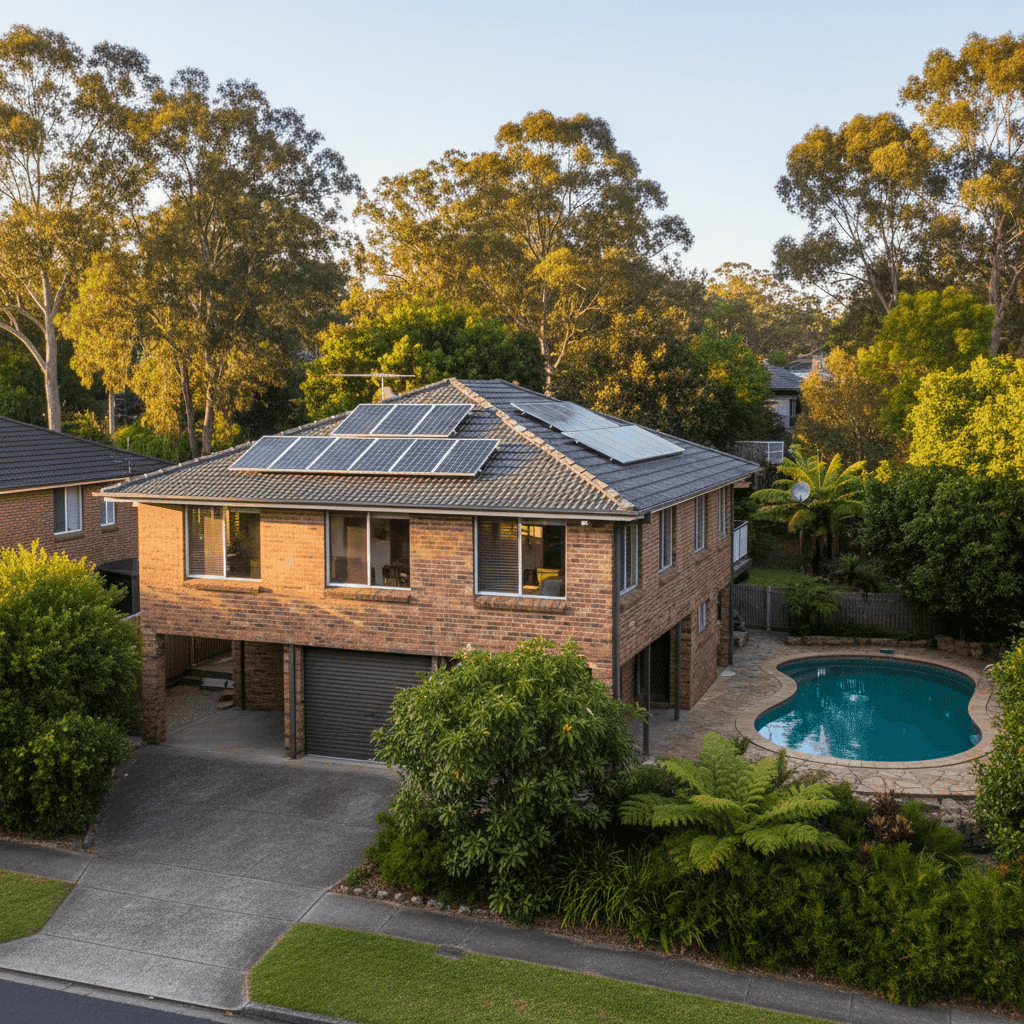
If you own a free standing home in Pennant Hills, NSW 2120, you're likely well aware that home insurance can be a significant household expense — and that premiums vary enormously depending on who you ask. This article breaks down a real home and contents insurance quote for a four-bedroom, two-bathroom brick veneer property in Pennant Hills, comparing it against suburb, state, and national benchmarks to help you understand what a fair price looks like.
---
Is This Quote Fair?
The quote in question came in at $1,770 per year (or $173/month) for combined home and contents cover, with a building sum insured of $785,000 and contents valued at $50,000. The building excess sits at $2,000, with a $1,000 excess on contents.
Our price rating for this quote? Cheap — well below average.
To put that in perspective, the suburb average premium for Pennant Hills is $3,865 per year, and the median sits at $3,779/yr. That means this quote is saving the homeowner roughly $2,095 annually compared to what others in the same postcode are typically paying. Even against the 25th percentile — meaning the cheapest quarter of quotes in the suburb — this result at $1,770/yr still undercuts the $2,876/yr benchmark.
In short: this is an exceptionally competitive result, and it illustrates just how much variation exists in the home insurance market.
---
How Pennant Hills Compares
Pennant Hills sits in the Hornsby LGA, one of Sydney's leafier northern suburbs. It's a desirable area, but insurance costs here run notably higher than both state and national averages — making a below-average quote all the more valuable.
Here's how the numbers stack up:
| Benchmark | Average Premium | Median Premium |
|---|---|---|
| Pennant Hills (2120) | $3,865/yr | $3,779/yr |
| Hornsby LGA | $3,666/yr | — |
| NSW | $3,801/yr | $3,410/yr |
| National | $2,965/yr | $2,716/yr |
Pennant Hills premiums are notably higher than the national average of $2,965/yr, and track closely with the broader NSW average of $3,801/yr. This reflects the elevated rebuild costs typical of established Sydney suburbs, the age of local housing stock, and the concentration of higher-value properties in the area.
The spread is also worth noting: with a 25th percentile of $2,876/yr and a 75th percentile of $4,555/yr, there's a $1,679 gap between the cheaper and more expensive ends of the market in Pennant Hills alone. That's a compelling reason to shop around rather than simply renewing with your existing insurer.
(Based on a sample of 28 quotes in the 2120 postcode.)
---
Property Features That Affect Your Premium
Several characteristics of this particular property influence how insurers assess risk — and ultimately, what they charge.
Brick veneer construction is generally viewed favourably by insurers. It offers solid fire resistance and structural durability, which can contribute to lower premiums compared to lightweight or timber-framed homes.
Concrete tile roofing is similarly well-regarded. Concrete tiles are durable, weather-resistant, and less susceptible to storm damage than older corrugated iron or terracotta alternatives — a meaningful factor in a suburb that can experience significant east coast low weather events.
Slab foundation is standard for many homes of this era and is generally considered a neutral-to-positive risk factor. However, homes built in 1975 are now approaching 50 years old, which means insurers may factor in the age of plumbing, electrical systems, and other building services when pricing risk.
Timber and laminate flooring can be a consideration for contents cover — these materials may be more susceptible to water damage than tiles, and replacement costs should be factored into your contents sum insured.
The property is elevated by at least one metre, which can be a double-edged sword. On one hand, elevation can reduce flood risk; on the other, it may introduce concerns around underfloor access, structural movement, or wind exposure depending on the insurer's assessment criteria.
Solar panels add value to the property but also add replacement cost. It's worth confirming with your insurer whether solar panels are covered under the building sum insured or require a separate endorsement — policies vary significantly on this point.
A swimming pool is another feature insurers take note of, primarily from a liability perspective. Most home and contents policies include some level of legal liability cover, but it's worth reviewing the specifics of your policy to ensure poolside incidents are adequately covered.
Finally, ducted climate control represents a meaningful fixed asset. These systems can cost $10,000–$25,000+ to replace, so ensuring your building sum insured accounts for this is important.
---
Tips for Homeowners in Pennant Hills
1. Review your building sum insured carefully. At $785,000, this quote's building cover reflects the higher rebuild costs typical of established Sydney homes. But with construction costs continuing to rise, it's worth getting an independent building replacement estimate — not just relying on insurer calculators — to make sure you're not underinsured.
2. Confirm solar panel and pool coverage explicitly. Don't assume these are automatically included. Ask your insurer in writing whether solar panels are covered as part of the building, and what liability provisions apply to your swimming pool. Gaps in cover here can be costly.
3. Shop around at renewal — every year. The $2,000+ gap between the cheapest and most expensive quotes in Pennant Hills shows that loyalty doesn't always pay. Insurers often reserve their best pricing for new customers, so comparing quotes annually is one of the simplest ways to keep your premium in check.
4. Consider your excess trade-off. This quote carries a $2,000 building excess and $1,000 contents excess. Higher excesses generally reduce your premium, but make sure the excess level is one you could comfortably cover out of pocket in the event of a claim. If cash flow is a concern, a lower excess — even at a slightly higher premium — may be the more prudent choice.
---
Ready to Compare Your Own Quote?
Whether you're a long-time Pennant Hills resident or you've recently purchased in the area, it pays to know what the market looks like. CoverClub makes it easy to see how your current premium stacks up against real quotes from across the suburb and state.
Get a home insurance quote today at CoverClub and find out if you're paying more than you need to.