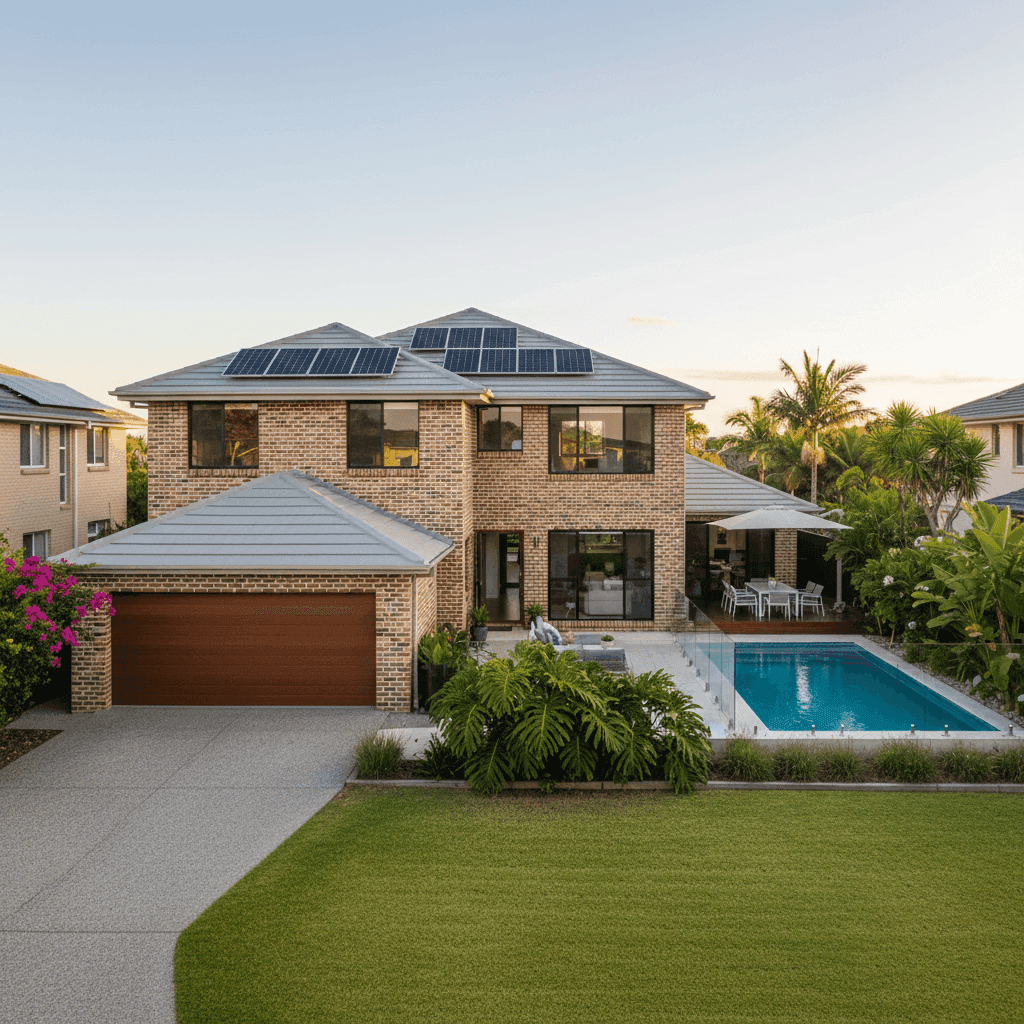
Peregian Beach is one of the Sunshine Coast's most sought-after coastal addresses — a relaxed beachside village with a strong sense of community and a property market to match. For owners of a free standing home in this postcode, getting the right home and contents insurance is an important financial decision. This article takes a close look at a recent quote for a five-bedroom, three-bathroom brick veneer home in Peregian Beach (QLD 4573), and puts the numbers in context so you can make a more informed call on your own cover.
---
Is This Quote Fair?
The quote in question comes in at $2,548 per year (or $243/month) for combined home and contents cover, with a building sum insured of $1,318,000 and contents valued at $200,000. The building excess is set at $3,000 and the contents excess at $1,000.
Our price rating for this quote is FAIR — Around Average.
That assessment is based on where the premium sits relative to other quotes we've seen for comparable properties in the area. At $2,548/yr, this quote falls comfortably below the Peregian Beach suburb average of $3,384/yr and also under the suburb median of $2,827/yr. In other words, the homeowner is paying less than what most others in this postcode are quoted — which is a reasonable outcome, even if there's still room to potentially do better.
It's worth noting that "fair" doesn't mean "the best available." The suburb's 25th percentile sits at $1,712/yr, which tells us that roughly a quarter of properties in Peregian Beach are being quoted significantly less. That gap is worth investigating, particularly if your property profile has changed recently or you haven't shopped around in a few years.
---
How Peregian Beach Compares
To put this quote in broader perspective, here's how the Peregian Beach market stacks up against Queensland and national benchmarks:
| Benchmark | Average Premium | Median Premium |
|---|---|---|
| Peregian Beach (4573) | $3,384/yr | $2,827/yr |
| Noosa LGA | $4,485/yr | — |
| Queensland | $4,547/yr | $3,931/yr |
| National | $2,965/yr | $2,716/yr |
A few things stand out here. First, Queensland premiums are substantially higher than the national average — the state average of $4,547/yr is more than $1,500 above the national figure. This reflects the elevated risk profile of much of Queensland, where weather events including storms, flooding, and hail are more prevalent than in southern states.
Second, Peregian Beach actually sits below both the Queensland state average and the Noosa LGA average of $4,485/yr. This suggests the suburb benefits from some favourable risk characteristics — notably, it is not classified as a cyclone risk area, which can be a significant premium driver further north in Queensland.
The quote of $2,548/yr sits below the national average as well, which is a solid outcome for a property of this size and value.
---
Property Features That Affect Your Premium
Several characteristics of this particular property have a meaningful influence on how insurers price the risk.
Size and sum insured: At 286 sqm and a building sum insured of $1,318,000, this is a substantial home. Larger homes cost more to rebuild, and the sum insured needs to reflect that accurately. Underinsurance is a common problem in Australia — if rebuild costs have risen since your policy was last reviewed, your cover may no longer be adequate.
Brick veneer construction with a tiled roof: This is generally viewed favourably by insurers. Brick veneer is more resistant to fire and wind damage than timber-framed or clad alternatives, and tiled roofs tend to perform well in storms compared to metal or older materials. This combination typically attracts more competitive premiums.
Slab foundation: A concrete slab is a standard and stable foundation type that doesn't carry the same flood or moisture risk as raised timber stumps. Insurers generally treat slab homes as lower risk for certain types of damage.
Swimming pool: A pool adds to the replacement cost of the property and can introduce additional liability considerations. It's important your sum insured accounts for the pool and associated equipment (pumps, filtration systems, fencing).
Solar panels: Solar systems are an increasingly common feature on Australian homes, but they're not always automatically covered under a standard building policy. It's worth confirming with your insurer that your panels — and any battery storage system — are explicitly included in your building cover.
Above average fittings: The property's above-average fittings quality means the cost to repair or replace internal fixtures and finishes is higher than a standard home. This is a key reason the sum insured is set at a premium level, and it's important not to underestimate this when calculating your building cover.
Built in 1985: Homes from this era can carry some additional considerations — older electrical wiring, plumbing, or roofing materials may require attention. Some insurers factor construction age into their risk assessment, though a well-maintained 1985 home with quality materials is generally still insurable at competitive rates.
---
Tips for Homeowners in Peregian Beach
1. Review your sum insured annually Building costs have risen sharply across Australia in recent years. A sum insured that was appropriate two or three years ago may now fall short of what it would actually cost to rebuild your home. Use a building cost calculator or speak with a quantity surveyor to make sure your $1,318,000 cover still reflects current rebuild costs.
2. Confirm solar panel coverage explicitly Don't assume your solar panels are covered just because they're attached to the roof. Ask your insurer directly whether panels are included under the building definition, what events are covered (e.g. storm damage, fire, accidental breakage), and whether there are any sub-limits that apply.
3. Shop around before renewal Even a "fair" quote can be beaten. The spread of premiums in Peregian Beach is wide — from $1,712/yr at the 25th percentile to $4,226/yr at the 75th percentile. That's a $2,500+ gap, which means the insurer and policy you choose matters enormously. Don't let your policy auto-renew without checking what else is available.
4. Consider your excess settings carefully This quote carries a $3,000 building excess and a $1,000 contents excess. A higher excess generally reduces your premium, but make sure the excess is an amount you could comfortably pay out of pocket in the event of a claim. If $3,000 would be a financial stretch, it may be worth comparing quotes with a lower building excess to understand the premium difference.
---
Compare Your Own Quote
Whether you're a long-time Peregian Beach local or new to the area, it pays to know where your premium sits relative to the market. CoverClub makes it easy to see how your current quote compares and to explore alternatives — all in one place. Get a quote today at CoverClub and find out if you're getting a fair deal on your home and contents insurance.