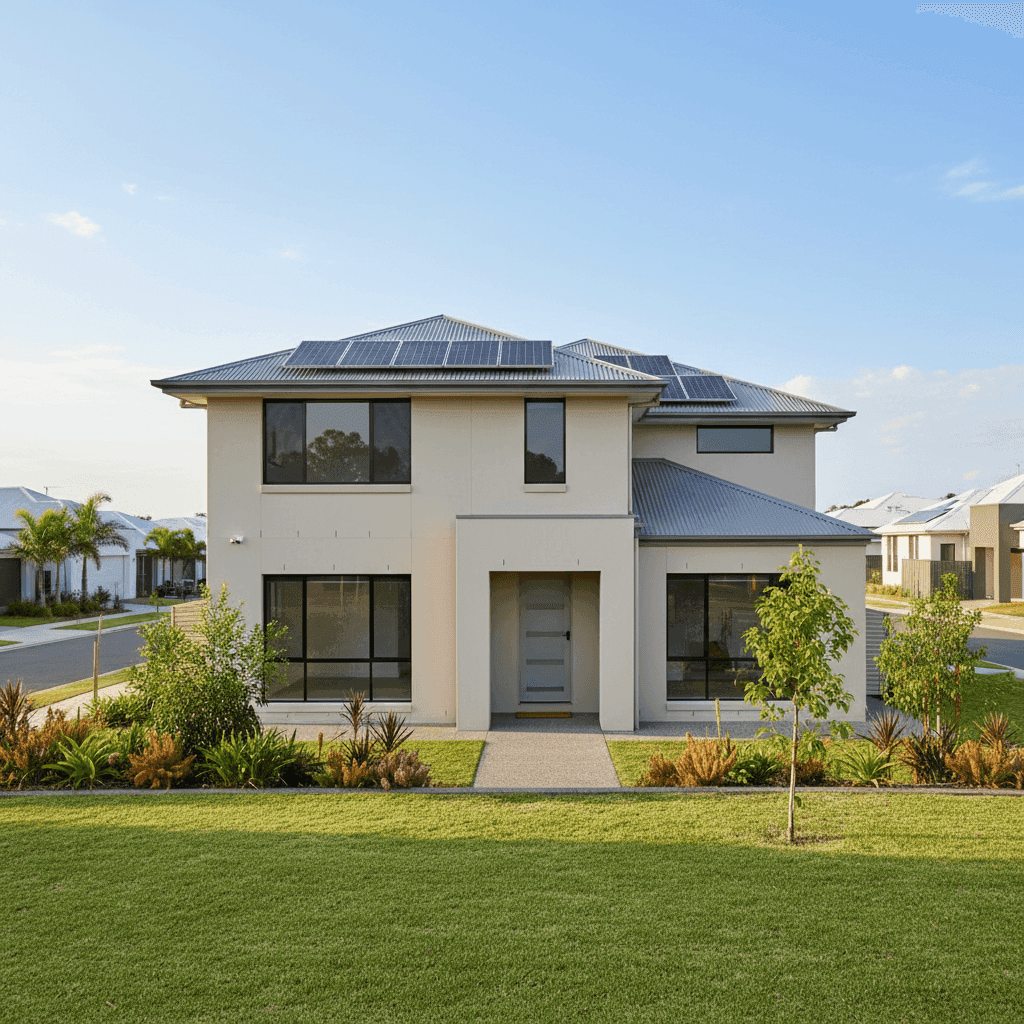
Peregian Springs is one of the Sunshine Coast's most sought-after residential pockets — a master-planned community known for its leafy streetscapes, modern homes, and relaxed coastal lifestyle. If you own or are considering insuring a free-standing home here, understanding what a fair premium looks like is an important first step. This article breaks down a real home and contents insurance quote for a 3-bedroom, 2-bathroom property in Peregian Springs (QLD 4573) and puts it into context against local, state, and national benchmarks.
---
Is This Quote Fair?
The quote in question comes in at $2,590 per year (or $248 per month) for combined home and contents cover — with a building sum insured of $701,000 and contents valued at $50,000. Both the building and contents excesses are set at $1,000.
Based on CoverClub's pricing data, this quote is rated CHEAP — sitting below the suburb average. That's a meaningful result for a homeowner. It suggests the premium is competitive relative to what most Peregian Springs residents are paying for comparable cover.
To put it plainly: this quote falls below the suburb's 25th percentile of $2,603 per year, meaning fewer than one in four quotes in the area come in this low. For a well-built, modern home with a reasonable sum insured, landing under that threshold is a solid outcome.
---
How Peregian Springs Compares
Understanding where your premium sits relative to the broader market helps you gauge whether you're getting genuine value — or whether it's worth shopping around further.
Here's how the numbers stack up:
| Benchmark | Premium |
|---|---|
| This Quote | $2,590 / yr |
| Peregian Springs Average | $3,113 / yr |
| Peregian Springs Median | $3,125 / yr |
| Peregian Springs 25th Percentile | $2,603 / yr |
| Peregian Springs 75th Percentile | $3,615 / yr |
| QLD State Average | $9,129 / yr |
| QLD State Median | $3,903 / yr |
| National Average | $5,347 / yr |
| National Median | $2,764 / yr |
| Noosa LGA Average | $18,770 / yr |
(Based on [31 quotes collected for Peregian Springs](https://coverclub.com.au/stats/QLD/4573/peregian-springs). See full [QLD state data](https://coverclub.com.au/stats/QLD) and [national statistics](https://coverclub.com.au/stats/national).)
A few things stand out here. First, the QLD state average of $9,129 is dramatically higher than what this homeowner is paying — largely because Queensland's insurance pool includes many high-risk coastal and cyclone-prone areas that push the average up significantly. The Noosa LGA average of $18,770 is a striking figure, though this is heavily influenced by premium beachfront and hinterland properties that attract very high replacement costs and elevated risk profiles.
Second, the national average of $5,347 is also well above this quote, reflecting the outsized influence of disaster-prone regions across Australia on the overall pricing landscape.
For Peregian Springs specifically, the suburb median of $3,125 gives a cleaner picture of what a "typical" homeowner pays locally. At $2,590, this quote sits roughly $535 below the suburb median — a meaningful saving of around 17%.
---
Property Features That Affect Your Premium
Several characteristics of this property work in the homeowner's favour when it comes to pricing.
Hebel external walls are a notable factor. Autoclaved aerated concrete (AAC) panels like Hebel are valued by insurers for their fire resistance and structural durability. Compared to traditional brick veneer or weatherboard, Hebel-clad homes can attract more favourable underwriting assessments.
Steel/Colorbond roofing is another positive. Colorbond is widely regarded as one of the most resilient roofing materials available in Australia — resistant to corrosion, fire, and high winds. Insurers tend to view it favourably compared to terracotta tiles or older corrugated iron.
Slab foundation is standard for modern Queensland builds and generally presents no elevated risk. Combined with tile flooring, which is both durable and resistant to moisture damage, the property has a low-maintenance, resilient profile overall.
The 2014 construction year is also relevant. Homes built after 2012 were constructed under updated Australian Building Codes that introduced stronger requirements for wind resistance and energy efficiency. A relatively modern build reduces the likelihood of structural claims related to age-related deterioration.
Solar panels are present on this property. While they add some replacement value to the building sum insured, most standard home insurance policies in Australia cover rooftop solar panels as part of the building structure — so this is generally well-handled under existing cover.
Ducted climate control adds to the contents and fixtures value, and it's worth confirming with your insurer whether this is captured under the building or contents component of your policy.
One risk factor worth noting: while Peregian Springs itself is not classified as a cyclone risk area, the broader Sunshine Coast region can still experience severe storms, heavy rainfall, and flash flooding. Ensuring your policy includes storm and flood cover is essential.
---
Tips for Homeowners in Peregian Springs
1. Review your sum insured regularly Building costs have risen sharply in recent years across Queensland. A sum insured of $701,000 for a 214 sqm home works out to approximately $3,275 per square metre — which is within a reasonable range for a modern Sunshine Coast home, but worth revisiting annually to ensure it reflects current rebuild costs. Underinsurance is one of the most common and costly mistakes homeowners make.
2. Confirm storm and flood cover is included Even outside designated cyclone zones, Peregian Springs and the wider Noosa region can experience significant rainfall events. Check your Product Disclosure Statement (PDS) carefully to confirm that storm surge, rainwater runoff, and flash flooding are all covered — not just riverine flooding.
3. Check your solar panel coverage Solar panel systems are a meaningful investment. Confirm with your insurer that your panels are covered for damage from hail, storm, and fire, and that the replacement value is factored into your building sum insured.
4. Compare quotes at renewal time Even if your current premium looks competitive, the insurance market shifts constantly. Insurers reprice risks, introduce new discounts, and adjust their appetite for certain property types. Running a fresh comparison each year — especially through a platform like CoverClub — takes only minutes and could reveal meaningful savings.
---
Ready to Compare?
Whether you're renewing your existing policy or insuring a home for the first time, CoverClub makes it easy to see how your quote stacks up. Get a personalised home insurance quote in minutes, and explore suburb-level pricing data for Peregian Springs to make sure you're not paying more than you need to.