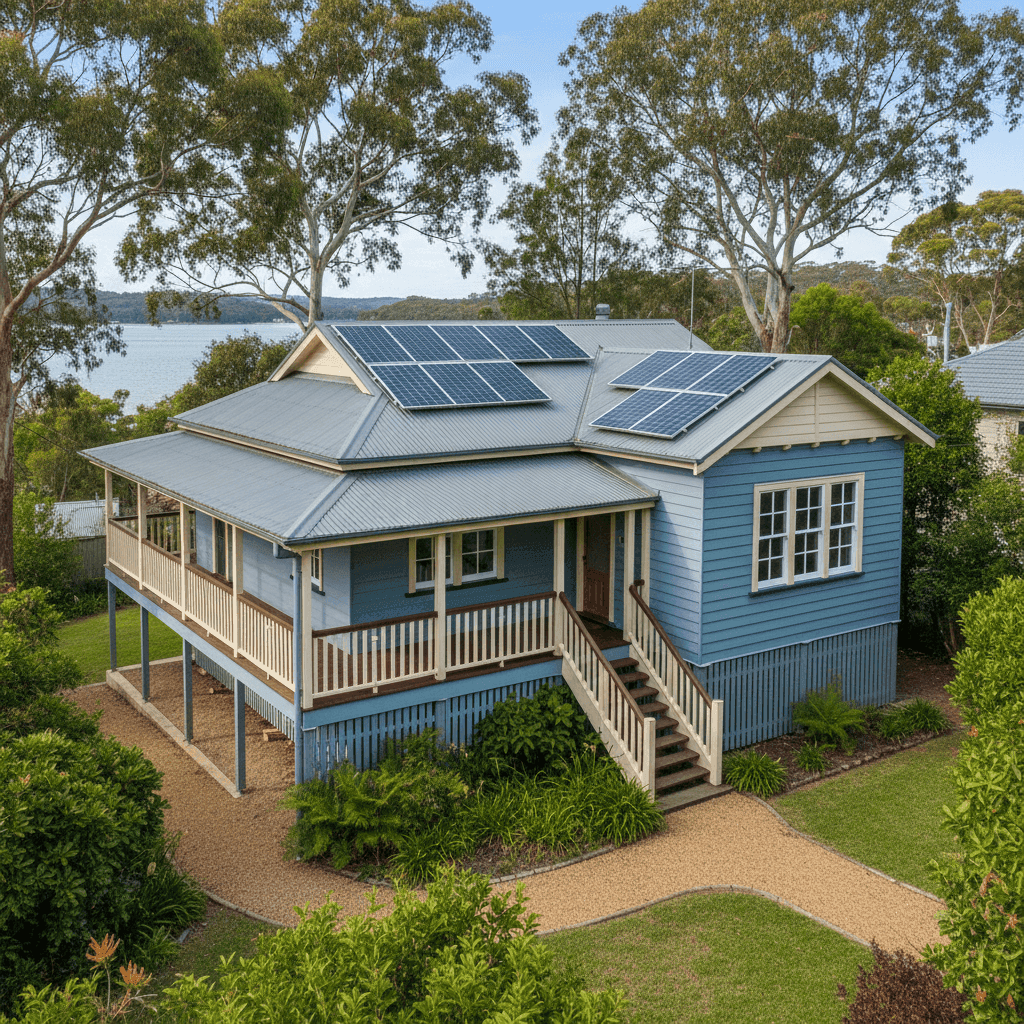
Nestled on the western shores of Brisbane Water, Phegans Bay is a quiet, leafy suburb on the NSW Central Coast. It's the kind of place where timber homes sit among established trees and waterfront living feels within reach. But for owners of free standing homes in this postcode, home insurance can come with some surprises — and understanding what's driving your premium is the first step to making sure you're not overpaying.
This article breaks down a recent building-only insurance quote for a 4-bedroom, 2-bathroom free standing home in Phegans Bay (NSW 2256), and puts the numbers into context against local, state, and national benchmarks.
---
Is This Quote Fair?
The quote in question comes in at $7,822 per year (or $750/month), with a building sum insured of $800,000 and a $2,000 building excess. Our price rating for this quote is Expensive — Above Average.
To be clear, "above average" doesn't automatically mean the quote is wrong or should be rejected. A high sum insured, specific property features, and localised risk factors can all legitimately push premiums higher. But it does mean this homeowner is paying noticeably more than most of their neighbours, and it's worth understanding why before simply accepting the figure.
---
How Phegans Bay Compares
Here's how this quote stacks up against available benchmarks:
| Benchmark | Premium |
|---|---|
| This quote | $7,822/yr |
| Phegans Bay suburb average | $3,780/yr |
| Phegans Bay suburb median | $3,654/yr |
| Central Coast LGA average | $8,387/yr |
| NSW state average | $9,528/yr |
| NSW state median | $3,770/yr |
| National average | $5,347/yr |
| National median | $2,764/yr |
A few things stand out here. While the quote sits well above the Phegans Bay suburb average of $3,780/yr, it's actually below the NSW state average of $9,528/yr and also below the Central Coast LGA average of $8,387/yr. That tells an important story: the suburb sample (just 5 quotes) may not fully capture the risk profile of larger or higher-value homes in the area.
The national average of $5,347/yr provides a useful mid-point — this quote is roughly 46% above that figure, which reinforces the "expensive" rating, but the gap narrows considerably when you compare against the broader NSW and Central Coast context.
It's also worth noting the difference between averages and medians across the board. The NSW average ($9,528) is dramatically higher than the NSW median ($3,770), which suggests a relatively small number of very high-cost properties are pulling the average up significantly. This quote sits between those two figures — expensive relative to typical homes, but not an outlier in the broader NSW landscape.
---
Property Features That Affect Your Premium
Several characteristics of this property are likely contributing to the higher-than-suburb-average premium:
Weatherboard Timber Construction
Weatherboard wood external walls are one of the most significant premium drivers in Australian home insurance. Timber is considered higher risk than brick veneer or full brick, primarily due to fire susceptibility and the potential for rot, pest damage, and moisture ingress over time. Insurers typically price this risk accordingly.
Steel/Colorbond Roof
On the positive side, a Colorbond steel roof is generally viewed favourably by insurers. It's durable, low-maintenance, and performs well in high-wind events. This may be partially offsetting the timber wall loading.
Stump Foundation (Elevated)
The home sits on stumps and is elevated by less than 1 metre. Elevated homes on stumps can attract mixed treatment from insurers — the elevation can reduce flood risk, but the construction type may add complexity and cost to rebuilding. Stump foundations are also more common in older homes and can be associated with higher repair costs.
Construction Year: 1994
At roughly 30 years old, the property sits in a middle ground — not new enough to benefit from modern construction discounts, but not so old as to attract the heaviest age loadings. Wiring, plumbing, and roofing from this era may be approaching end-of-life, which some insurers factor into their pricing.
Solar Panels
Solar panels add replacement value to the building sum insured and can increase the cost to rebuild. With a $800,000 sum insured, it's worth confirming that solar panels are explicitly covered under the policy and that the sum insured adequately accounts for their replacement.
Ducted Climate Control
Ducted air conditioning systems are a meaningful cost item in a rebuild scenario. Like solar, this contributes to the overall replacement value and is likely reflected in the higher sum insured.
High Sum Insured: $800,000
At 214 sqm, an $800,000 building sum insured works out to approximately $3,738 per sqm. This is on the higher end of the spectrum and will be a primary driver of the premium. It's worth getting an independent building replacement cost estimate to confirm this figure is appropriate — both over- and under-insuring carry real risks.
---
Tips for Homeowners in Phegans Bay
1. Shop around — seriously The gap between this quote ($7,822) and the suburb average ($3,780) is substantial. Even accounting for the higher sum insured, comparison shopping across multiple insurers could uncover meaningfully lower premiums for equivalent cover. Use CoverClub's free quote comparison tool to see what other providers are offering for your specific property.
2. Review your sum insured carefully An $800,000 building sum insured is a significant figure. Consider commissioning a professional building replacement cost assessment (not a market valuation — these are very different). If your home can be rebuilt for less, reducing the sum insured to an accurate figure could lower your premium without leaving you underinsured.
3. Ask about timber construction discounts or alternatives Some insurers offer better rates for weatherboard homes if you can demonstrate recent maintenance, pest inspections, or upgrades. It's worth asking your insurer directly whether any of these factors can be reflected in your pricing.
4. Consider your excess strategically This quote carries a $2,000 building excess. Opting for a higher voluntary excess — say $2,500 or $3,000 — can reduce your annual premium. If you're unlikely to make small claims (which can also affect future premiums), this trade-off often makes financial sense.
---
Ready to Compare?
Whether this quote is right for your situation depends on your property's specific rebuild cost, your risk tolerance, and what cover inclusions matter most to you. The best way to know if you're getting a fair deal is to compare.
Get a home insurance quote at CoverClub and see how multiple Australian insurers price your Phegans Bay property — side by side, in minutes.