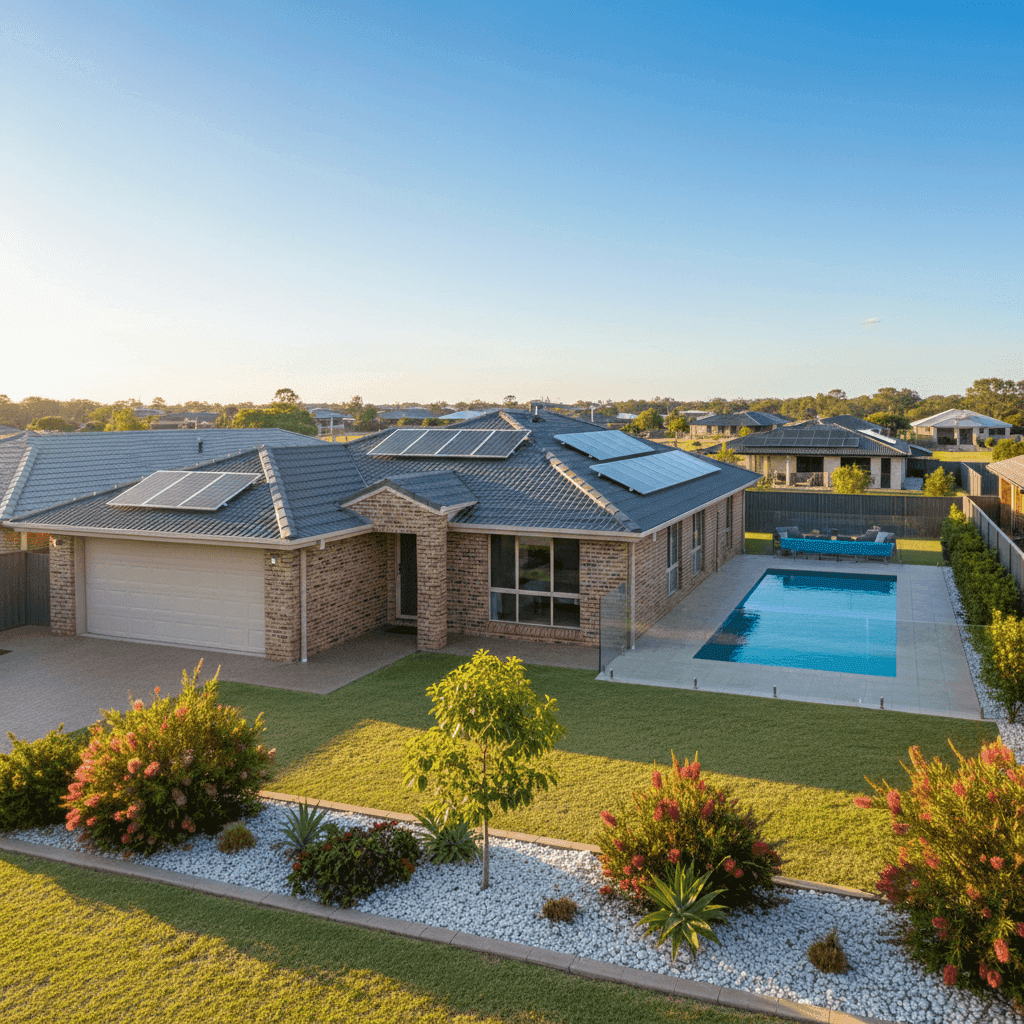
If you own a free standing home in Pialba, QLD 4655, you're likely well aware that home insurance costs in Queensland can vary enormously depending on your property's features, location, and the level of cover you choose. This article breaks down a real home and contents insurance quote for a four-bedroom brick veneer home in Pialba, benchmarks it against local, state, and national data, and offers practical tips to help you get the best value on your policy.
---
Is This Quote Fair?
The quote in question comes in at $1,997 per year (or roughly $191 per month) for combined home and contents cover — insuring the building for $580,000 and contents for $80,000, with a $1,000 building excess and $500 contents excess.
Our price rating for this quote is FAIR — Around Average, and the numbers back that up. At $1,997 annually, this premium sits comfortably below the Pialba suburb average of $2,592 and just under the suburb median of $2,461. In other words, this homeowner is paying less than the majority of comparable properties in the area, without appearing to have sacrificed meaningful cover to get there.
That said, "fair" doesn't necessarily mean "the best available." Depending on the insurer, the policy inclusions, and any optional extras attached, there may still be room to sharpen the price further — which is worth exploring before renewal time rolls around.
---
How Pialba Compares
To put this quote in proper context, it helps to zoom out and look at the broader pricing landscape. Check out the Pialba suburb insurance stats for the full picture.
| Benchmark | Premium |
|---|---|
| This quote | $1,997/yr |
| Pialba suburb average | $2,592/yr |
| Pialba suburb median | $2,461/yr |
| Pialba 25th percentile | $1,710/yr |
| Pialba 75th percentile | $3,296/yr |
| QLD state average | $9,129/yr |
| QLD state median | $3,903/yr |
| National average | $5,347/yr |
| National median | $2,764/yr |
A few things stand out immediately. First, the QLD state average of $9,129 per year is extraordinarily high — a figure heavily skewed by cyclone-prone coastal and far-north Queensland postcodes, where premiums can reach eye-watering levels. The state median of $3,903 is a more representative figure for the typical Queensland homeowner, and this quote sits well below even that benchmark.
Compared to the national picture, the story is similarly encouraging. The national average sits at $5,347 and the median at $2,764 — meaning this Pialba quote comes in below both measures.
Within Pialba itself, the quote lands between the 25th percentile ($1,710) and the median ($2,461) — technically slightly above median, but still well within the lower half of the local distribution. Based on 81 quotes sampled in the suburb, this is a reasonably well-priced policy for the area.
---
Property Features That Affect Your Premium
Several characteristics of this property play a meaningful role in determining where its premium lands.
Brick veneer construction and tiled roof are generally viewed favourably by insurers. These materials are considered durable and relatively fire-resistant compared to timber weatherboard or Colorbond alternatives, which can translate to modest premium savings.
Slab foundation is standard for Queensland homes of this era and doesn't typically attract any loading. However, it's worth noting that slab homes can be more susceptible to certain subsidence or drainage issues over time — something to keep an eye on as the property ages.
Built in 1991, this home is now over 30 years old. Older properties can attract slightly higher premiums as insurers factor in the likelihood of wear on electrical systems, plumbing, and roofing. Ensuring your sum insured accurately reflects current rebuild costs — not just market value — is critical for a home of this vintage.
The swimming pool is a notable feature. Pools add to the replacement cost of the property and can also introduce liability considerations, both of which may nudge premiums upward. Ensuring the pool is included in your building sum insured calculation is essential.
Solar panels are another factor. At 214 sqm, this is a reasonably sized home, and solar systems can be a significant asset to insure. Some policies cover panels as part of the building; others treat them separately or exclude certain types of damage. It's worth confirming exactly how your insurer handles solar in the policy wording.
Ducted climate control adds to the overall replacement value of the home. Systems like these are expensive to replace and should be factored into your building sum insured to avoid being underinsured in the event of a total loss.
Importantly, this property is not in a designated cyclone risk area, which is a significant factor in keeping premiums lower than many other parts of Queensland. Pialba sits in the Fraser Coast region, and while severe weather events can still occur, the absence of a formal cyclone risk classification removes one of the biggest premium drivers seen elsewhere in the state.
---
Tips for Homeowners in Pialba
1. Review your sum insured regularly With a building sum insured of $580,000 for a 214 sqm home, it's important to verify this figure reflects the true cost to rebuild — not the market sale price. Construction costs have risen significantly in recent years, and underinsurance remains one of the most common and costly mistakes homeowners make. Use a building cost calculator or speak with a quantity surveyor if you're unsure.
2. Check how your solar panels and pool are covered Both features add real value to your property, but coverage can vary significantly between insurers. Confirm that your solar system is covered for accidental damage, storm damage, and electrical faults, and that your pool structure is included in your building cover.
3. Consider your excess strategy This policy carries a $1,000 building excess and $500 contents excess. Opting for a higher excess can reduce your annual premium — but only makes sense if you have the financial buffer to cover it at claim time. Review whether the current excess levels are right for your situation.
4. Shop around at renewal Even a "fair" quote can often be bettered. Insurers frequently offer better rates to new customers than to those who auto-renew. Before your policy rolls over, take 10 minutes to compare alternatives — you may find equivalent cover at a lower price point, or better cover for the same spend.
---
Compare Your Home Insurance Options
Whether you're reviewing an existing policy or shopping for cover for the first time, comparing quotes is the single most effective way to make sure you're not overpaying. At CoverClub, we make it easy to see how your premium stacks up against real data from homeowners in your suburb and across Australia.
Get a home insurance quote today and find out where you stand — it only takes a few minutes.