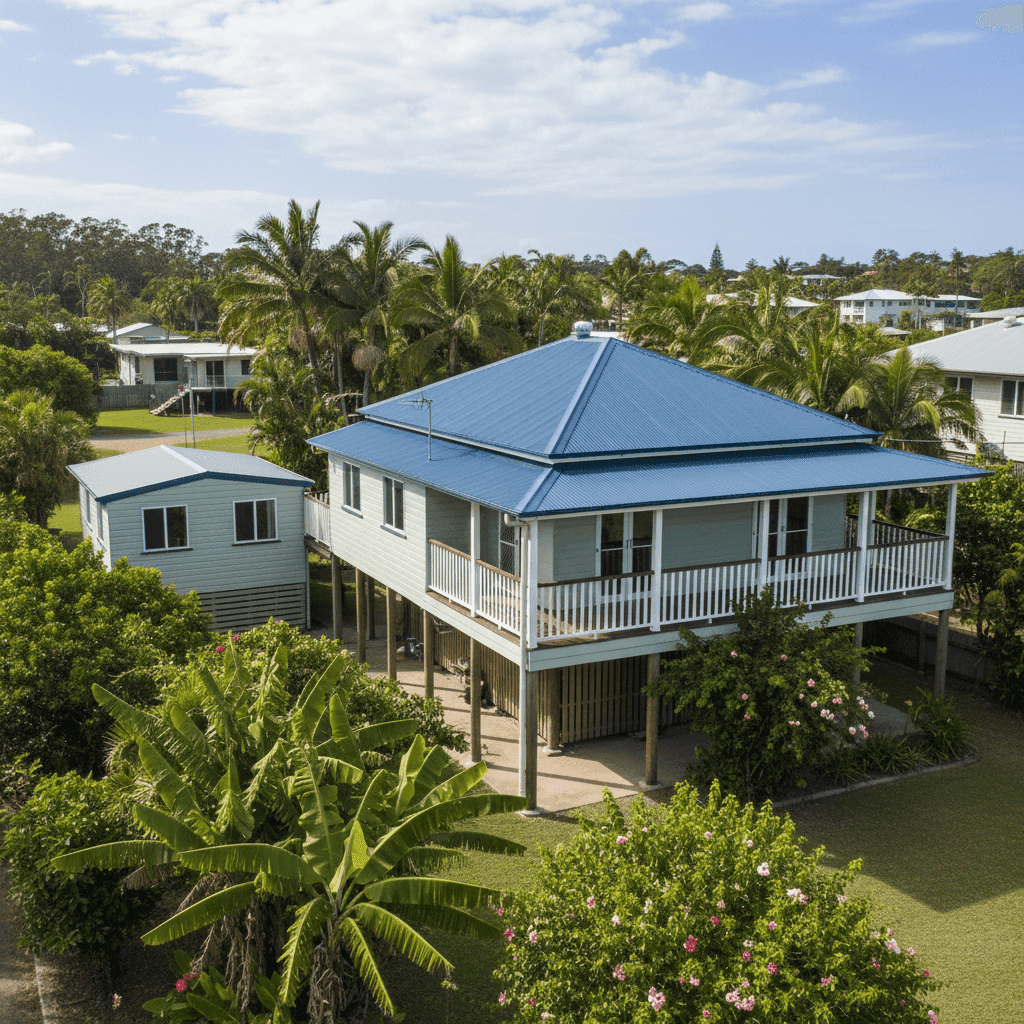
Home insurance in tropical North Queensland is a different beast to what most Australians pay elsewhere — and a quote for a free standing home in Picnic Bay, QLD 4819 illustrates this vividly. Nestled on Magnetic Island in the Townsville local government area, Picnic Bay is a picturesque coastal community with a relaxed lifestyle and a genuinely unique set of insurance risk factors. This article breaks down a real building-only quote of $10,538 per year for a 3-bedroom, 1-bathroom home in the suburb, examines how it stacks up against local, state, and national benchmarks, and offers practical guidance for homeowners looking to manage their costs.
---
Is This Quote Fair?
The short answer: this quote is rated Expensive (Above Average) — and the numbers back that up clearly.
At $10,538 per year (or $1,010 per month), this premium is more than double the Queensland state average of $4,547/yr and more than three and a half times the national average of $2,965/yr. Even when compared to the broader QLD state picture, this quote stands out as a significant financial commitment.
That said, "expensive" doesn't necessarily mean "wrong." Several legitimate risk factors specific to this property and location drive the premium upward, and understanding them is the first step to knowing whether you're being treated fairly by your insurer — or whether it's time to shop around.
The sum insured of $648,000 for a 130 sqm building is also on the higher end, which naturally contributes to a larger premium. Rebuilding costs in remote island locations like Magnetic Island carry a significant logistics premium — materials and labour must be transported to the island, which inflates reconstruction costs well above mainland equivalents.
---
How Picnic Bay Compares
While no suburb-level data is currently available for Picnic Bay specifically, we can draw meaningful comparisons using the data we do have. You can explore the latest figures on the Picnic Bay stats page as more data becomes available.
| Benchmark | Annual Premium |
|---|---|
| This Quote | $10,538 |
| Townsville LGA Average | $6,615 |
| QLD State Average | $4,547 |
| QLD State Median | $3,931 |
| National Average | $2,965 |
| National Median | $2,716 |
Even within the Townsville LGA — already one of Australia's more expensive insurance markets — this quote sits 59% above the local average. The gap widens further against national benchmarks, where the premium is nearly four times the national median.
It's worth noting that the Townsville LGA average of $6,615/yr already reflects elevated risk in the region. Picnic Bay's island location adds further complexity: limited emergency services access, the cost of island logistics, and concentrated cyclone exposure all push premiums beyond what you'd expect even in mainland Townsville suburbs.
---
Property Features That Affect Your Premium
Several characteristics of this particular property have a direct and meaningful impact on what insurers charge. Here's how each one plays into the final figure:
Fibro Asbestos Walls
This is one of the most significant premium drivers. Homes with fibro asbestos cladding are expensive to repair or rebuild because the material requires licensed asbestos removal professionals, strict safety protocols, and careful disposal. Insurers price this risk in — and it's not a small loading.
Cyclone Risk Area
Picnic Bay sits squarely in a designated cyclone risk zone. North Queensland's cyclone season runs from November through April, and properties in these areas attract substantially higher premiums across all insurers. Many policies in cyclone-prone areas also apply a separate cyclone excess, so it's worth reading the fine print carefully.
Elevated on Stumps
Being elevated by at least one metre on stumps is actually a positive feature in flood and storm surge contexts — it reduces the likelihood of inundation damage. However, stumped homes can be more vulnerable to wind uplift in cyclone events, which insurers factor into their modelling.
Steel/Colorbond Roof
Colorbond roofing is generally viewed favourably by insurers due to its durability and resistance to fire and weather. In cyclone regions, however, the roof is one of the most vulnerable components of any home, so this benefit is somewhat offset by the regional risk.
Timber/Laminate Flooring
Timber floors — particularly in elevated homes — can be susceptible to moisture ingress and termite damage. While not a major premium driver on its own, it contributes to the overall risk profile.
Construction Era (1970)
A home built in 1970 predates many modern building codes, including those introduced after major cyclone events. Older homes may not meet current wind-resistance standards, which is a meaningful consideration for insurers in cyclone zones.
Granny Flat
The presence of a granny flat increases the total insured asset on the property, contributing to a higher sum insured and, in turn, a higher premium.
Body Corporate / Strata Property
This is an important nuance. In a strata or body corporate arrangement, the body corporate typically holds a master building insurance policy covering the common property and, in many cases, the building structures. Homeowners should clarify exactly what is — and isn't — covered under the body corporate policy before purchasing individual building cover, to avoid paying for duplicate protection.
---
Tips for Homeowners in Picnic Bay
Managing home insurance costs in a high-risk coastal location requires a proactive approach. Here are four practical steps worth considering:
- Review your strata/body corporate coverage first. Before renewing or purchasing building insurance independently, obtain a copy of the body corporate's insurance certificate. You may find that some or all of the building structure is already covered, which could allow you to reduce your sum insured or switch to contents-only cover.
- Get multiple quotes — every single year. The insurance market in cyclone-prone areas is competitive and volatile. Premiums can shift significantly between insurers and between renewal periods. Using a comparison platform like CoverClub makes this process fast and straightforward.
- Consider your sum insured carefully. At $648,000 for a 130 sqm home, the rebuild cost per square metre is approximately $4,985 — which is high, even accounting for island logistics. It's worth getting an independent building valuation to confirm your sum insured is accurate. Being over-insured means you're paying a higher premium than necessary; being under-insured means you could face a shortfall at claim time.
- Ask about cyclone mitigation discounts. Some insurers offer premium reductions for homes that have undergone cyclone-proofing upgrades — such as roof tie-down straps, cyclone-rated shutters, or reinforced connections. Given the age of this home, targeted upgrades could both reduce your premium and genuinely improve the property's resilience.
---
Compare Your Options with CoverClub
Whether you're renewing your policy or buying cover for the first time, it pays to see the full market before committing. CoverClub makes it easy to compare home insurance quotes from multiple Australian insurers in one place — so you can be confident you're getting the right cover at a fair price. Start your free quote today and see how much you could save.