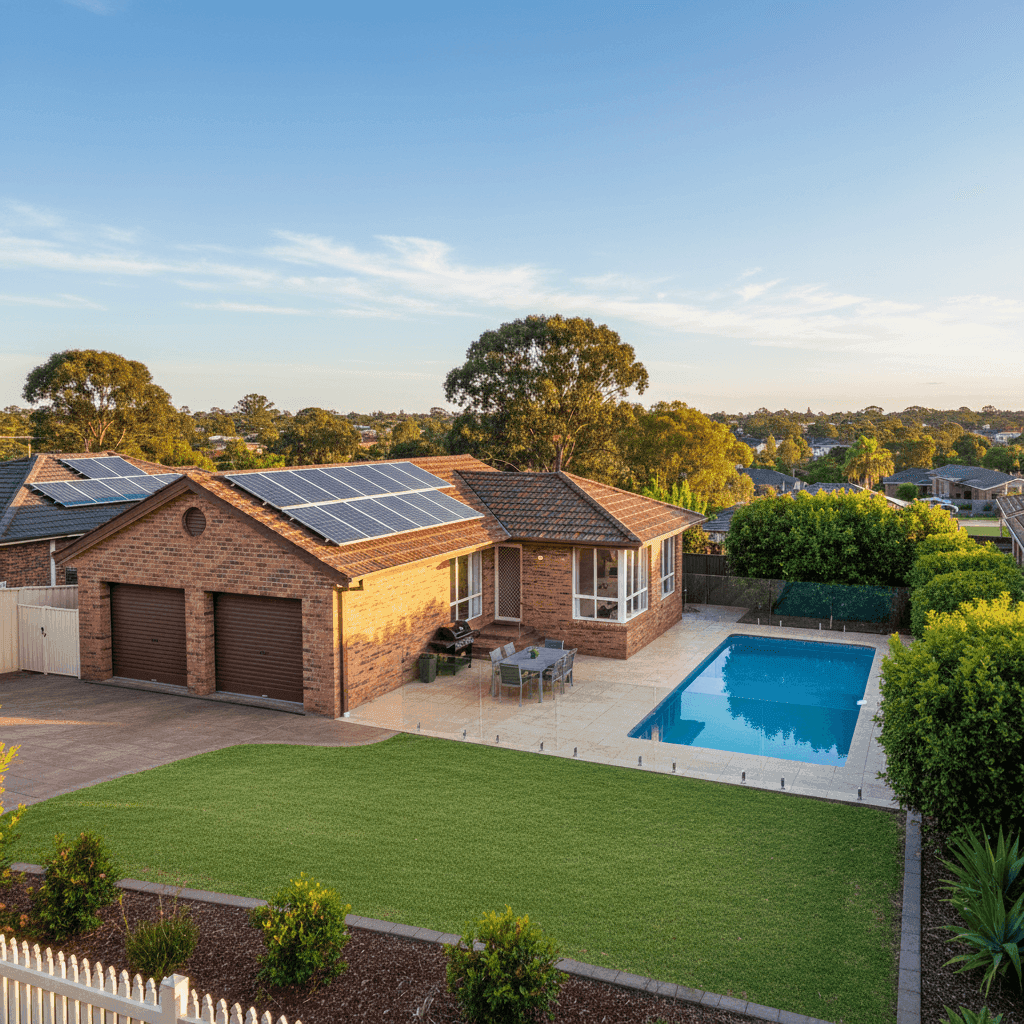
If you own a free standing home in Picnic Point, NSW 2213, you already know it's one of Sydney's more leafy and elevated southern suburbs — a sought-after pocket of the Canterbury-Bankstown LGA that sits above the Georges River. But with desirable real estate comes the responsibility of protecting it properly. This article breaks down a recent home and contents insurance quote for a four-bedroom property in the area, assesses whether the price stacks up, and offers practical guidance for local homeowners looking to get better value on their cover.
---
Is This Quote Fair?
The quote in question comes in at $18,810 per year (or $1,803/month) for combined home and contents cover, with a building sum insured of $1,108,000 and contents valued at $248,000. Both the building and contents excess are set at $2,000.
Our price rating for this quote is EXPENSIVE — above average for the area.
To put that in perspective: the suburb average premium in Picnic Point sits at just $1,506 per year, and the median is even lower at $1,428 per year. This quote is more than 12 times the suburb median — a significant gap that warrants a closer look.
That said, it's important to understand why this quote is elevated before assuming something is wrong. A $1,108,000 building sum insured is substantial, and a 235 sqm brick veneer home built in 1984 with a pool, solar panels, and ducted climate control carries more replacement risk than a modest two-bedroom unit. The high sum insured alone accounts for much of the premium difference compared to lower-value properties in the same postcode.
Still, even accounting for these factors, it's worth shopping around. A quote this far above the local median is a clear signal that comparing insurers could yield meaningful savings.
---
How Picnic Point Compares
Understanding where your suburb sits relative to broader benchmarks helps you make sense of what you're paying. Here's how Picnic Point stacks up:
| Benchmark | Average Premium | Median Premium |
|---|---|---|
| Picnic Point (2213) | $1,506/yr | $1,428/yr |
| NSW State | $9,528/yr | $3,770/yr |
| National | $5,347/yr | $2,764/yr |
| Canterbury-Bankstown LGA | $9,344/yr | — |
Interestingly, Picnic Point's suburb averages are well below both the NSW and national medians — suggesting that, on the whole, properties in this postcode attract relatively competitive premiums. The suburb's elevated terrain, distance from flood-prone river flats, and predominantly brick construction likely contribute to this.
The Canterbury-Bankstown LGA average of $9,344/year is notably high, which reflects the diversity of risk profiles across the broader council area — including lower-lying, flood-affected suburbs. Picnic Point, sitting above much of this, appears to benefit from its geography.
You can explore detailed premium data for this suburb at the Picnic Point insurance stats page, or compare against NSW state-wide figures and national benchmarks.
> Note: The suburb sample size for this analysis is 11 quotes, so averages should be treated as indicative rather than definitive.
---
Property Features That Affect Your Premium
Several characteristics of this property play a direct role in shaping the insurance cost. Here's what matters most:
🏗️ Brick Veneer Construction & Tiled Roof
Brick veneer walls paired with a tiled roof is one of the most common and well-regarded combinations for insurers in NSW. It's considered durable and fire-resistant, which generally works in your favour at premium time. This construction profile is unlikely to be inflating your quote.
📅 1984 Build Year
Homes built in the early-to-mid 1980s sit in an interesting zone for insurers. They're old enough that plumbing, electrical wiring, and roofing materials may be approaching end-of-life, but not so old as to attract heritage complications. Insurers may factor in a slightly higher risk of internal water damage or maintenance-related claims for homes of this era.
🏊 Swimming Pool
A pool adds both value and liability to a property. From an insurance perspective, pools increase the cost of rebuilding (contributing to a higher sum insured) and can introduce liability considerations — particularly if you have visitors or young children in the neighbourhood.
☀️ Solar Panels
Solar panels are increasingly common on Australian homes, but they do add to the replacement cost of a building. If your panels are included in your building sum insured, this is appropriate — but it's worth confirming with your insurer that panels are explicitly covered, including for storm damage and electrical faults.
❄️ Ducted Climate Control
Ducted air conditioning systems are expensive to replace and are typically included in the building sum insured. A full ducted system in a 235 sqm home could easily represent $15,000–$30,000 in replacement value, which is a meaningful contributor to a higher building sum insured.
📐 235 sqm & Slab Foundation
At 235 square metres, this is a generously sized family home. Combined with a concrete slab foundation, it presents a straightforward (if substantial) rebuild profile. Slab foundations are generally considered lower risk than suspended timber floors in terms of pest and moisture exposure.
🪵 Timber/Laminate Flooring
Timber and laminate floors can be more costly to replace than carpet and may be more susceptible to water damage. This is a minor factor, but one that can influence contents and internal fitout valuations.
---
Tips for Homeowners in Picnic Point
1. Review Your Building Sum Insured Carefully
At $1,108,000, the building sum insured is the single largest driver of this premium. Make sure this figure reflects the cost to rebuild — not the market value of the property. Over-insuring is a common and costly mistake. Tools like the Cordell Sum Sure calculator can help you arrive at a more accurate figure.
2. Compare Quotes Annually
Insurance premiums can shift significantly from year to year, and loyalty doesn't always pay. Given this quote is well above the local median, running a fresh comparison at renewal time is essential. Get a new quote through CoverClub to see what other insurers are offering for your specific property.
3. Check What's Explicitly Covered
With a pool, solar panels, and ducted climate control, make sure your policy explicitly lists these as covered items — and understand the sub-limits that may apply. Some policies cap solar panel cover or exclude certain pool equipment. Reading the Product Disclosure Statement (PDS) is the only way to know for certain.
4. Consider Your Excess Strategy
Both the building and contents excess are set at $2,000. Opting for a higher excess (say, $2,500 or $3,000) can reduce your annual premium meaningfully. If you have a good emergency fund and are unlikely to make small claims, this trade-off often makes financial sense.
---
Ready to Compare?
Whether you're renewing your policy or buying cover for the first time, CoverClub makes it easy to see how your quote stacks up against real data from your suburb and beyond. Don't pay more than you need to — get a home insurance quote today and find out if there's a better deal waiting for you.