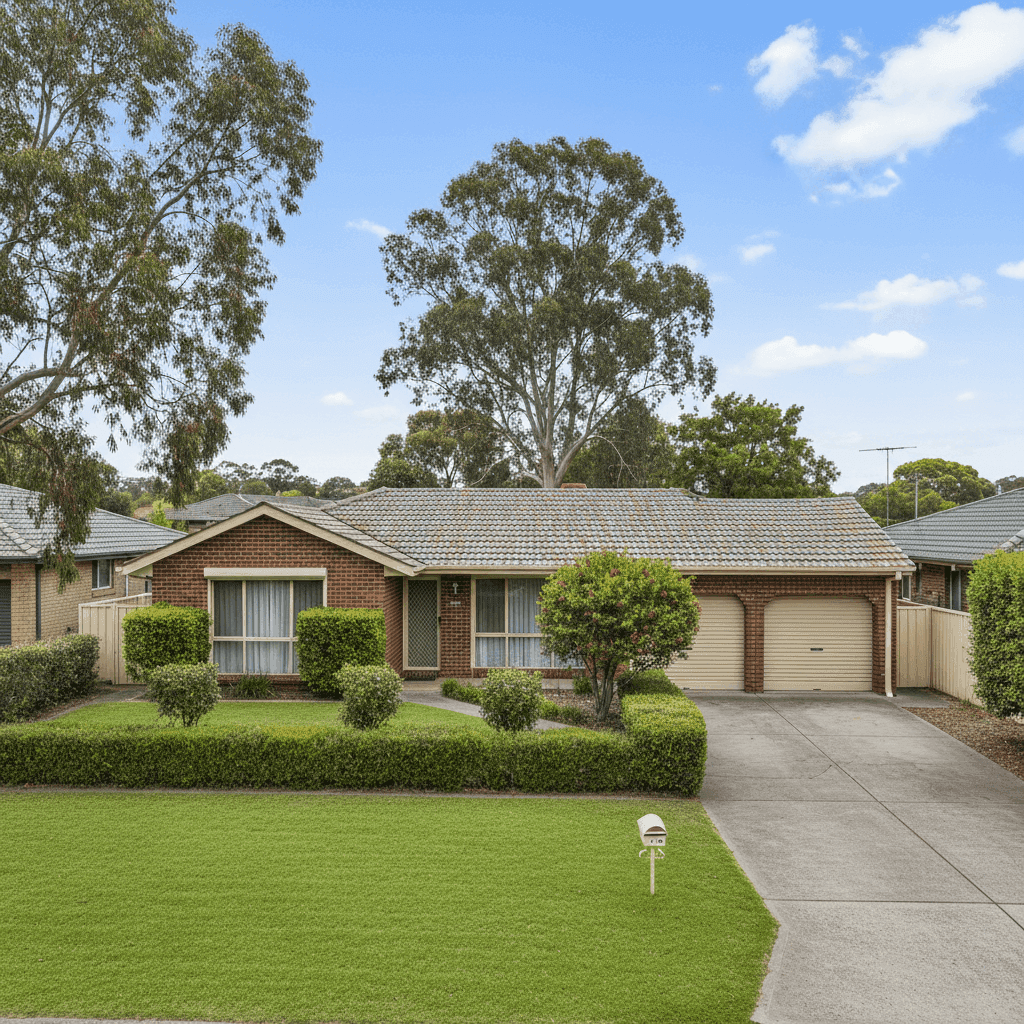
If you own a free standing home in Picton, NSW 2571, you've probably wondered whether you're paying too much — or too little — for building insurance. Picton is a charming semi-rural town in the Macarthur region, sitting at the foothills of the Southern Highlands and growing steadily in popularity with families seeking space without straying too far from Sydney. Like many towns in this corridor, property values have climbed, which means getting the right level of cover at a competitive price matters more than ever.
This article breaks down a recent building-only insurance quote for a 4-bedroom, 2-bathroom free standing home in Picton, and puts that figure into context against suburb, state, and national benchmarks.
---
Is This Quote Fair?
The quote in question came in at $2,351 per year (or $231 per month) for building-only cover on a 214 sqm home insured for $705,000, with a $1,000 building excess.
Our price rating for this quote is CHEAP — below average — and the numbers back that up convincingly.
To put it plainly: this premium is less than half the suburb average. The average annual building insurance premium recorded for Picton homes sits at $4,895/yr, with a median of $4,623/yr. Even the cheapest quartile of quotes in the suburb averages $4,367/yr — still nearly double this quote. That's a remarkable result for the homeowner.
Compared to the broader NSW state average of $3,801/yr, this quote comes in at roughly 62% of the typical cost. And against the national average of $2,965/yr, it's still comfortably below the mark.
In short: yes, this is a genuinely competitive quote — not just by local standards, but by any measure.
---
How Picton Compares
Understanding where Picton sits in the broader insurance landscape helps put individual quotes in perspective. Here's a snapshot:
| Benchmark | Annual Premium |
|---|---|
| This Quote | $2,351 |
| Picton (2571) Suburb Average | $4,895 |
| Picton (2571) Suburb Median | $4,623 |
| Picton 25th Percentile | $4,367 |
| Picton 75th Percentile | $5,179 |
| Wingecarribee LGA Average | $3,312 |
| NSW State Average | $3,801 |
| NSW State Median | $3,410 |
| National Average | $2,965 |
| National Median | $2,716 |
What stands out immediately is that Picton premiums are well above both state and national averages. The suburb average of $4,895 is nearly 29% higher than the NSW average and 65% higher than the national average. This tells us that insurers price Picton as a higher-risk location compared to much of Australia — likely a reflection of the area's exposure to bushfire risk, storms, and flooding events that can affect parts of the Southern Highlands corridor.
You can explore the full Picton suburb insurance stats, compare against all of NSW, or look at national home insurance benchmarks to see how your area stacks up.
Note: the suburb sample size here is 13 quotes, so while directionally useful, a larger dataset would provide even greater confidence in these figures.
---
Property Features That Affect Your Premium
Every insurer assesses risk differently, but certain property characteristics consistently influence what you'll pay. Here's how this home's features factor in:
Brick Veneer Walls Brick veneer is one of the most common external wall types in Australian suburban homes and is generally viewed favourably by insurers. It offers solid fire resistance compared to weatherboard or lightweight cladding, which can contribute to a more competitive premium.
Tiled Roof A tiled roof is considered durable and low-maintenance. Compared to Colorbond or corrugated iron, tiles can be more costly to repair after hail events, but they're a known quantity for insurers and typically don't attract loading in the way that older or unconventional roofing materials might.
Concrete Slab Foundation Slab-on-ground construction is standard for homes built in the 1990s across NSW and is generally considered structurally sound. It reduces the risk of subfloor issues such as pest damage or moisture intrusion that can affect older homes on stumps.
Construction Year: 1994 A home built in 1994 is mature but not old. It predates some modern building codes but is far newer than heritage-era stock. Insurers typically view 1990s-built homes as a manageable risk — old enough to potentially need maintenance, but not so old as to attract significant age-related loading.
Timber/Laminate Flooring While aesthetically popular, timber and laminate floors can be more susceptible to water damage than tiles. This is worth keeping in mind when considering whether to add contents cover or review your policy's water damage provisions.
Ducted Climate Control The presence of ducted air conditioning adds to the overall replacement value of the home and is appropriately factored into the sum insured. At $705,000, the building sum insured appears well-calibrated for a 214 sqm home in this region.
No Pool, No Solar The absence of a pool and solar panels simplifies the risk profile slightly — both features can add complexity and cost to a policy, so their absence may contribute to the competitive premium here.
---
Tips for Homeowners in Picton
Given that Picton premiums are notably higher than state and national averages, it pays to be strategic about your cover. Here are four practical tips:
- Shop around every renewal. The gap between this quote ($2,351) and the suburb average ($4,895) is enormous. That kind of difference doesn't happen by accident — it's the result of comparing multiple insurers. Make it a habit to get fresh quotes at each renewal rather than auto-renewing.
- Review your sum insured carefully. Underinsurance is a real risk in Australia. Make sure your $705,000 building sum insured reflects current construction costs in the Southern Highlands — rebuild costs have risen significantly in recent years due to labour and materials inflation. A quantity surveyor's report can provide a precise figure.
- Understand your bushfire and storm exposure. Parts of the Picton and broader Wingecarribee area carry elevated bushfire and storm risk. Check whether your policy covers these events comprehensively and whether any exclusions apply to your specific location. Some insurers may apply specific conditions for properties in higher-risk zones.
- Consider whether building-only cover is sufficient. This quote covers the building structure alone. If you have significant personal belongings — furniture, appliances, electronics, clothing — a combined building and contents policy may offer better overall value and peace of mind.
---
Compare Your Own Quote with CoverClub
Whether you're a long-time Picton local or a recent arrival to the Macarthur region, making sure you have the right cover at the right price is one of the smartest financial decisions you can make as a homeowner. CoverClub makes it easy to see how your quote stacks up against real data from your suburb and across Australia.