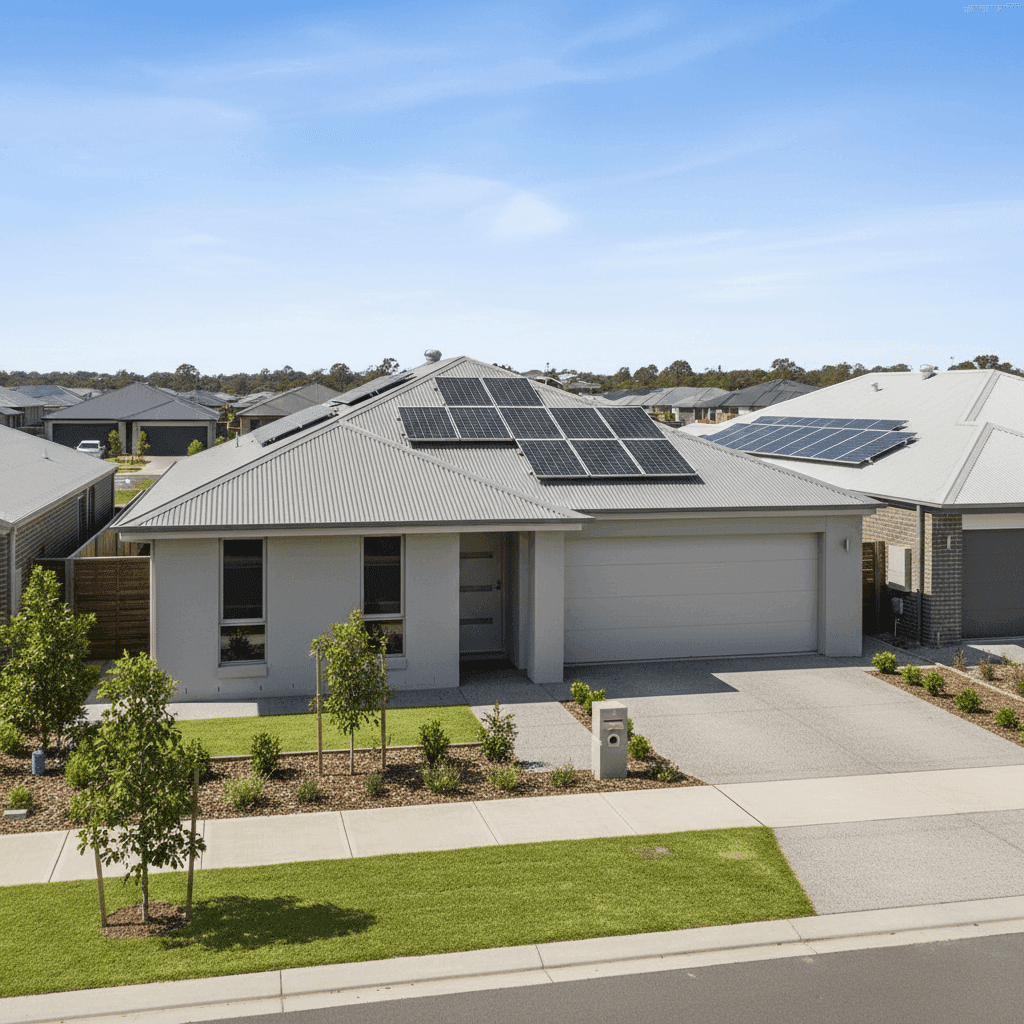
Pimpama is one of South-East Queensland's fastest-growing corridors, sitting on the northern fringe of the Gold Coast and offering a mix of modern estates and master-planned communities. If you own a free standing home here — particularly a newer build — understanding what you should be paying for home and contents insurance is genuinely useful. This article breaks down a real quote for a 2-bedroom, 1-bathroom free standing home in Pimpama (postcode 4209), compares it against local, state, and national benchmarks, and offers practical tips to help you get the best value cover.
---
Is This Quote Fair?
The quote in question comes in at $2,154 per year (or $218/month) for combined home and contents insurance, covering a building sum insured of $900,000 and $30,000 worth of contents. The building excess is $3,000, and the contents excess sits at $1,000.
Our price rating for this quote is FAIR — Around Average.
That assessment holds up when you dig into the numbers. The suburb median premium for Pimpama is $2,425 per year, meaning this quote sits comfortably below the midpoint of what most homeowners in the area are paying. It's not a bargain-basement result, but it's a solid outcome — particularly given the relatively high building sum insured of $900,000, which reflects the true replacement cost of a well-appointed modern home rather than a conservative underestimate.
For context, the suburb's 25th percentile sits at $1,507/yr, so there are cheaper quotes available in the market — but those may reflect lower cover limits, higher excesses, or fewer inclusions. At $2,154, this quote lands between the 25th and 50th percentile, which is a reasonable position for a property with above-average fittings.
---
How Pimpama Compares
Zooming out reveals just how favourably Pimpama sits relative to broader insurance markets. Here's a snapshot:
| Benchmark | Average Premium | Median Premium |
|---|---|---|
| Pimpama (4209) | $3,055/yr | $2,425/yr |
| Gold Coast LGA | $8,161/yr | — |
| Queensland | $9,129/yr | $3,903/yr |
| National | $5,347/yr | $2,764/yr |
The figures for Queensland and the Gold Coast LGA look striking at first glance — and they are. Queensland carries some of the highest home insurance premiums in the country, largely driven by extreme weather exposure in many parts of the state: cyclones in the north, flooding in river catchments, and severe storm activity throughout. The Gold Coast LGA average of $8,161/yr reflects the diversity of risk across that region, which includes beachside and flood-prone areas that attract very high premiums.
Pimpama, however, benefits from its position as a relatively modern, inland suburb not classified as a cyclone risk area. The suburb average of $3,055/yr is dramatically lower than the broader Gold Coast and Queensland averages, and this quote at $2,154/yr comes in below even that local average.
Nationally, the median premium is $2,764/yr — and this quote sits just below that figure too, which is a solid result for a Queensland property. You can explore Pimpama-specific insurance data, Queensland-wide premium trends, and national insurance benchmarks on CoverClub for deeper context.
---
Property Features That Affect Your Premium
Several characteristics of this property work in the owner's favour from an insurance pricing perspective — and a couple are worth understanding in more detail.
Hebel external walls are a notable feature. Hebel (autoclaved aerated concrete panels) is a modern, lightweight construction material that offers excellent fire resistance and thermal performance. Insurers generally view it favourably compared to older cladding types, and it's increasingly common in newer Queensland builds.
Steel/Colorbond roofing is similarly well-regarded. Colorbond is durable, low-maintenance, and performs well in high-wind and hail events — all relevant considerations in South-East Queensland. It's a much lower risk profile than older tile or fibrous cement roofing.
Slab foundation is standard for modern construction in this region and presents no particular risk flags for insurers.
Vinyl flooring is an interesting one — it's durable and water-resistant, which can reduce the risk and cost of water damage claims compared to timber or carpet.
Solar panels are present on this property. While solar panels themselves are generally insurable under home and contents policies, it's worth confirming with your insurer whether the panels are covered under the building or contents section, and whether the sum insured adequately accounts for their replacement value.
Above-average fittings quality will have contributed to the higher building sum insured of $900,000. Premium fixtures, quality cabinetry, stone benchtops, and high-spec appliances all increase the cost to rebuild — and it's important that your sum insured reflects this accurately to avoid being underinsured.
The absence of a pool and ducted climate control keeps the risk profile clean, and the non-cyclone classification for this suburb is a meaningful factor in keeping premiums more competitive than many other Queensland locations.
---
Tips for Homeowners in Pimpama
1. Double-check your building sum insured regularly With construction costs rising significantly across Queensland in recent years, a sum insured that was accurate two or three years ago may no longer reflect the true cost to rebuild. For a 105 sqm home with above-average fittings, $900,000 may be appropriate — but it's worth using a building cost calculator or speaking with a quantity surveyor to validate this figure annually.
2. Confirm solar panel coverage with your insurer Solar panels are a valuable asset, and policies vary in how they treat them. Some insurers cover panels under the building sum insured; others require a separate contents listing. Ask your insurer directly, and make sure the replacement value is factored into your total cover.
3. Review your contents sum insured $30,000 in contents cover is on the lower end for a furnished home, even a 2-bedroom one. Do a quick audit of your furniture, appliances, electronics, clothing, and valuables — many homeowners find they are underinsured on contents once they tally everything up. Portable valuables like jewellery or laptops may also need to be listed separately.
4. Compare quotes at renewal, not just when you first buy The insurance market shifts year to year, and loyalty doesn't always pay. Even if your current premium seems fair, it's worth comparing alternatives at each renewal period. A 10–15% saving is not unusual when switching, and you may find equivalent or better cover at a lower price.
---
Ready to Compare?
Whether you're reviewing your current policy or shopping for the first time, CoverClub makes it easy to see how your premium stacks up and find competitive quotes for your property. Get a home insurance quote today and see what the market looks like for your address — it takes just a few minutes and could save you hundreds.