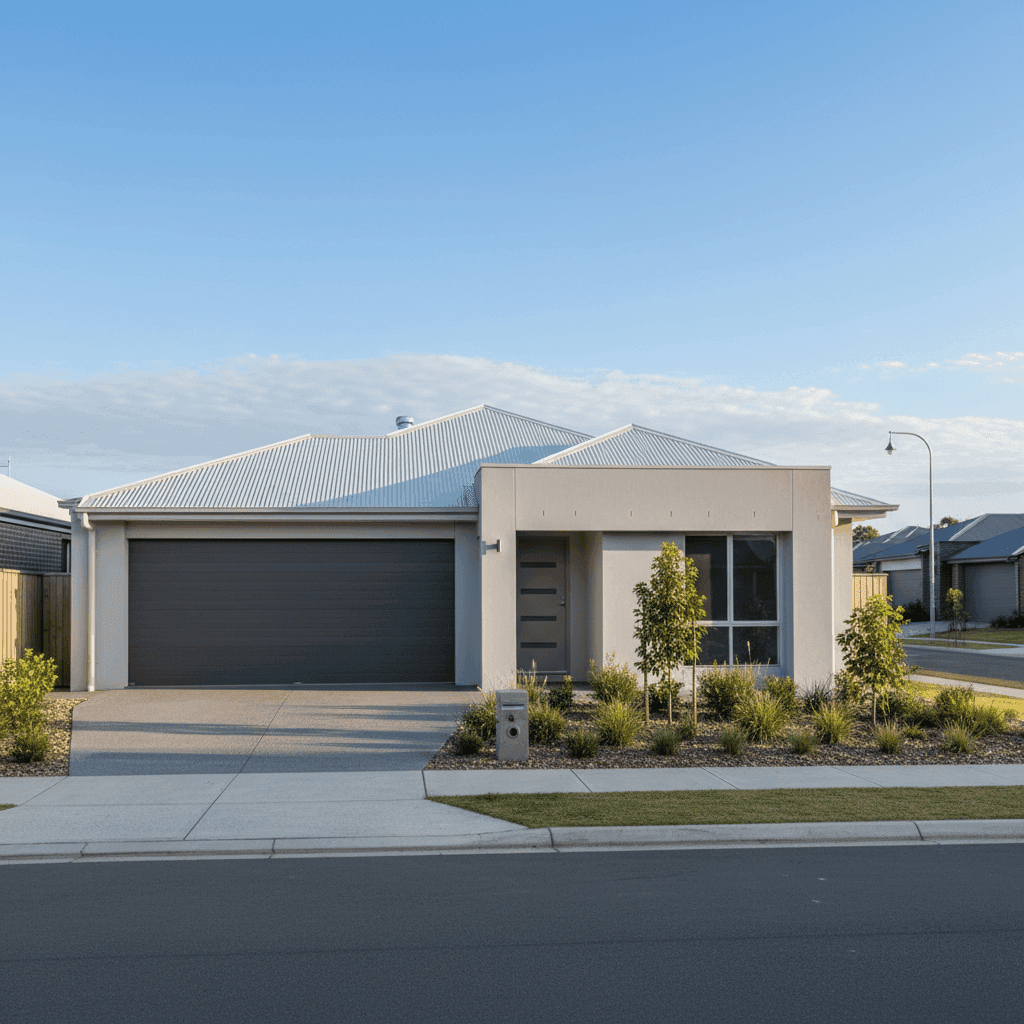
If you own a free standing home in Pimpama, QLD 4209, you've probably noticed that home insurance premiums in South-East Queensland can vary enormously. Pimpama is a rapidly growing suburb on the northern Gold Coast corridor, popular with families drawn to its newer estates, modern builds, and relatively affordable housing. But what does it actually cost to insure a home here — and how do you know whether you're getting a fair deal? This article breaks down a real building insurance quote for a three-bedroom, two-bathroom free standing home in Pimpama, and puts the numbers in context using suburb, state, and national data.
---
Is This Quote Fair?
The quote in question comes in at $1,504 per year (or around $155 per month) for building-only cover on a home insured for $487,000. The building excess is set at $3,000.
Based on data from 102 quotes collected for Pimpama (postcode 4209), this premium sits just below the 25th percentile for the suburb — meaning roughly 75% of comparable quotes in the area are more expensive. CoverClub rates this as CHEAP (Below Average), which is genuinely good news for the homeowner.
To put that in plain terms: this isn't just marginally below average — it's sitting near the lower quartile of what Pimpama homeowners are typically paying. For a modern, well-constructed home, that's a strong result and suggests the insurer has priced the risk favourably.
---
How Pimpama Compares
Understanding where your premium sits relative to broader benchmarks is one of the most useful things you can do when evaluating a quote. Here's how this $1,504 annual premium stacks up:
| Benchmark | Premium |
|---|---|
| This quote | $1,504/yr |
| Pimpama suburb average | $3,055/yr |
| Pimpama suburb median | $2,425/yr |
| Pimpama 25th percentile | $1,507/yr |
| Pimpama 75th percentile | $3,260/yr |
| Gold Coast LGA average | $8,161/yr |
| QLD state average | $9,129/yr |
| QLD state median | $3,903/yr |
| National average | $5,347/yr |
| National median | $2,764/yr |
The contrast with Queensland's state-wide averages is striking. The QLD average of $9,129 per year is heavily skewed by high-risk coastal and cyclone-prone areas further north — places like Cairns, Townsville, and the Whitsundays, where premiums can be eye-watering. Pimpama, sitting in the south-east corner of the state, benefits from being outside designated cyclone risk zones.
Even compared to the national average of $5,347, this quote looks very competitive. The national median of $2,764 is still nearly double what this homeowner is paying. For a relatively new build in a growth corridor suburb, this premium reflects a genuinely low-risk profile.
---
Property Features That Affect Your Premium
Several characteristics of this property work in the homeowner's favour when it comes to insurance pricing:
Construction year (2015) Newer homes are generally cheaper to insure. A home built in 2015 was constructed under modern Queensland building codes, which include stricter standards for wind resistance, waterproofing, and structural integrity. Insurers reward this with lower premiums compared to older homes that may have outdated wiring, plumbing, or structural materials.
Hebel external walls Hebel (autoclaved aerated concrete panels) is a popular choice in modern Australian construction. It offers excellent fire resistance and is considered a low-risk wall material by most insurers. This is a meaningful factor — homes with brick or masonry-style cladding like Hebel typically attract lower premiums than those with timber weatherboard.
Steel/Colorbond roof Colorbond steel roofing is one of the most insurer-friendly roof types available. It's durable, resistant to fire, and performs well in high-wind events. Compared to older terracotta tiles or fibrous cement, a Colorbond roof signals lower replacement risk and reduced likelihood of storm damage claims.
Concrete slab foundation A slab-on-ground foundation is standard for modern Queensland builds and is considered very stable. There's no subfloor void to worry about, and it's less susceptible to subsidence or pest damage compared to older suspended timber floors.
Tile flooring Tiles are resilient and less prone to water damage than carpet or timber — another tick in the low-risk column that can subtly influence how an insurer assesses a property.
No pool, no solar, no ducted climate control Each of these features adds complexity and potential liability to a property. The absence of all three keeps this home's risk profile clean and straightforward.
Not in a cyclone risk area This is perhaps the single biggest factor keeping premiums low for Pimpama homeowners. Cyclone-rated construction requirements and the associated insurance loadings can add thousands of dollars to annual premiums in northern Queensland. Pimpama sits outside these zones entirely.
---
Tips for Homeowners in Pimpama
1. Review your sum insured regularly This home is insured for $487,000, which should reflect the full cost to rebuild — not the market value of the property. With construction costs rising across South-East Queensland, it's worth reassessing your sum insured annually to avoid being underinsured. Use a building cost calculator or speak to a quantity surveyor if you're unsure.
2. Consider whether building-only cover is enough Building-only cover protects the structure but not your belongings inside. If you own furniture, appliances, electronics, and personal items of significant value, a combined building and contents policy may be worth comparing. Check CoverClub's suburb stats for Pimpama to see how combined cover premiums compare in your area.
3. Don't set-and-forget your policy Even if your current premium is competitive, insurers adjust their pricing models regularly. What's cheap this year may not be next year. Set a reminder to compare quotes at renewal time — it takes minutes and could save you hundreds.
4. Understand your excess This policy carries a $3,000 building excess. That's on the higher end of the standard range, and it's worth making sure you'd be comfortable covering that out of pocket in the event of a claim. Some insurers allow you to adjust your excess in exchange for a lower or higher premium — it's worth modelling both scenarios.
---
Compare Your Home Insurance with CoverClub
Whether you're renewing an existing policy or shopping for cover for the first time, it pays to compare. CoverClub makes it easy to see how your quote stacks up against real data from your suburb and beyond. Get a home insurance quote today and find out if you're paying a fair price — or if there's a better deal waiting for you.