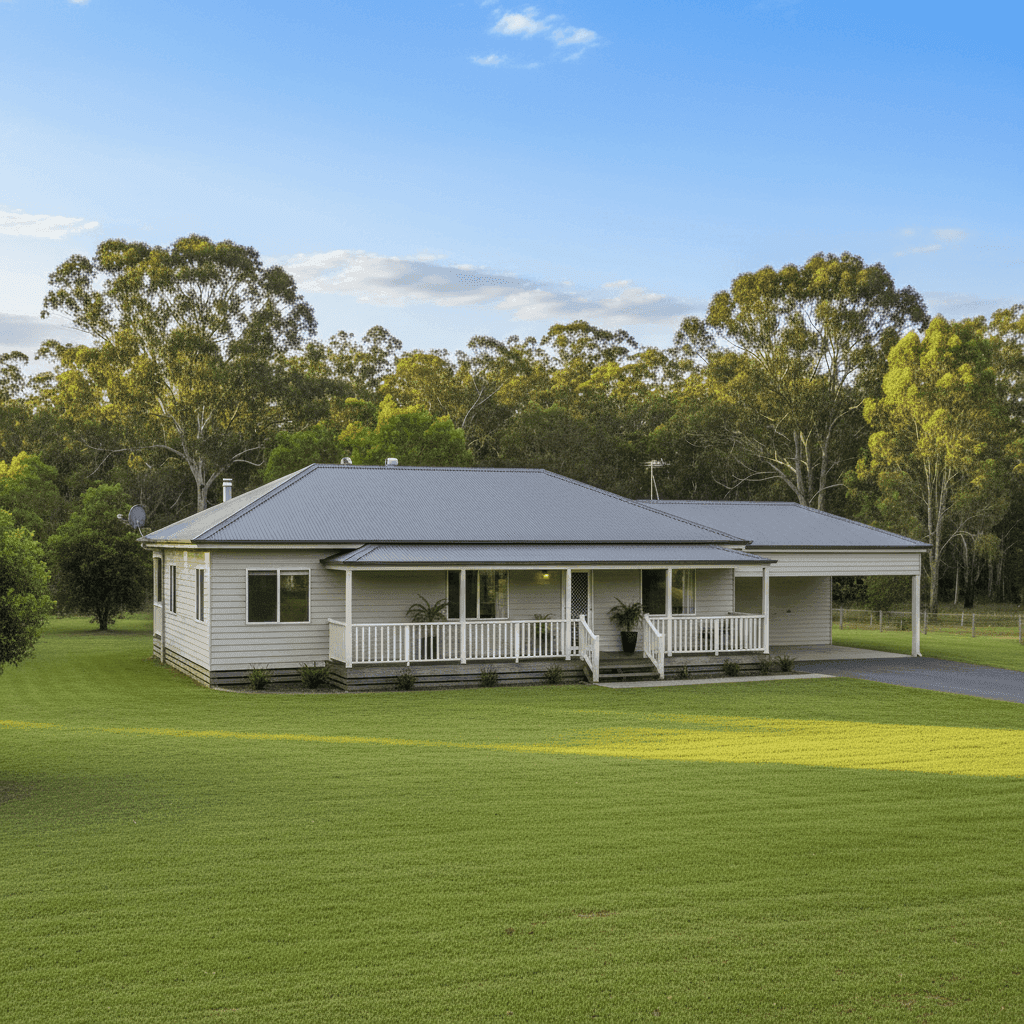
If you own a free standing home in Pimpimbudgee, QLD 4615, you might be wondering whether you're paying a fair price for home insurance — or whether there's room to save. This article breaks down a real home and contents insurance quote for a three-bedroom weatherboard property in the area, compares it against local, state, and national benchmarks, and offers practical tips to help you get the best value cover.
---
Is This Quote Fair?
The short answer: yes — and then some. This quote comes in at $1,390 per year (or $139/month) for combined home and contents cover, which our pricing model rates as Cheap (Below Average). That means it sits well below what most Australian homeowners are paying for equivalent protection.
To put that in perspective, the Queensland state average sits at $4,547 per year, with a median of $3,931. At the national level, the average is $2,965 and the median is $2,716. This quote is less than half the Queensland average — a remarkable result for a property in the Gympie LGA, where the average premium is even higher at $5,581 per year.
So what's driving such a competitive price? A combination of factors — the property's characteristics, the sum insured, and the chosen excess levels — all play a role. We'll unpack each of these below.
---
How Pimpimbudgee Compares
Pimpimbudgee is a small rural locality in the Gympie Regional Council area of south-east Queensland. While no suburb-level premium data is available for this postcode specifically, we can draw meaningful conclusions from the broader regional and state picture. You can explore available local data at the Pimpimbudgee stats page.
| Benchmark | Annual Premium |
|---|---|
| This Quote | $1,390 |
| National Median | $2,716 |
| National Average | $2,965 |
| QLD State Median | $3,931 |
| QLD State Average | $4,547 |
| Gympie LGA Average | $5,581 |
The Gympie LGA average of $5,581 is particularly striking — it's more than four times what this quote costs. Premiums in regional Queensland tend to be elevated due to a range of environmental and infrastructure factors, including flood risk, storm exposure, and the higher cost of rebuilding in areas with limited local trades. Against that backdrop, securing cover at $1,390 represents genuine value.
It's worth noting that the building is insured for $450,000 and contents for $30,000 — a combined sum insured of $480,000. For a 130 sqm home built in 1955, the building sum insured reflects realistic replacement costs, particularly given the rising cost of construction materials and labour in regional Queensland.
---
Property Features That Affect Your Premium
Every home is different, and insurers assess a range of property characteristics when calculating your premium. Here's how the features of this particular property likely influence its pricing:
Weatherboard Timber Walls
Weatherboard construction is common in older Queensland homes and carries a slightly higher fire risk compared to brick or concrete. However, it's a well-understood building type for insurers, and when paired with appropriate coverage, it doesn't necessarily lead to sky-high premiums.
Steel/Colorbond Roof
A Colorbond steel roof is generally viewed favourably by insurers. It's durable, resistant to corrosion, and performs well in high-wind events — a relevant consideration in Queensland. Compared to older tile or fibro roofing, Colorbond can contribute to a more competitive premium.
Slab Foundation
A concrete slab foundation is typically considered low-risk by insurers. It provides structural stability and is less susceptible to subsidence or termite damage than older timber-stump foundations, which are common in homes of this era.
Timber/Laminate Flooring
Timber and laminate floors are a standard feature in many Australian homes. While they can be more costly to replace than carpet in a claim scenario, they don't significantly push premiums up on their own.
Construction Year: 1955
Older homes can attract higher premiums due to ageing wiring, plumbing, and structural components. A 1955 build is something insurers will factor in, so it's worth ensuring your policy covers the full cost of rebuilding to current standards — not just like-for-like replacement.
No Pool, Solar Panels, or Ducted Climate Control
The absence of these features keeps the risk profile simple and the premium lean. Pools introduce liability considerations, solar panels add replacement costs, and ducted systems can be expensive to repair after storm or flood damage.
High Building Excess: $3,000
Opting for a higher building excess is one of the most effective ways to reduce your annual premium. The $3,000 building excess here is well above average and likely contributes meaningfully to the lower annual cost. Just make sure you can comfortably cover that amount out of pocket if you need to make a claim.
---
Tips for Homeowners in Pimpimbudgee
1. Review Your Sum Insured Annually
Construction costs in regional Queensland have risen sharply in recent years. Make sure your $450,000 building sum insured still reflects what it would actually cost to rebuild your home from scratch — including demolition, site clearing, and professional fees. Underinsurance is a common and costly mistake.
2. Understand Your Flood and Storm Exposure
Even if your property isn't in a designated cyclone risk zone, south-east Queensland is no stranger to severe storms and localised flooding. Check whether your policy includes flood cover as standard or as an optional add-on, and review any exclusions carefully.
3. Consider Your Excess Strategy
The $3,000 building excess in this quote is helping keep premiums low — but it's a two-edged sword. If you make a claim, you'll need to fund that excess yourself. Think about whether a slightly lower excess might offer better peace of mind, even if it nudges the premium up a little.
4. Don't Set and Forget
Insurance is not a once-a-decade decision. Market conditions, your property's condition, and your personal circumstances all change. Comparing quotes at renewal — rather than simply auto-renewing — is one of the easiest ways to avoid overpaying year after year.
---
Ready to Compare?
Whether you're a first-time buyer or a long-term homeowner in Pimpimbudgee, it pays to shop around. CoverClub makes it easy to compare home and contents insurance quotes in one place, so you can see exactly how your current cover stacks up. Get a quote today and find out if you could be paying less — without sacrificing the protection your home deserves.