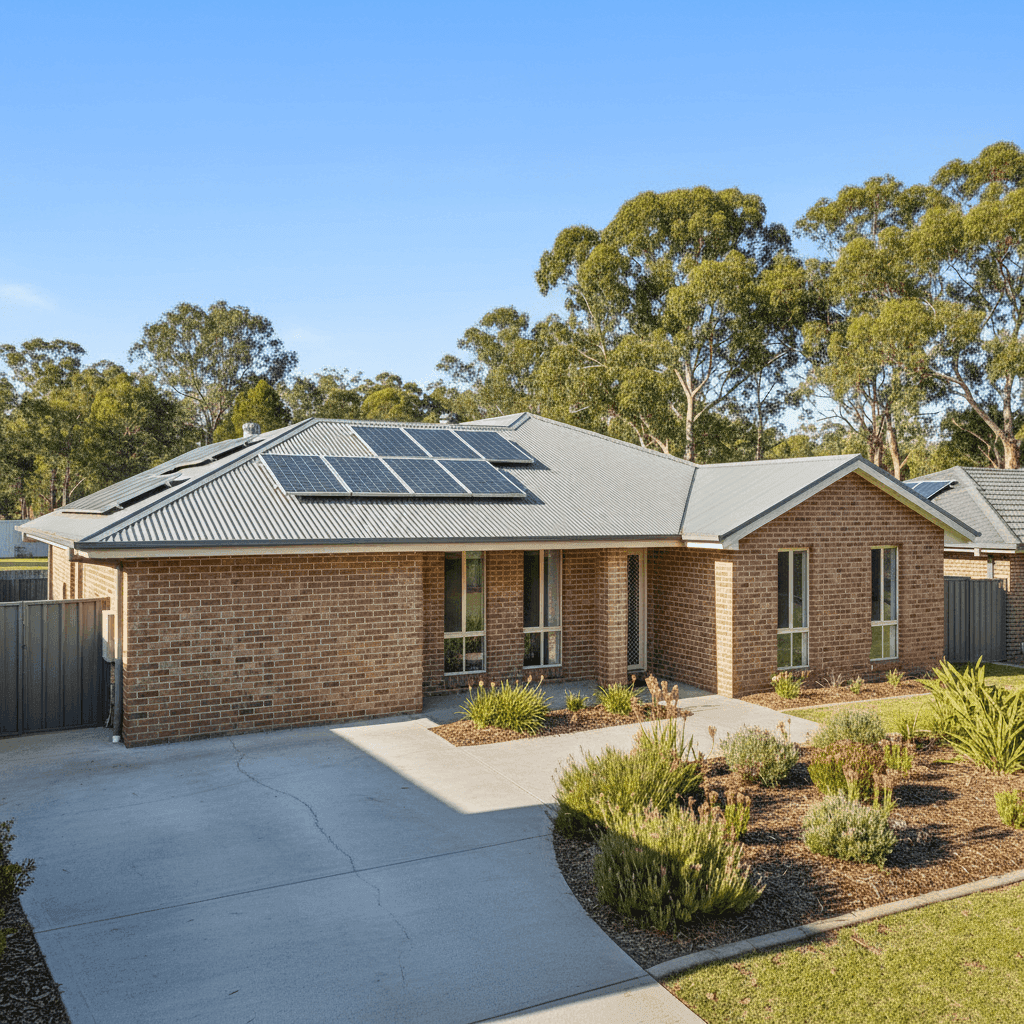
If you own a free standing home in Pine Mountain, QLD 4306, you've probably wondered whether you're paying a fair price for home insurance — or quietly overpaying year after year. This article breaks down a real home and contents insurance quote for a three-bedroom property in this suburb, compares it against local, state, and national benchmarks, and offers practical tips to help you make the most of your cover.
---
Is This Quote Fair?
The short answer: yes — and then some.
This quote came in at $1,996 per year (or roughly $197 per month) for a combined home and contents policy, covering a building sum insured of $590,000 and $50,000 in contents. Our price rating for this quote is CHEAP — below average for the area.
To put that in perspective, the suburb average for Pine Mountain sits at $4,078 per year, and the median is $3,645 per year. That means this policy is priced at less than half the local average — a genuinely strong result for the homeowner. Even the 25th percentile (the cheapest quarter of quotes in the suburb) sits at $2,827 per year, so this quote is comfortably below even that threshold.
For homeowners in Pine Mountain, landing a premium under $2,000 for a well-specified home and contents policy represents real value. The $1,000 excess on both building and contents is a standard and reasonable figure — not inflated to artificially suppress the premium.
---
How Pine Mountain Compares
Understanding where your suburb sits within the broader insurance landscape helps you gauge whether a quote is genuinely competitive or just average.
Here's how Pine Mountain stacks up:
| Benchmark | Annual Premium |
|---|---|
| This quote | $1,996 |
| Pine Mountain suburb average | $4,078 |
| Pine Mountain suburb median | $3,645 |
| QLD state average | $9,129 |
| QLD state median | $3,903 |
| National average | $5,347 |
| National median | $2,764 |
| Scenic Rim LGA average | $8,744 |
A few things stand out here. The QLD state average of $9,129 per year is extraordinarily high — a reflection of the significant flood, storm, and cyclone exposure across much of Queensland, which drives up premiums dramatically in high-risk postcodes. The national average of $5,347 tells a similar story, pulled upward by coastal and disaster-prone regions.
Pine Mountain's own suburb average of $4,078 is notably below the QLD state average, suggesting the area carries a more moderate risk profile than many Queensland locations. The Scenic Rim LGA average of $8,744 is considerably higher, which likely reflects the diverse risk profiles across that broader council area — Pine Mountain appears to sit on the more favourable end of that spectrum.
You can explore the full Pine Mountain suburb insurance stats to see how premiums are distributed across the postcode.
Note: The suburb sample size for this analysis is 22 quotes, which provides a useful directional guide, though a larger sample would give even greater confidence in these figures.
---
Property Features That Affect Your Premium
Insurance pricing isn't arbitrary — it's driven by the specific characteristics of your home. Here's how the features of this property influence the premium:
Brick Veneer Walls Brick veneer is generally viewed favourably by insurers. It offers solid fire resistance and structural durability compared to lightweight cladding materials, which can contribute to a more competitive premium.
Steel / Colorbond Roof Colorbond roofing is a popular choice in Queensland for good reason — it handles heat, rain, and wind well. Insurers typically regard steel roofing as a lower-risk material than older tile or asbestos-cement roofs, particularly when it comes to storm and hail damage claims.
Concrete Slab Foundation A slab foundation is considered low-risk from an insurance perspective. There's no subfloor cavity to harbour moisture or pests, and slab construction tends to be structurally stable across a wide range of conditions.
Solar Panels This property has solar panels, which are worth noting. Many standard home insurance policies cover rooftop solar panels as part of the building, but it's worth confirming with your insurer that your system is explicitly included — particularly for damage from storms or hail. Given Queensland's weather, this is an important detail to clarify.
Ducted Climate Control Ducted air conditioning systems are a fixed building feature and are typically covered under building insurance. However, they can be costly to repair or replace, so ensuring your building sum insured ($590,000 in this case) adequately accounts for this is sensible.
Construction Year: 1996 At around 28–29 years old, this home is mature but not ancient. Properties from this era are generally well-regarded — built to reasonable standards, but worth checking that any renovations or upgrades are reflected in the sum insured.
Vinyl Flooring Vinyl is a practical, cost-effective flooring choice that's relatively straightforward to replace after water or impact damage. This is unlikely to significantly move the needle on premium but is a factor in overall contents and building replacement cost estimates.
---
Tips for Homeowners in Pine Mountain
1. Review your building sum insured regularly With construction costs rising across Australia, the cost to rebuild a home has increased substantially in recent years. A sum insured of $590,000 for a 214 sqm brick veneer home in Queensland is worth reviewing annually — consider using a building cost calculator or speaking with a quantity surveyor to ensure you're not underinsured.
2. Confirm solar panel coverage explicitly Don't assume your solar panels are covered. Ask your insurer to confirm in writing that your rooftop system is included under the building policy and check whether storm, hail, and electrical fault damage are all covered events.
3. Shop around at renewal time Even with a competitive premium like this one, it pays to compare at renewal. Insurers regularly adjust their pricing models, and loyalty doesn't always translate to the best rate. Use a comparison service like CoverClub to benchmark your renewal quote before you accept it.
4. Consider your contents sum insured $50,000 in contents cover is a starting point, but it's easy to underestimate the replacement value of everything inside your home — furniture, appliances, clothing, electronics, and more. Conducting a room-by-room contents audit every couple of years helps ensure you're not left short after a claim.
---
Find Your Best Rate with CoverClub
Whether you're renewing an existing policy or insuring a new home, it's always worth knowing where you stand. CoverClub makes it easy to compare home and contents insurance quotes across Australia, with transparent suburb and state-level data to help you understand what's fair.
Get a quote today at CoverClub and see how your premium stacks up against your neighbours.