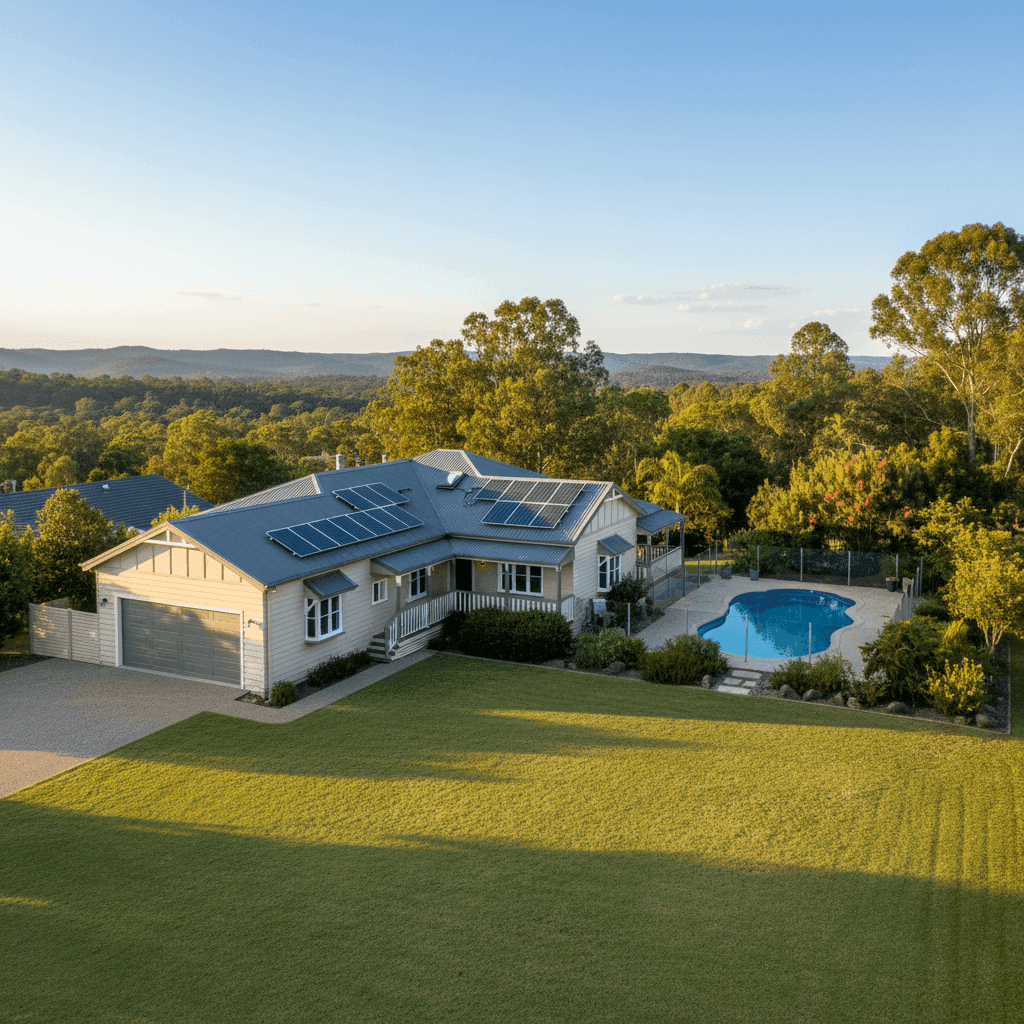
Pinjarra Hills is a leafy, semi-rural suburb tucked into Brisbane's western fringe — known for its generous block sizes, bushland character, and relaxed lifestyle. For owners of free standing homes in this pocket of Queensland, getting the right building insurance at a fair price matters. This article breaks down a real building-only insurance quote for a three-bedroom, two-bathroom home in Pinjarra Hills (QLD 4069), compares it against state and national benchmarks, and offers practical tips to help you make the most of your cover.
---
Is This Quote Fair?
The quote in question comes in at $3,445 per year (or $323 per month) for building-only cover, with a $1,000 building excess and a sum insured of $833,000. Our price rating for this quote is CHEAP — below average — which is genuinely good news for the homeowner.
To put that in perspective: Queensland homeowners are among the hardest hit in the country when it comes to insurance premiums, largely due to the state's exposure to severe weather events including floods, storms, and hail. Against that backdrop, a quote sitting below both the state average and the state median is a meaningful result.
At $3,445, this premium is:
- 62% below the QLD state average of $9,129/yr
- 12% below the QLD state median of $3,903/yr
- 35% below the national average of $5,347/yr
- 25% above the national median of $2,764/yr
The one figure that really stands out is the LGA (Brisbane) average of $16,277/yr — more than four times this quote. That figure is heavily skewed by high-risk flood and storm-prone suburbs within the broader Brisbane local government area, which helps explain why Pinjarra Hills, sitting on elevated terrain away from major waterways, fares considerably better.
---
How Pinjarra Hills Compares
While suburb-level comparison data isn't currently available for Pinjarra Hills specifically, the state-wide QLD data and national statistics paint a useful picture.
Queensland consistently records some of the highest home insurance premiums in Australia. The state average of $9,129/yr is nearly 71% higher than the national average — a gap driven by the frequency and severity of weather-related claims across the state. Coastal and low-lying suburban areas bear the brunt of this, while elevated, well-drained suburbs like Pinjarra Hills tend to attract more moderate premiums.
The Brisbane LGA average of $16,277/yr is an outlier that reflects the enormous diversity of risk within Greater Brisbane. Suburbs prone to flooding (particularly along the Brisbane River and Oxley Creek catchments) pull that average up sharply. Pinjarra Hills, by contrast, sits on higher ground and is not classified as a cyclone risk area, which works in the homeowner's favour.
You can explore localised stats for this postcode at the Pinjarra Hills suburb stats page as more data becomes available.
---
Property Features That Affect Your Premium
Several characteristics of this particular property influence how insurers assess and price the risk. Here's what's at play:
Construction Materials
The home features weatherboard timber external walls and a steel/Colorbond roof — a combination that's common in Queensland homes built in the early 1990s. Timber-clad homes can attract slightly higher premiums than brick veneer due to fire risk, but Colorbond roofing is generally viewed favourably by insurers for its durability and resistance to wind and hail damage.
Age and Foundation
Built in 1992, the property is over 30 years old. Older homes can sometimes attract higher premiums due to the cost of replacing materials to current building standards. However, the concrete slab foundation is a positive signal — slabs are structurally sound and don't carry the subsidence or pest-related risks associated with older timber stumped foundations.
Size and Sum Insured
At 214 sqm with a sum insured of $833,000, the rebuild cost is substantial. The sum insured reflects the full cost of rebuilding to current standards (not market value), and getting this figure right is critical — underinsurance is one of the most common and costly mistakes homeowners make.
Additional Features
This property includes a swimming pool, solar panels, and ducted climate control — all features that add to the rebuild cost and complexity. Pools and solar systems need to be explicitly covered under a building policy, and ducted systems (given their integration into the structure) are generally included under building cover rather than contents. It's worth confirming with your insurer that these are all adequately reflected in your sum insured.
No Cyclone Risk
Pinjarra Hills is not classified as a cyclone risk area, which is a notable premium advantage compared to properties in North Queensland or coastal Far North Queensland, where cyclone loading can add hundreds — sometimes thousands — of dollars to annual premiums.
---
Tips for Homeowners in Pinjarra Hills
1. Review your sum insured regularly Building costs have risen significantly in recent years due to labour shortages and material price increases. A sum insured set a few years ago may no longer reflect the true cost of rebuilding your home. Use a building cost calculator or speak with a quantity surveyor to make sure $833,000 still holds up — and adjust annually if needed.
2. Maintain your timber cladding Weatherboard homes require ongoing maintenance to stay in good condition. Cracked, peeling, or rotting timber can affect both the structural integrity of your home and potentially your ability to make a successful claim if damage is deemed to result from lack of maintenance. Regular repainting and prompt repairs go a long way.
3. Confirm your pool and solar are covered Not all policies automatically extend to in-ground pools or rooftop solar systems without specific mention. Review your Product Disclosure Statement (PDS) carefully and contact your insurer to confirm these features are included — and at appropriate values.
4. Consider your excess strategically A $1,000 building excess is fairly standard. If you're looking to reduce your premium further, increasing your excess can lower your annual cost — but only do this if you're confident you could comfortably cover that amount out of pocket in the event of a claim. Conversely, if cash flow is a concern, a lower excess with a slightly higher premium may offer better peace of mind.
---
Compare Quotes and Save
Whether you're renewing your policy or shopping around for the first time, it pays to compare. A quote rated "cheap" today might not be the most competitive option at renewal — insurers regularly adjust their pricing, and loyalty doesn't always pay. Get a home insurance quote at CoverClub to see how your current premium stacks up and whether there's a better deal available for your Pinjarra Hills property.