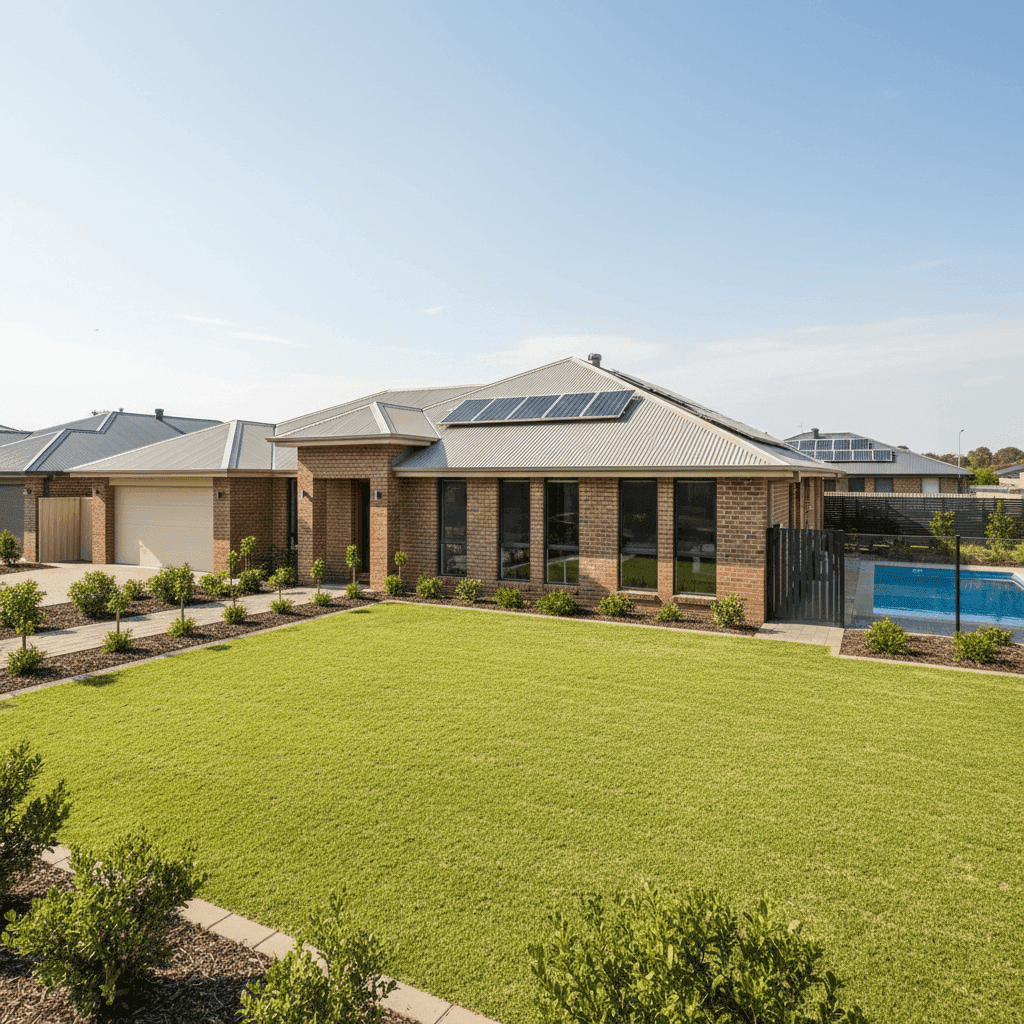
Pitt Town is a semi-rural suburb nestled in the Hawkesbury region of New South Wales, known for its leafy streets, generous block sizes, and a growing number of modern family homes. If you own a free standing home here, understanding what you should be paying for home and contents insurance — and why — can save you thousands of dollars a year. In this article, we break down a real insurance quote for a five-bedroom property in Pitt Town (NSW 2756) and put the numbers in context.
---
Is This Quote Fair?
The quote in question comes in at $5,299 per year (or $501 per month) for combined home and contents cover, with a building sum insured of $2,500,000 and contents valued at $270,400. Both the building and contents excess are set at $1,000.
Our pricing analysis rates this quote as CHEAP — below average for the area. That's genuinely good news for the homeowner. Given the size and quality of the property — five bedrooms, four bathrooms, above-average fittings, a pool, solar panels, and ducted climate control — a sub-$5,300 annual premium represents strong value.
To put it plainly: this quote sits just below the suburb's 25th percentile of $5,383 per year, meaning fewer than one in four comparable quotes in the area come in this low. For a property of this calibre, that's a result worth noting.
---
How Pitt Town Compares
The pricing data for Pitt Town (2756) tells an interesting story. You can explore the full breakdown on the Pitt Town suburb stats page.
| Benchmark | Annual Premium |
|---|---|
| This Quote | $5,299 |
| Suburb 25th Percentile | $5,383 |
| Suburb Median | $12,319 |
| Suburb Average | $61,583 |
| NSW Average | $9,528 |
| NSW Median | $3,770 |
| National Average | $5,347 |
| National Median | $2,764 |
| LGA (Lithgow) Average | $11,842 |
A few things stand out here. The suburb average of $61,583 is dramatically higher than the median of $12,319 — a strong sign that a small number of very high-value properties or high-risk quotes are pulling the average upward. In statistical terms, the median is a more reliable indicator of what most Pitt Town homeowners actually pay, and at $12,319, the median is still more than double this quote.
Compared to the NSW state average of $9,528, this quote is roughly 44% cheaper. Against the national average of $5,347, it's essentially on par — remarkable given that this is a large, high-value property with a $2.5 million building sum insured.
The LGA average for Lithgow sits at $11,842, further reinforcing that this quote is performing well below what most homeowners in the broader region are paying.
---
Property Features That Affect Your Premium
Several characteristics of this property influence how insurers calculate the premium. Here's what's at play:
Construction (Brick Veneer & Colorbond Roof)
Brick veneer walls are generally viewed favourably by insurers — they're durable, fire-resistant, and widely used in Australian residential construction. Combined with a steel Colorbond roof, this property has a construction profile that tends to attract competitive premiums. Colorbond roofing is low-maintenance, resistant to corrosion, and performs well in a range of weather conditions.
Slab Foundation
A concrete slab foundation is standard for newer builds and is considered low-risk by most insurers. There's no raised subfloor to worry about, which reduces exposure to certain types of water and pest damage.
New Build (2022)
At just a few years old, this home benefits from modern building standards, including updated electrical systems, plumbing, and structural integrity. Newer homes typically attract lower premiums because the risk of age-related defects is minimal.
Pool, Solar Panels & Ducted Climate Control
These features add value to the property — and to the contents and building sum insured — but they also introduce some additional risk. Pools can increase liability exposure, while solar panels and ducted systems add to the cost of replacement if damaged. That said, these features are increasingly common in Australian homes and most insurers price them into standard policies without dramatic premium increases.
Above-Average Fittings
With above-average fittings throughout, the cost to rebuild or repair this home to its current standard is higher than a comparable property with standard finishes. This is reflected in the $2.5 million building sum insured, which is on the higher end and ensures the homeowner isn't left underinsured in a worst-case scenario.
Timber and Laminate Flooring
Timber and laminate floors can be more susceptible to water damage than tiles, and replacement costs can be significant. Ensuring your contents policy adequately covers floor coverings is worth checking with your insurer.
---
Tips for Homeowners in Pitt Town
Whether you're renewing your policy or shopping around for the first time, here are four practical tips for getting the best outcome on your home insurance.
- Don't let your building sum insured fall behind. Construction costs in Australia have risen sharply in recent years. A $2.5 million sum insured might be appropriate today, but it's worth reviewing annually — especially for a large, high-specification home. Underinsurance is one of the most common and costly mistakes homeowners make.
- Bundle home and contents for better value. As demonstrated by this quote, combining building and contents cover under a single policy often delivers a better overall premium than purchasing them separately. It also simplifies the claims process.
- Review your excess settings. A $1,000 excess on both building and contents is a reasonable middle ground. If you're comfortable absorbing a larger out-of-pocket cost in the event of a claim, increasing your excess can reduce your annual premium meaningfully.
- Compare quotes regularly. Insurance pricing varies significantly between providers, and loyalty doesn't always pay. The fact that this quote sits well below the suburb median suggests that shopping around — rather than auto-renewing — can yield real savings. Use a comparison tool to see multiple quotes side by side before committing.
---
Ready to Compare Your Options?
Whether you're a Pitt Town local or simply researching home insurance costs in NSW, CoverClub makes it easy to see what you should be paying. Get a quote today and compare real premiums from multiple insurers in minutes. With pricing data drawn from thousands of Australian properties, you'll know instantly whether your current policy is competitive — or whether it's time to switch.