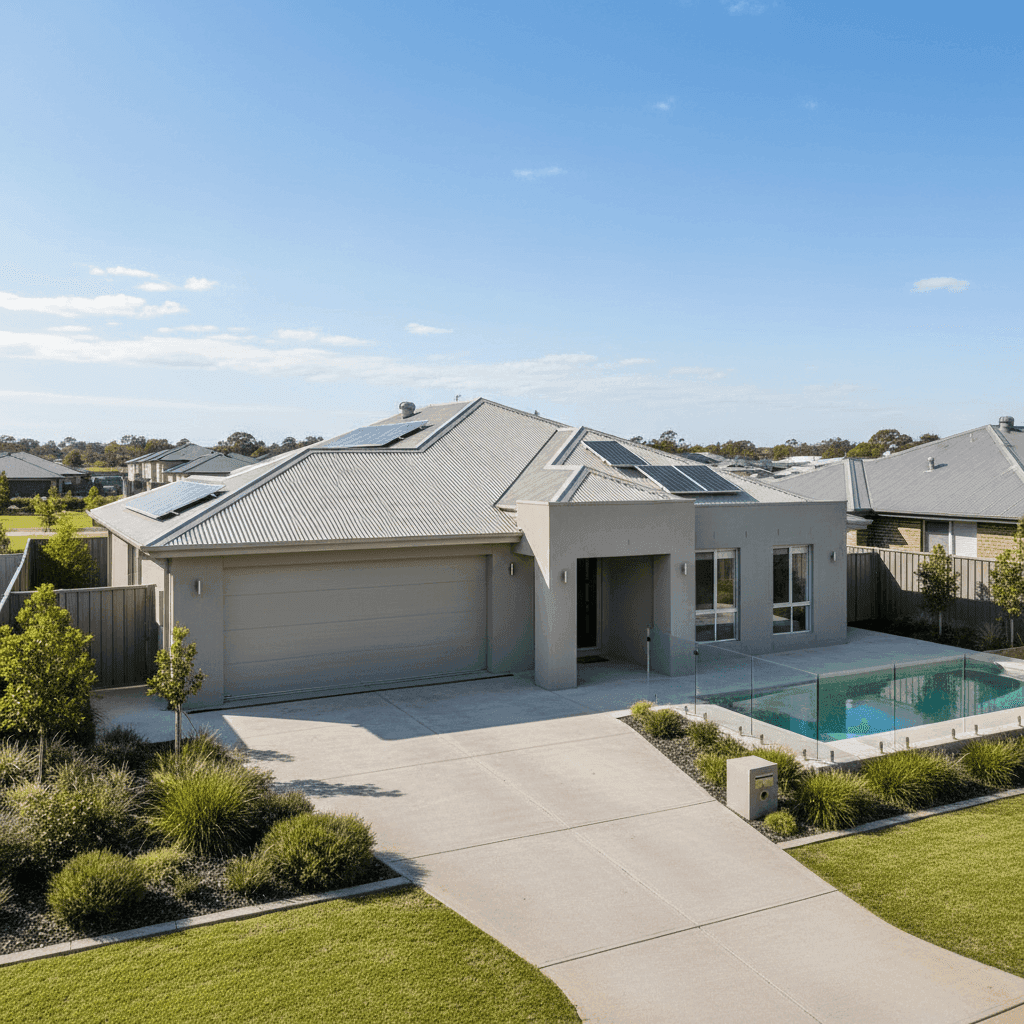
Pitt Town is a semi-rural suburb nestled in the Hawkesbury region of New South Wales, known for its spacious blocks, newer housing estates, and a relaxed lifestyle within commuting distance of Sydney. For owners of a free standing home in this postcode, understanding what you should be paying for home and contents insurance — and why — can make a meaningful difference to your household budget.
This article breaks down a real insurance quote for a five-bedroom free standing home in Pitt Town (NSW 2756), compares it against local, state, and national benchmarks, and offers practical guidance for getting the best value cover.
---
Is This Quote Fair?
The quote in question sits at $3,067 per year (or roughly $300 per month) for combined home and contents insurance, covering a building sum insured of $1,266,000 and contents valued at $90,000, each with a $2,000 excess.
Our pricing analysis rates this quote as CHEAP — below average for the area. That's a strong result for a property of this size and specification. To put it in perspective:
- The suburb median for Pitt Town (postcode 2756) sits at $12,319/year
- The NSW state median is $3,770/year
- The national median is $2,764/year
At $3,067/year, this quote is sitting comfortably below the NSW median and only marginally above the national median — remarkable given the property's size, high sum insured, and the range of additional features (more on those below). Compared to the suburb median of over $12,000, this quote represents exceptional value.
It's worth noting that the Pitt Town suburb sample includes just 20 quotes, which means the local average ($61,583/year) is heavily skewed by a small number of high-premium outliers. The median is a far more reliable benchmark in this case, and even against that figure, this quote performs very well.
---
How Pitt Town Compares
Here's a snapshot of how insurance premiums in Pitt Town stack up across different benchmarks:
| Benchmark | Annual Premium |
|---|---|
| This Quote | $3,067 |
| Pitt Town 25th Percentile | $5,383 |
| Pitt Town Median | $12,319 |
| Pitt Town 75th Percentile | $17,600 |
| Pitt Town Average | $61,583 |
| NSW State Median | $3,770 |
| NSW State Average | $9,528 |
| National Median | $2,764 |
| National Average | $5,347 |
| LGA (Lithgow) Average | $11,842 |
You can explore more detailed pricing data for the area on the Pitt Town suburb stats page, or browse broader trends on the NSW insurance stats page and the national stats page.
The Pitt Town suburb average of $61,583 is dramatically higher than both state and national figures, which points to a small number of very high-risk or very high-value properties inflating the pool. For a well-built, modern home, the median is the more meaningful comparison — and this quote beats it comfortably.
---
Property Features That Affect Your Premium
Several characteristics of this property are likely working in the homeowner's favour when it comes to pricing.
Modern Construction (Built 2021)
Newly built homes generally attract lower premiums because they comply with current building codes, use contemporary materials, and are less likely to have ageing infrastructure issues such as old wiring or deteriorating plumbing. A 2021 build is about as new as it gets in the insurance world.
Concrete External Walls
Concrete is one of the most insurer-friendly wall materials available. It's highly resistant to fire, impact, and general weathering — all factors that reduce the likelihood and cost of a claim. This is a significant premium advantage compared to properties with timber or weatherboard cladding.
Steel / Colorbond Roof
Colorbond steel roofing is durable, low-maintenance, and performs well in high-wind events. Insurers typically view it favourably compared to terracotta tiles (which can crack or dislodge) or older materials. It also carries a lower bushfire risk than some alternatives.
Slab Foundation
A concrete slab foundation is considered stable and low-risk by most underwriters. Unlike suspended timber floors or older pier-and-beam foundations, slabs are less susceptible to subsidence, moisture damage, and pest intrusion.
Slight Elevation (Less Than 1m)
The property is elevated by less than one metre. While this provides a marginal buffer against surface water ingress, it's not significant enough to dramatically affect flood risk pricing. It does, however, contribute to good drainage outcomes in moderate rainfall events.
Pool, Solar Panels & Ducted Climate Control
These features add to the overall replacement value of the property, which is reflected in the $1,266,000 building sum insured. A swimming pool introduces some liability considerations, and solar panels add to the rebuild cost. Ducted climate control systems are expensive to replace and should always be included in your building sum insured calculation. Despite these additions, the premium remains competitive.
Above-Average Fittings
The property is noted as having above-average fittings quality — think stone benchtops, quality fixtures, and premium finishes. This contributes to the higher sum insured but is appropriately factored in to avoid the risk of underinsurance.
---
Tips for Homeowners in Pitt Town
1. Don't underinsure your building With a high-spec 286 sqm home featuring a pool, solar system, and ducted air conditioning, it's critical that your building sum insured reflects the true cost of rebuilding — not just the market value of the land and structure. Underinsurance is one of the most common and costly mistakes Australian homeowners make. Use a quantity surveyor or your insurer's calculator to verify your figure annually.
2. Review your contents value regularly $90,000 in contents cover is a reasonable starting point for a five-bedroom home, but it's easy for this figure to fall behind reality as you accumulate furniture, appliances, and personal items. Do a room-by-room audit every year or two to make sure you're not left short after a claim.
3. Understand your flood and storm risk Pitt Town sits within the Hawkesbury-Nepean Valley, a region with a well-documented history of significant flooding. Even if your specific property is not in a designated flood zone, it's worth confirming whether your policy includes flood cover — and understanding the difference between flood, storm surge, and rainwater damage. Not all policies treat these the same way.
4. Compare quotes at renewal time Even if your current premium is below average, the insurance market shifts constantly. Insurers reprice based on claims history, reinsurance costs, and catastrophe modelling. Taking 15 minutes to compare quotes at renewal could save you hundreds of dollars — or reveal a policy with meaningfully better cover for a similar price.
---
Ready to Compare?
Whether you're reviewing your current policy or shopping for the first time, CoverClub makes it easy to compare home and contents insurance quotes for properties across NSW. Get a quote today and see how your premium stacks up against the suburb, state, and national benchmarks — in seconds.