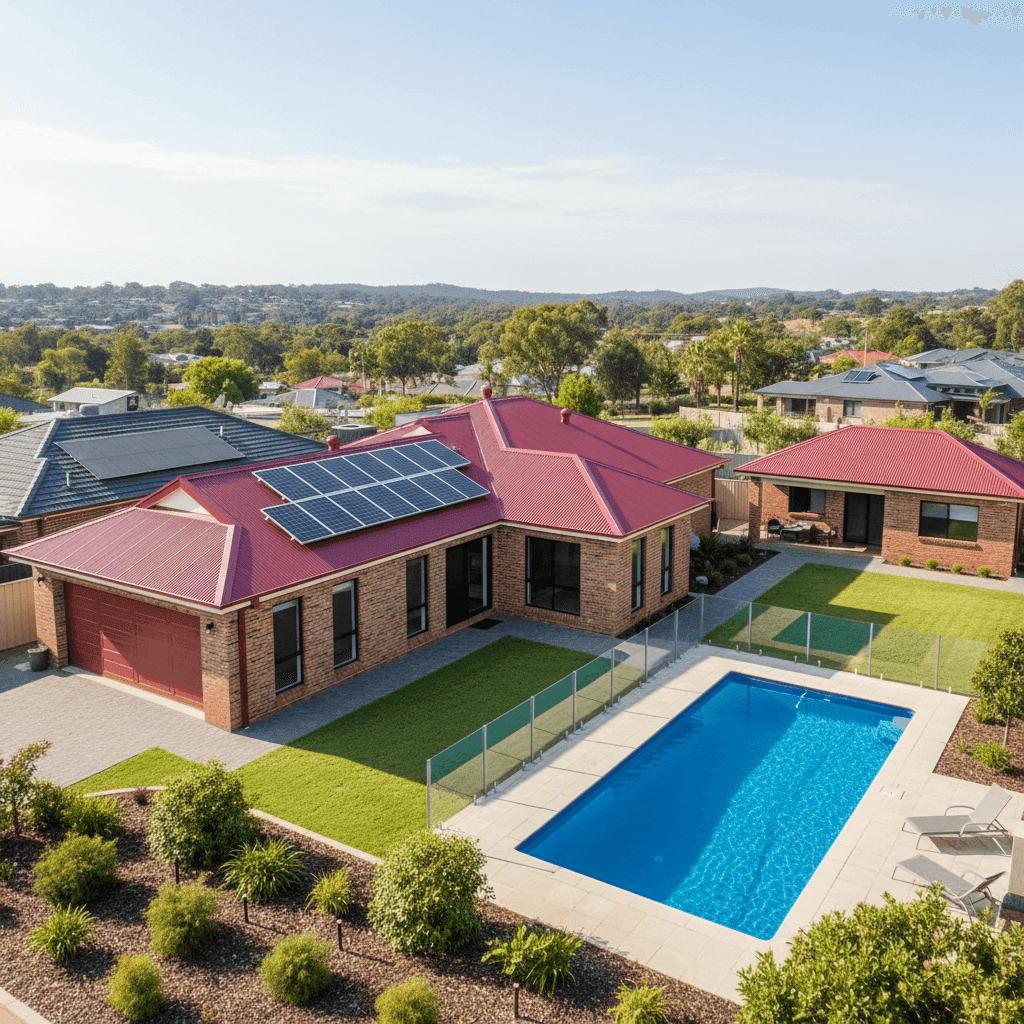
Pitt Town is one of the Hawkesbury region's most charming semi-rural suburbs — a place where generous land parcels, established homes, and a relaxed lifestyle attract families looking for space without straying too far from greater Sydney. If you own a free standing home here, you'll know that insuring it properly is no small consideration. This article breaks down a real home and contents insurance quote for a four-bedroom, two-bathroom property in Pitt Town (NSW 2765), and helps you understand whether the premium stacks up against what others are paying across the suburb, state, and nationally.
---
Is This Quote Fair?
The short answer: yes — and then some. This quote comes in at $4,292 per year (or $411 per month) for combined home and contents cover, with a building sum insured of $1,259,000 and contents valued at $160,000. Our price rating for this quote is CHEAP, meaning it sits below average for comparable properties.
To put that in perspective, the NSW state average premium sits at a hefty $9,528 per year — more than double this quote. Even the state median (a more representative figure that filters out extreme outliers) is $3,770 per year, which this quote still undercuts. Nationally, the average home insurance premium is $5,347 per year, with a median of $2,764.
It's worth noting that the building excess on this policy is $5,000 and the contents excess is $2,000 — both on the higher side. A higher excess is one of the most common levers used to bring down annual premiums, so homeowners should weigh up whether the upfront savings justify the out-of-pocket cost if a claim arises. That said, for a well-maintained property in a relatively low-risk area, this trade-off may be entirely sensible.
---
How Pitt Town Compares
Benchmarking your premium against local and broader data is the best way to gauge value. Here's how this quote stacks up:
| Benchmark | Annual Premium |
|---|---|
| This Quote | $4,292 |
| LGA (Penrith) Average | $2,220 |
| NSW State Median | $3,770 |
| NSW State Average | $9,528 |
| National Average | $5,347 |
| National Median | $2,764 |
A few things stand out here. The LGA average for Penrith is notably lower at $2,220 — however, this reflects a broader mix of properties across the local government area, many of which will be smaller, newer, or carry lower sums insured. This Pitt Town property is insured for over $1.25 million in building cover alone, which naturally pushes the premium higher than a typical suburban dwelling.
Compared to the NSW state average of $9,528, this quote is remarkably competitive. The elevated state average is largely driven by high-risk coastal and flood-prone areas across New South Wales, where premiums can be eye-watering. Pitt Town, while situated near the Hawkesbury River floodplain, appears to be rated favourably in this instance — a reflection of the specific property's characteristics and the insurer's risk assessment.
You can explore more localised data for this postcode on the Pitt Town suburb stats page.
---
Property Features That Affect Your Premium
Every property tells a story, and insurers read it carefully. Here's how the specific features of this home likely influence the premium:
Double Brick Construction Double brick walls are among the most favoured construction types for insurers. They offer excellent structural integrity, strong fire resistance, and durability against the elements. Compared to lightweight or timber-framed homes, double brick properties typically attract lower premiums — and rightfully so.
Steel/Colorbond Roof Colorbond roofing is another tick in the insurer's favour column. It's durable, low-maintenance, resistant to corrosion, and performs well in high-wind conditions. It's far less susceptible to storm damage than older tile or corrugated iron roofing, which can translate to fewer claims and better pricing.
Slab Foundation & Tiled Flooring A concrete slab foundation is a stable and widely accepted construction method. Combined with tiled flooring throughout, this home presents a low-moisture-damage risk profile — tiles don't warp, swell, or absorb water the way timber floors can.
Above-Average Fittings Quality The property's above-average fittings — think quality kitchens, bathrooms, and fixtures — contribute to the higher building sum insured of $1,259,000. Insurers price based on rebuild cost, not market value, and premium finishes cost more to replace. This is reflected in the coverage amount rather than penalising the premium rate itself.
Swimming Pool A pool adds to the replacement cost of the property and may introduce some liability considerations, depending on the policy. It's a factor insurers account for, and homeowners should ensure their policy explicitly covers pool-related structures and equipment.
Solar Panels Solar panels are increasingly common on Australian homes, but they do add to the insurable value of the property. Most modern home insurance policies cover panels as a fixed fixture, but it's worth confirming this is the case — particularly for a system of meaningful size.
Granny Flat The presence of a granny flat is a significant consideration. Separate structures on the same property may or may not be automatically covered under a standard home policy. Homeowners should confirm with their insurer whether the granny flat — including its contents, if tenanted — is fully covered under the existing policy or requires separate endorsement.
Ducted Climate Control Ducted air conditioning is a fixed asset that forms part of the building's insurable value. It's a relatively expensive system to replace and is factored into the sum insured calculation.
Built in 1986 A home approaching 40 years old may have ageing infrastructure — plumbing, wiring, and roofing components that are more susceptible to failure. Insurers are aware of this, though the double brick construction and Colorbond roof suggest the property has been well maintained or updated over the years.
---
Tips for Homeowners in Pitt Town
1. Review your granny flat coverage carefully Don't assume a secondary dwelling is automatically included in your home policy. Contact your insurer directly to confirm whether the granny flat is covered as part of the main building, and whether any contents within it (especially if rented) require additional cover.
2. Reassess your excess levels annually A $5,000 building excess significantly reduces your premium, but it also means you'll absorb the first $5,000 of any claim. As your financial situation changes, it's worth revisiting whether a lower excess — and slightly higher premium — makes more sense for your peace of mind.
3. Keep your sum insured up to date Building costs in NSW have risen sharply in recent years. The $1,259,000 building sum insured should be reviewed annually to ensure it reflects current construction costs. Being underinsured at claim time can leave you significantly out of pocket, even with a valid policy.
4. Compare quotes before renewal This quote is rated as cheap relative to the market — but that doesn't mean it's the best deal available at renewal time. Insurers regularly adjust their pricing, and loyalty doesn't always pay. Use a comparison tool to benchmark your renewal offer against current market rates.
---
Ready to Compare?
Whether you're a first-time buyer or a long-time Pitt Town resident, getting the right home insurance at the right price takes more than accepting the first quote that lands in your inbox. At CoverClub, we make it easy to compare home and contents insurance options side by side — so you can make a confident, informed decision.
Get a home insurance quote today at CoverClub and see how your premium stacks up against the market.