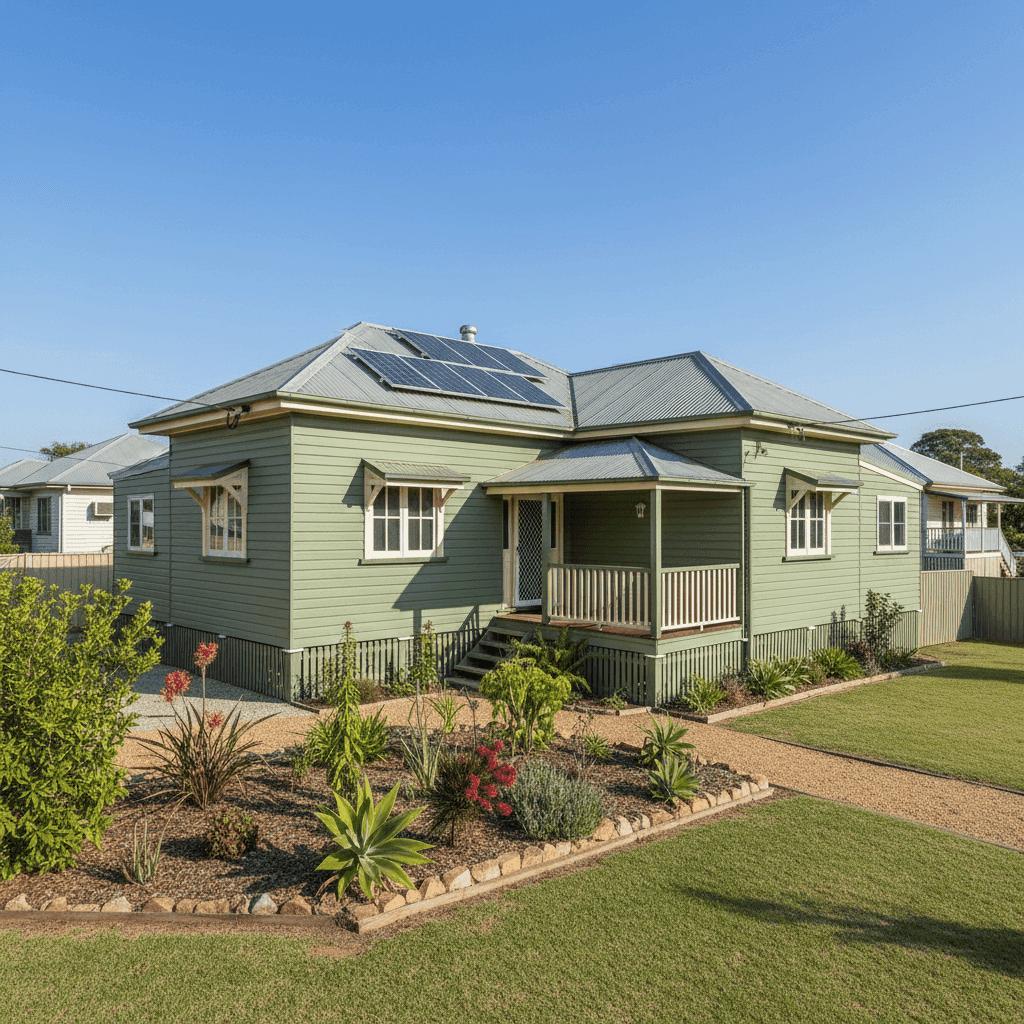
Home insurance costs can vary enormously depending on where you live, what your home is made of, and how much cover you need. This article breaks down a real home and contents insurance quote for a three-bedroom free standing home in Pittsworth, QLD 4356 — a quiet regional town on the Darling Downs, roughly 40 kilometres south-west of Toowoomba. We'll unpack whether the quoted premium represents good value, how it compares to local and national benchmarks, and what property features are likely driving the price.
---
Is This Quote Fair?
The annual premium for this quote comes in at $967 per year (or $100/month), covering both building and contents with a building sum insured of $600,000 and contents valued at $50,000. Our price rating for this quote is CHEAP — below average for the area.
To put that in context: the suburb average premium for Pittsworth is $1,723/year, and the median sits at $1,566/year. This quote lands well below the 25th percentile of $1,128/year — meaning it's cheaper than at least 75% of comparable quotes we've seen for the area. That's a meaningful saving.
For homeowners paying month-to-month, the $100/month figure is easy to manage, though it's always worth noting that paying annually typically avoids any instalment loading that insurers may apply.
At face value, this is a competitive quote. Whether it's the right policy depends on the fine print — excess levels, inclusions, and claim limits all matter — but from a pure price standpoint, this one stacks up very well against the local market.
---
How Pittsworth Compares
Pittsworth sits in the Toowoomba LGA, where the average home insurance premium is $2,479/year — more than double this quote. Zooming out further, the picture becomes even more striking:
| Benchmark | Premium |
|---|---|
| This quote | $967/yr |
| Pittsworth 25th percentile | $1,128/yr |
| Pittsworth suburb average | $1,723/yr |
| Pittsworth suburb median | $1,566/yr |
| Toowoomba LGA average | $2,479/yr |
| QLD state average | $9,129/yr |
| QLD state median | $3,903/yr |
| National average | $5,347/yr |
| National median | $2,764/yr |
The Queensland state average of $9,129/year is extraordinarily high compared to the rest of the country — a reflection of the significant flood, cyclone, and storm risk that affects large parts of the state. Coastal and far-north Queensland properties can push premiums into the tens of thousands annually, which drags the state average up considerably.
Pittsworth, however, benefits from its inland location on the Darling Downs. It sits outside designated cyclone risk zones, and while the region is not immune to severe storms and occasional flooding, it doesn't carry the same level of catastrophic risk as coastal Queensland. This goes a long way to explaining why local premiums are far more modest than the state average.
---
Property Features That Affect Your Premium
Several characteristics of this property are worth examining through an insurance lens:
Weatherboard Timber Walls
Weatherboard wood is one of the most common external wall materials on the Darling Downs, particularly in homes built mid-last century. While it's a charming and durable material, timber construction is generally considered higher risk than brick veneer or full brick — primarily due to fire susceptibility. This can push premiums slightly higher, though the effect varies significantly between insurers.
Steel / Colorbond Roof
Colorbond roofing is viewed favourably by most insurers. It's durable, low-maintenance, and performs well in high-wind events compared to terracotta or concrete tiles. This is likely a positive factor for this quote.
Stump Foundation
The home sits on stumps, which is very typical for Queensland homes of this era. Stumped homes can be more susceptible to movement and moisture-related issues over time, but they also allow for better airflow beneath the structure — a practical advantage in Queensland's climate. Insurers assess stump foundations differently; some apply a loading, others don't.
Construction Year: 1958
Older homes can attract higher premiums due to the cost of sourcing period-appropriate materials and trades for repairs. A 1958 build is not unusual for Pittsworth, and the $600,000 building sum insured reflects the full replacement cost — not market value — which is the correct way to insure a home.
Solar Panels
This property has solar panels installed. Solar systems are generally covered under home and contents policies, but it's worth confirming with your insurer whether the panels are included under the building sum insured or require separate listing. Damage from storms, hail, and fire is typically covered, but accidental damage or mechanical breakdown may not be.
Standard Fittings, Carpet Flooring
Standard-quality fittings and carpet flooring keep replacement costs predictable, which is reflected in a more modest premium. High-end finishes, custom joinery, or imported tiles would all increase the cost to rebuild and, consequently, the premium.
---
Tips for Homeowners in Pittsworth
1. Review your building sum insured regularly Construction costs have risen sharply in recent years. A $600,000 sum insured may be appropriate today, but it's worth reassessing annually to ensure it reflects current rebuild costs — not just the market value of the land and home combined. Underinsurance is one of the most common and costly mistakes homeowners make.
2. Check your solar panel coverage If you've recently installed solar panels or upgraded your system, confirm with your insurer exactly how they're covered. Some policies include them automatically under the building definition; others require you to specify them. Given the cost of a typical solar system, this is worth a quick phone call.
3. Maintain your stumps and subfloor Stumped homes require periodic inspection to ensure the stumps haven't shifted, rotted, or been undermined by moisture or pest activity. Proactive maintenance not only protects the structural integrity of your home but can also prevent claim complications if damage is later attributed to gradual deterioration (which is typically excluded under most policies).
4. Compare quotes at renewal time This quote is already well below the local average, but that doesn't mean it can't be beaten — or that the same insurer will offer the same rate next year. The insurance market shifts constantly, and loyalty doesn't always pay. Comparing quotes annually is the simplest way to ensure you're not overpaying.
---
Compare Home Insurance Quotes in Pittsworth
Whether you're a long-time Pittsworth local or new to the area, it pays to shop around. CoverClub makes it easy to compare home and contents insurance quotes side by side, so you can see exactly how different insurers price your specific property. Get a quote today and find out if you're getting the best deal available — or check out the Pittsworth suburb stats to see how your current premium stacks up against your neighbours.