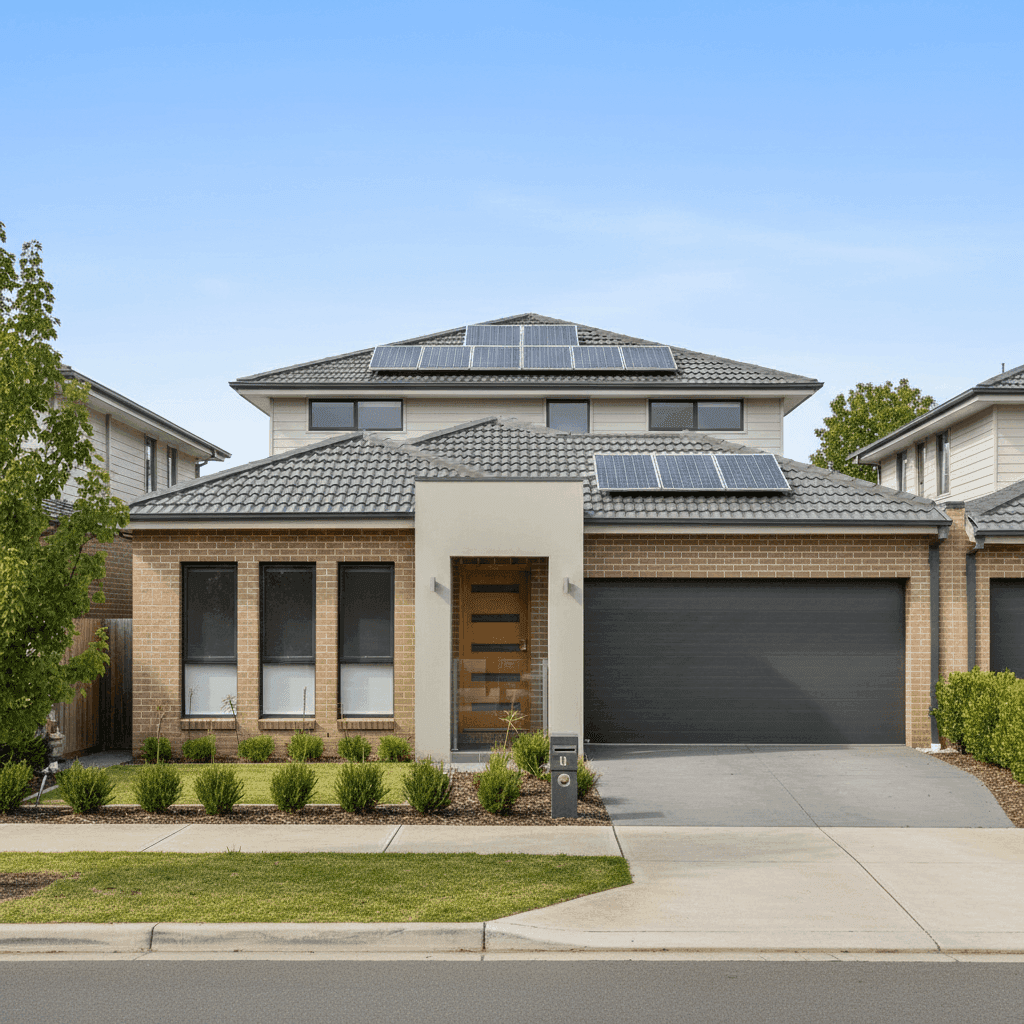
Point Cook has established itself as one of Melbourne's most popular growth corridors, and it's easy to see why. With well-designed streetscapes, good schools, and easy freeway access, the suburb attracts families looking for modern homes at a relatively accessible price point. If you own a townhouse in Point Cook — or you're thinking about buying one — understanding what you should be paying for building insurance is an important part of managing your household budget.
This article breaks down a recent building-only insurance quote for a 3-bedroom, 2-bathroom brick veneer townhouse in Point Cook (VIC 3030), built in 2005, with a sum insured of $695,000 and an annual premium of $1,505. We'll examine whether that figure stacks up against the local market, compare it to Victorian and national benchmarks, and share some practical tips for homeowners in the area.
---
Is This Quote Fair?
The short answer: yes, broadly speaking. This quote has been rated Fair (Around Average) — meaning it sits comfortably within the typical range for the suburb, without being a standout bargain or an overpriced outlier.
At $1,505 per year (or $152 per month), the premium comes in below the Point Cook suburb average of $1,742/yr and below the suburb median of $1,763/yr. That's a saving of roughly $237–$258 annually compared to what many other homeowners in the same postcode are paying.
To put it in the context of the full spread: the 25th percentile for Point Cook sits at $1,277/yr, while the 75th percentile reaches $2,141/yr. This quote lands in the lower-middle portion of that range — not the cheapest available, but well clear of the higher-cost policies that some local homeowners are carrying. Based on 82 quotes sampled in the suburb, that's a reasonably solid data set to draw meaningful conclusions from.
---
How Point Cook Compares to the Rest of Victoria and Australia
One of the more striking takeaways from this data is just how much cheaper Point Cook is compared to broader Victorian and national benchmarks. Check out the numbers:
| Benchmark | Average Premium | Median Premium |
|---|---|---|
| Point Cook (3030) | $1,742/yr | $1,763/yr |
| Wyndham LGA | $1,591/yr | — |
| Victoria | $2,921/yr | $2,694/yr |
| National | $2,965/yr | $2,716/yr |
Point Cook's suburb average is 40% below the Victorian state average and nearly 41% below the national average. Even the Wyndham LGA average of $1,591/yr — which covers a broader mix of properties across the council area — sits well under the state figure.
This is genuinely good news for Point Cook homeowners. The suburb's relatively modern housing stock, low flood risk, and absence of cyclone exposure all contribute to a more favourable risk profile in the eyes of insurers. You can explore the full breakdown of local premiums on the Point Cook suburb stats page, compare it against the Victorian state overview, or see where it sits in the national picture.
---
Property Features That Affect Your Premium
Every insurer prices risk differently, but the physical characteristics of a property play a significant role in determining your premium. Here's how the features of this particular townhouse are likely influencing its cost:
Brick Veneer Walls Brick veneer is one of the most common external wall types in suburban Melbourne, and insurers generally view it favourably. It offers good fire resistance and structural durability, which can keep premiums lower compared to timber-framed or clad constructions.
Tiled Roof Concrete or terracotta tile roofs are considered a solid, low-maintenance option by most insurers. They hold up well in hail events and don't carry the same fire risk as some other materials, which helps from a pricing perspective.
Slab Foundation A concrete slab foundation is standard for homes built in this era and region. It's a straightforward construction type that doesn't introduce the additional risk factors associated with older stumped or pier-and-beam foundations.
Solar Panels This property has solar panels installed, which is worth noting. Solar panels are generally covered under building insurance, but it's important to confirm with your insurer that they're explicitly included in your policy — and that the sum insured is adequate to cover their replacement cost. With energy prices continuing to rise, replacing a solar system is a meaningful expense.
Ducted Climate Control Ducted heating and cooling systems are a fixed building feature, and they're typically covered under building insurance. As with solar panels, ensuring your sum insured reflects the replacement cost of these systems is important when setting your coverage level.
No Pool The absence of a pool removes a liability and maintenance risk factor that can push premiums higher, particularly for policies that include legal liability cover.
153 sqm Building Size At 153 square metres, this is a mid-sized townhouse. Rebuild costs are a primary driver of your sum insured, and at $695,000, this policy is insuring the structure at approximately $4,542 per square metre — which is broadly in line with current construction cost estimates for this type of dwelling in metropolitan Melbourne.
---
Tips for Homeowners in Point Cook
1. Review your sum insured regularly Construction costs in Victoria have risen significantly over the past few years. A sum insured that was appropriate three years ago may no longer be sufficient to fully rebuild your home today. Use a building cost calculator or speak with a quantity surveyor to ensure you're not underinsured.
2. Confirm solar panels and fixed systems are covered If you have solar panels or ducted climate control — as this property does — check your policy wording carefully. Most building policies do cover these, but limits and conditions can vary. Make sure your sum insured accounts for their full replacement value.
3. Compare quotes at renewal time Even if your current premium feels reasonable, the insurance market shifts from year to year. Insurers reprice risk based on claims data, reinsurance costs, and regional factors. It's worth comparing quotes annually rather than simply auto-renewing — you might find a meaningfully better deal without sacrificing cover quality.
4. Understand your excess This quote carries a $1,000 building excess. Choosing a higher excess can reduce your annual premium, but make sure it's an amount you could comfortably cover out of pocket in the event of a claim. For most homeowners, somewhere between $500 and $2,000 tends to strike the right balance.
---
Compare Your Own Quote at CoverClub
Whether you're a Point Cook local or you own property elsewhere in Australia, CoverClub makes it easy to see how your current premium stacks up. Our platform aggregates real quote data so you can benchmark your policy against what others in your suburb are actually paying — not just advertised rates. Get a quote today and find out if you're getting a fair deal on your home insurance.