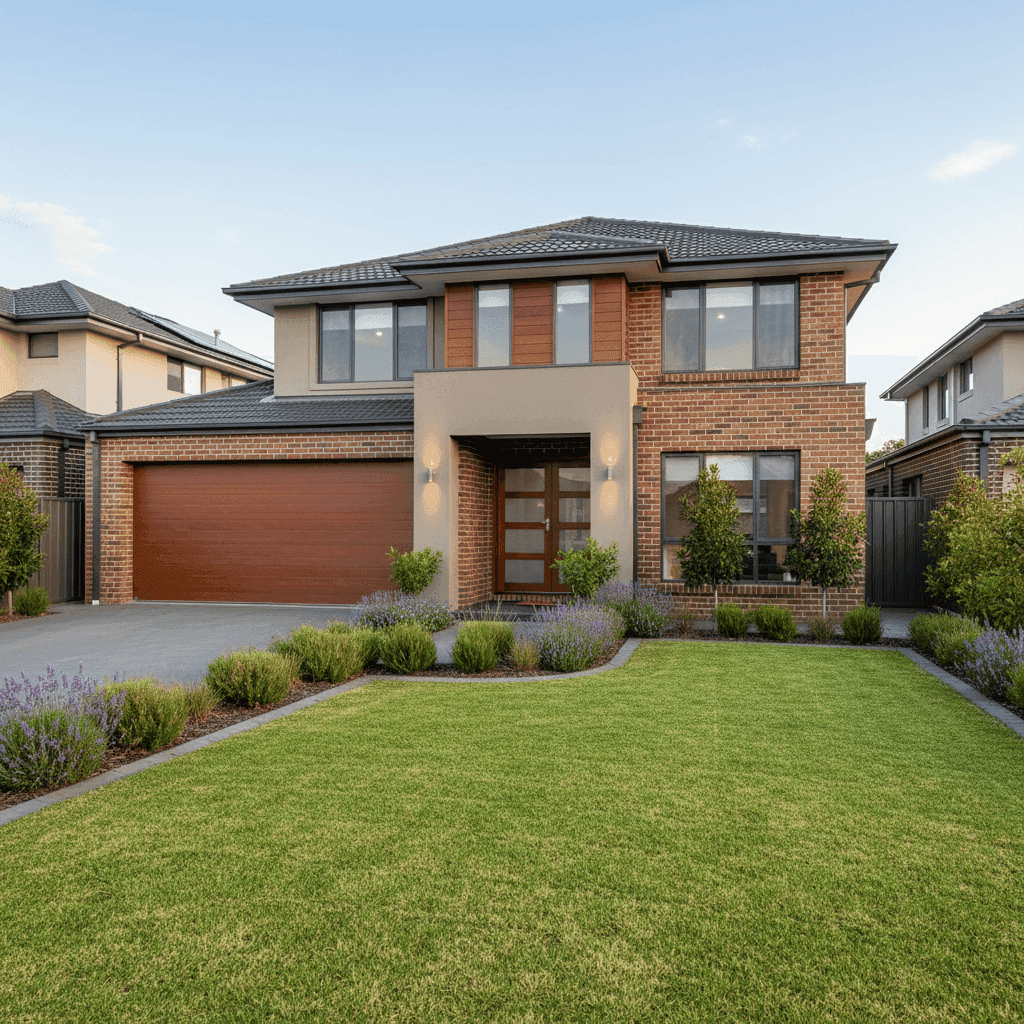
Point Cook, nestled in Melbourne's fast-growing south-western corridor, has become one of Victoria's most sought-after suburban addresses. With its master-planned streetscapes, quality schools, and proximity to the coast, it's no surprise that larger family homes are common here. This article takes a close look at a recent home and contents insurance quote for a five-bedroom free-standing home in Point Cook (VIC 3030) — breaking down whether the premium is competitive, how it stacks up against local and national benchmarks, and what homeowners in the area can do to keep their costs in check.
---
Is This Quote Fair?
The quoted annual premium for this property came in at $2,758 per year (or roughly $264 per month), covering both building and contents. Our analysis rates this as Expensive — Above Average for the Point Cook area.
To put that in perspective, the suburb average sits at $1,991 per year, with a median of $1,850. This quote lands well above the 75th percentile for Point Cook, which is $2,242 — meaning it's priced higher than approximately three-quarters of comparable quotes in the area.
That said, it's worth understanding why the premium is elevated before assuming it's simply poor value. Several factors specific to this property push the cost upward:
- A building sum insured of $1,584,000 is substantial, even for a large home. Rebuild costs for a 367 sqm brick veneer home with above-average fittings in metropolitan Melbourne are genuinely high, and the insurer is pricing that risk accordingly.
- A contents value of $201,000 adds meaningful coverage on top of the building sum.
- Above-average fittings quality signals higher-end fixtures, finishes, and appliances — all of which cost more to replace and are factored into the premium.
So while the price tag is higher than the suburb norm, the level of coverage being provided is also considerably broader than a typical entry-level policy. Homeowners comparing quotes should always weigh the sum insured and inclusions alongside the premium itself.
---
How Point Cook Compares
Understanding where Point Cook sits in the broader insurance landscape helps put this quote in context. Here's a snapshot based on data from 143 quotes collected for the 3030 postcode:
| Benchmark | Premium |
|---|---|
| Point Cook suburb average | $1,991/yr |
| Point Cook suburb median | $1,850/yr |
| Point Cook 25th percentile | $1,493/yr |
| Point Cook 75th percentile | $2,242/yr |
| LGA (Wyndham) average | $1,591/yr |
| VIC state average | $3,000/yr |
| VIC state median | $2,718/yr |
| National average | $5,347/yr |
| National median | $2,764/yr |
A few things stand out here. First, Point Cook is actually a relatively affordable suburb to insure compared to Victorian averages — the suburb median of $1,850 is well below the state median of $2,718. This reflects the area's lower exposure to natural hazards like flooding, bushfire, and cyclones compared to many other parts of Victoria and Australia.
Second, when you zoom out to the national picture, the quote looks far more reasonable. The national average premium is $5,347 per year — nearly double this quote — driven by high-risk regions in Queensland, northern Western Australia, and parts of NSW. Point Cook homeowners are, broadly speaking, in a favourable position.
The Wyndham LGA average of $1,591 is notably lower than the Point Cook suburb average, suggesting that Point Cook properties — likely due to their newer builds, larger sizes, and higher rebuild values — attract somewhat higher premiums than the surrounding local government area overall.
---
Property Features That Affect Your Premium
Insurance underwriters assess dozens of property-specific factors when calculating a premium. For this home, several characteristics are particularly relevant:
Brick veneer construction and tile roof are both viewed favourably by insurers. Brick veneer walls offer solid fire and impact resistance, while tiled roofs are durable and less prone to storm damage than Colorbond or corrugated iron in low-wind areas. These features generally attract lower premiums compared to timber-framed or clad properties.
Slab foundation is standard for homes of this era in Melbourne's west and presents no particular risk concern for insurers.
Construction year of 2007 means the home is relatively modern, built to contemporary Australian Standards for construction, which typically include improved fire resistance, energy efficiency, and structural integrity. Newer homes often attract lower premiums than older properties requiring more maintenance or built to outdated codes.
367 sqm of living space is a large footprint by any measure. Larger homes cost significantly more to rebuild, and the $1,584,000 building sum insured reflects this reality. Underinsurance is a genuine risk for large homes — getting the rebuild cost right is critical.
Above-average fittings quality — think stone benchtops, quality cabinetry, premium appliances, and high-end bathroom fixtures — increases the cost to repair or rebuild, and insurers price this into the premium accordingly.
Ducted climate control is a notable inclusion. Ducted HVAC systems are expensive to install and repair, and their presence in the home contributes to both the building sum insured and the overall premium.
No pool and no solar panels simplify the risk profile slightly. Both features, when present, can add to premiums due to liability exposure (pools) and specialised replacement costs (solar).
---
Tips for Homeowners in Point Cook
If you're looking to make sure you're getting the best value on your home insurance, here are four practical steps worth taking:
1. Review your sum insured annually. Building costs in Melbourne have risen sharply in recent years. If your sum insured hasn't kept pace with current rebuild costs per square metre, you could be underinsured — and that's a costly mistake at claim time. Equally, if your sum insured is set too high relative to actual rebuild costs, you may be overpaying. Use a building cost calculator or speak with a quantity surveyor to validate your figure.
2. Compare quotes before renewal. Loyalty rarely pays in insurance. Many Australians simply let their policy roll over each year, absorbing premium increases without question. Taking 15 minutes to compare quotes at CoverClub before your renewal date can reveal meaningfully cheaper options for equivalent or better coverage.
3. Consider your excess level. Both the building and contents excess on this policy are set at $1,000. Opting for a higher voluntary excess — say $2,500 or $5,000 — can reduce your annual premium noticeably. This strategy works well if you have the financial buffer to cover a larger out-of-pocket cost in the event of a claim, and you're primarily insuring against major losses rather than minor incidents.
4. Bundle building and contents thoughtfully. Combined home and contents policies often attract a discount compared to purchasing them separately. However, it's still worth getting separate quotes to confirm you're genuinely saving, rather than assuming the bundle is always the better deal.
---
Compare Your Options with CoverClub
Whether you're renewing soon or just curious about where your current premium sits, CoverClub makes it easy to see how your quote stacks up. Our suburb-level data covers hundreds of postcodes across Australia, giving you real benchmarks — not guesswork. Get a home insurance quote today and find out if you're paying a fair price for your Point Cook home.