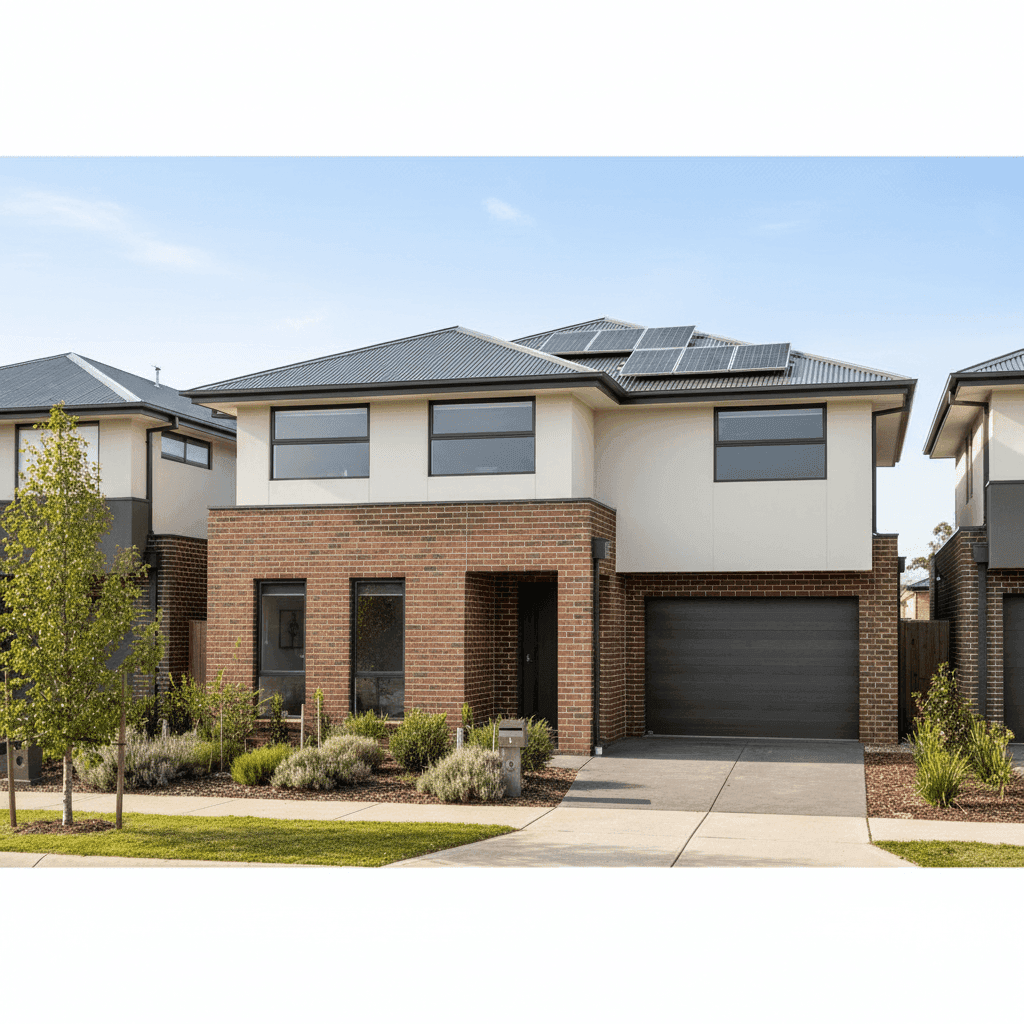
Point Cook in Melbourne's south-west has grown into one of Victoria's most popular family suburbs, and with that growth comes a lot of questions about the cost of protecting your home. This article takes a close look at a real home and contents insurance quote for a three-bedroom, two-bathroom townhouse in Point Cook (VIC 3030) — breaking down whether the price stacks up, how local premiums compare to the rest of Victoria and the nation, and what you can do to make sure you're getting the best deal possible.
---
Is This Quote Fair?
The quote in question comes in at $1,495 per year (or roughly $134 per month) for combined home and contents cover, with a building sum insured of $610,000 and contents valued at $50,000. Both the building and contents excess are set at $2,000.
Our pricing analysis rates this quote as Fair — Around Average, which is a reasonable result for a well-built modern townhouse in this part of Melbourne.
To put that in context, the 25th percentile of quotes for Point Cook sits at $1,493 per year — meaning this premium is right at the boundary between "competitive" and "average." In practical terms, about a quarter of comparable properties in the suburb are being quoted at or below this price, while the majority are paying more. That's not a bad position to be in, but it does suggest there may be room to do a little better with the right insurer.
---
How Point Cook Compares
One of the most useful ways to assess any insurance quote is to benchmark it against what others in the same area — and across the country — are paying. Here's how the numbers break down:
| Benchmark | Premium |
|---|---|
| This quote | $1,495/yr |
| Point Cook suburb average | $1,991/yr |
| Point Cook suburb median | $1,850/yr |
| Point Cook 25th percentile | $1,493/yr |
| Point Cook 75th percentile | $2,242/yr |
| Wyndham LGA average | $1,591/yr |
| Victoria average | $3,000/yr |
| Victoria median | $2,718/yr |
| National average | $5,347/yr |
| National median | $2,764/yr |
Based on 143 quotes sampled for the Point Cook area.
The headline takeaway here is striking: this quote is 25% below the Point Cook suburb average and sits well under both the Victorian state average of $3,000 and the national average of $5,347. The national average is heavily skewed by high-risk areas — particularly in Queensland and northern Australia where cyclone, flood, and storm exposure drive premiums sky-high — so the national figure should be taken with a grain of salt. Still, even against the national median of $2,764, this quote looks quite attractive.
Locally, the Wyndham LGA average sits at $1,591 per year, so this quote comes in modestly below that benchmark too. You can explore more detailed Point Cook suburb statistics here.
All up, while the quote is rated "Fair" rather than "Excellent," it's performing solidly — particularly for a property with a $610,000 building sum insured.
---
Property Features That Affect Your Premium
Insurers don't just look at your postcode — they assess the specific characteristics of your home when calculating risk. Here's how the features of this particular townhouse likely influence the premium:
Brick Veneer Walls Brick veneer is one of the most common external wall types in suburban Melbourne, and insurers generally view it favourably. It offers solid fire resistance and durability, which can help keep premiums in check compared to timber-framed or clad exteriors.
Steel / Colorbond Roof A Colorbond steel roof is another tick in the box. It's lightweight, resistant to ember attack, and holds up well in Melbourne's variable weather. Older terracotta or concrete tile roofs can be more expensive to repair or replace, so a modern steel roof often attracts a more competitive rate.
Slab Foundation Concrete slab foundations are standard for newer Melbourne builds and are generally considered low-risk by underwriters — no subfloor cavity means less exposure to certain types of damage.
Timber / Laminate Flooring Flooring type can influence contents and building claims, particularly in water damage scenarios. Timber and laminate floors can be costly to replace if damaged, which is worth keeping in mind when setting your sum insured.
Built in 2016 At roughly nine years old, this townhouse is still considered relatively new in insurance terms. Newer properties tend to attract lower premiums because the building materials, wiring, plumbing, and structural components are all in good condition and meet modern building codes.
Solar Panels The presence of rooftop solar panels is worth noting. Most home and contents policies will cover solar panels as part of the building, but it's always worth confirming this with your insurer — especially for damage caused by storms or hail. Make sure your building sum insured accounts for the replacement cost of the system.
Ducted Climate Control Ducted heating and cooling systems are a significant fixed asset and should be factored into your building sum insured. These systems can cost tens of thousands of dollars to replace, and underinsurance is a real risk if they're not properly accounted for.
No Pool, No Cyclone Risk The absence of a swimming pool removes a common liability exposure, and Point Cook's location in metropolitan Melbourne means there's no cyclone risk — a major driver of high premiums in northern parts of the country.
---
Tips for Homeowners in Point Cook
Whether you're reviewing an existing policy or shopping for new cover, here are a few practical steps worth taking:
- Check your building sum insured regularly. Construction costs in Melbourne have risen significantly over the past few years. A sum insured that was accurate in 2020 may no longer reflect what it would actually cost to rebuild your home today. Use a building cost calculator or speak to a quantity surveyor to make sure you're not underinsured.
- Confirm solar panel coverage. If your policy doesn't explicitly list solar panels as a covered item under the building section, ask your insurer to clarify. Some policies treat them as an optional extra or may have sub-limits on how much they'll pay out.
- Compare quotes annually. Insurers regularly reprice their books, and loyalty doesn't always pay. Spending 15 minutes comparing quotes at renewal time can uncover meaningful savings — especially given the spread between the 25th and 75th percentile in Point Cook ($1,493 vs $2,242) is nearly $750 per year.
- Consider your excess carefully. A $2,000 excess on both building and contents is on the higher end of the standard range. While a higher excess reduces your premium, it also means a larger out-of-pocket cost at claim time. Make sure the trade-off makes sense for your financial situation.
---
Ready to Compare?
If you're a homeowner in Point Cook or anywhere else in Australia, it pays to know where your premium sits relative to the market. CoverClub makes it easy to compare home and contents insurance quotes in minutes — so you can see exactly what you're paying and whether you can do better. Get a quote today at CoverClub and find out where your home stands.